Italy’s Most Cultural Cities per Square Mile
We analyzed how densely packed Italy’s most visited cities and towns are with historic and cultural landmarks. To provide a broad national picture, we’ve selected some of the most popular tourist destinations from each region—ranging from large cities to smaller towns that play a key cultural role locally. While places like Milan or Naples offer major museums and architectural landmarks, others like Tropea or Merano stand out for how much history they preserve in just a few square miles.
Some destinations are global icons; others are regional favorites. But all offer a high concentration of things to see within a walkable area.
Here’s how they compare, ranked by cultural site density per square mile:
| Ranking | City or Town | Sites / Sq mi | Area (sq mi) | Sites | Region | |
|---|---|---|---|---|---|---|
| 1 | Milan | 18.75 | 70.14 | 1315 | Lombardy | |
| 2 | Trieste | 15.76 | 32.86 | 518 | Friuli-Venezia Giulia | |
| 3 | Naples | 14.62 | 45.95 | 672 | Campania | |
| 4 | Tropea | 13.45 | 1.41 | 19 | Calabria | |
| 5 | Sorrento | 13.26 | 3.85 | 51 | Campania | |
| 6 | Florence | 12.25 | 39.51 | 484 | Tuscany | |
| 7 | Pescara | 11.99 | 13.27 | 159 | Abruzzo | |
| 8 | Taormina | 9.07 | 5.07 | 46 | Sicily | |
| 9 | Padua | 8.94 | 35.92 | 321 | Veneto | |
| 10 | Merano | 8.55 | 10.17 | 87 | Trentino-Alto Adige | |
| 11 | Udine | 8.34 | 22.07 | 184 | Friuli-Venezia Giulia | |
| 12 | Portofino | 8.19 | 0.98 | 8 | Liguria | |
| 13 | Palermo | 6.56 | 62.00 | 407 | Sicily | |
| 14 | Turin | 6.41 | 50.20 | 322 | Piedmont | |
| 15 | Bologna | 5.52 | 54.39 | 300 | Trentino-Alto Adige | |
| 16 | Aosta | 5.45 | 8.26 | 45 | Valle d’Aosta | |
| 17 | Como | 5.30 | 14.33 | 76 | Lombardy | |
| 18 | Gorizia | 4.77 | 15.93 | 76 | Friuli-Venezia Giulia | |
| 19 | Venice | 4.15 | 160.58 | 667 | Veneto | |
| 20 | Bolzano | 4.11 | 20.19 | 83 | Lombardy | |
| 21 | Caserta | 3.93 | 20.88 | 82 | Campania | |
| 22 | Cagliari | 3.75 | 32.82 | 123 | Sardinia | |
| 23 | Vasto | 3.74 | 27.55 | 103 | Abruzzo | |
| 24 | Rome | 3.67 | 497.05 | 1826 | Lazio | |
| 25 | Salerno | 3.25 | 23.11 | 75 | Campania | |
| 26 | Lignano Sabbiadoro | 3.13 | 6.07 | 19 | Friuli-Venezia Giulia | |
| 27 | Genoa | 3.05 | 92.78 | 283 | Liguria | |
| 28 | Cosenza | 3.01 | 14.62 | 44 | Calabria | |
| 29 | Verona | 2.85 | 76.80 | 219 | Veneto | |
| 30 | Nuoro | 2.78 | 74.15 | 206 | Sardinia | |
| 31 | Siena | 2.73 | 45.76 | 125 | Tuscany | |
| 32 | Campobasso | 2.72 | 21.66 | 59 | Molise | |
| 33 | Positano | 2.69 | 3.34 | 9 | Campania | |
| 34 | Bari | 2.49 | 45.32 | 113 | Puglia | |
| 35 | La Spezia | 2.37 | 19.84 | 47 | Liguria | |
| 36 | Termoli | 2.19 | 21.48 | 47 | Molise | |
| 37 | Riccione | 2.07 | 6.76 | 14 | Emilia-Romagna | |
| 38 | Pisa | 2.04 | 71.50 | 146 | Tuscany | |
| 39 | Trento | 2.03 | 60.96 | 124 | Trentino-Alto Adige | |
| 40 | Catanzaro | 2.02 | 43.52 | 88 | Calabria | |
| 41 | Livorno | 1.98 | 40.35 | 80 | Tuscany | |
| 42 | Messina | 1.83 | 82.53 | 151 | Sicily | |
| 43 | Teramo | 1.81 | 59.01 | 107 | Abruzzo | |
| 44 | Catania | 1.78 | 70.62 | 126 | Sicily | |
| 45 | Tivoli | 1.66 | 26.51 | 44 | Lazio | |
| 46 | Rimini | 1.62 | 52.40 | 85 | Emilia-Romagna | |
| 47 | Stresa | 1.54 | 13.65 | 21 | Piedmont | |
| 48 | Savona | 1.51 | 25.22 | 38 | Liguria | |
| 49 | Pizzo | 1.47 | 8.84 | 13 | Calabria | |
| 50 | Sirmione | 1.38 | 10.14 | 14 | Lombardy | |
| 51 | L’Aquila | 1.34 | 182.98 | 245 | Abruzzo | |
| 52 | Isernia | 1.27 | 26.70 | 34 | Molise | |
| 53 | Ancona | 1.27 | 48.20 | 61 | Marche | |
| 54 | Pesaro | 1.23 | 48.95 | 60 | Marche | |
| 55 | Alberobello | 1.21 | 15.76 | 19 | Puglia | |
| 56 | Assisi | 1.20 | 72.27 | 87 | Umbria | |
| 57 | Cuneo | 1.13 | 46.20 | 52 | Piedmont | |
| 58 | Reggio Calabria | 1.02 | 92.29 | 94 | Calabria | |
| 59 | Macerata | 1.01 | 35.73 | 36 | Marche | |
| 60 | Lecce | 0.98 | 93.05 | 91 | Puglia | |
| 61 | Perugia | 0.81 | 173.56 | 140 | Umbria | |
| 62 | Potenza | 0.74 | 67.73 | 50 | Basilicata | |
| 63 | Maratea | 0.69 | 26.19 | 18 | Basilicata | |
| 64 | Grado | 0.65 | 42.98 | 28 | Friuli-Venezia Giulia | |
| 65 | Matera | 0.64 | 151.39 | 97 | Basilicata | |
| 66 | Terni | 0.62 | 82.02 | 51 | Umbria | |
| 67 | Jesolo | 0.54 | 37.22 | 20 | Veneto | |
| 68 | Viterbo | 0.51 | 156.85 | 80 | Lazio | |
| 69 | Alghero | 0.48 | 87.03 | 42 | Sardinia | |
| 70 | Urbino | 0.47 | 87.45 | 41 | Marche | |
| 71 | Orvieto | 0.36 | 108.60 | 39 | Umbria | |
| 72 | Ravenna | 0.30 | 252.44 | 75 | Emilia-Romagna | |
| 73 | Foggia | 0.29 | 196.63 | 58 | Puglia | |
| 74 | Latina | 0.29 | 107.19 | 31 | Lazio | |
| 75 | Sassari | 0.22 | 211.21 | 46 | Sardinia | |
| 76 | Olbia | 0.20 | 148.12 | 29 | Sardinia | |
| 77 | Courmayeur | 0.05 | 80.93 | 4 | Valle d’Aosta |
1. Milan (Lombardy) – 18.75 sites per square mile
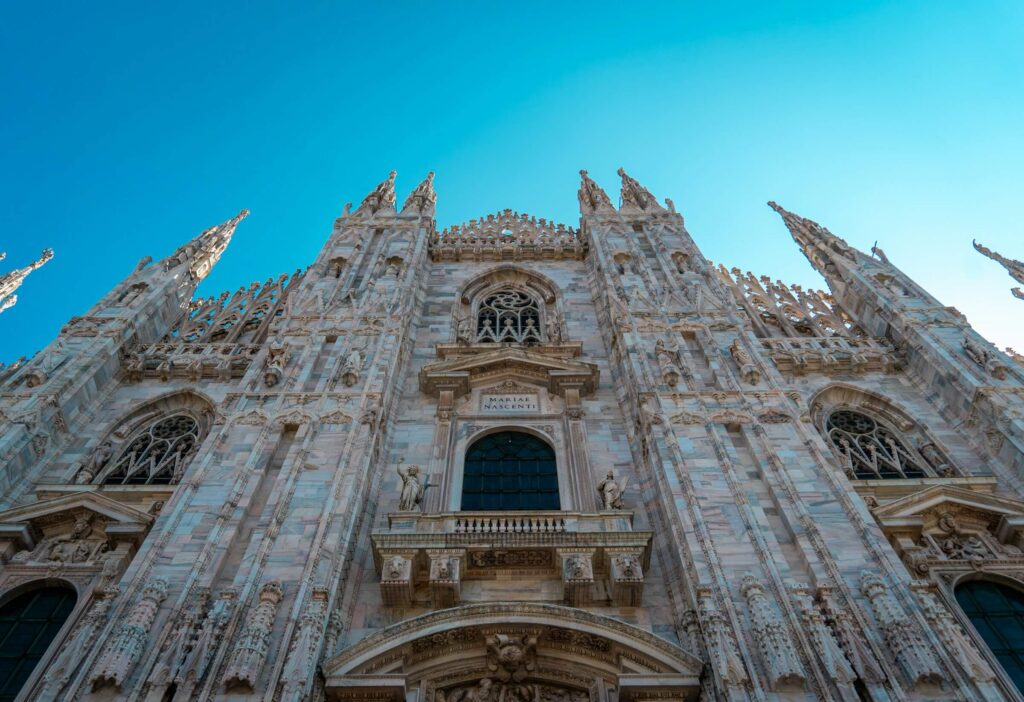
Milan leads the ranking with a dense mix of history, art, and modern design. The Gothic Duomo dominates the skyline, while the Santa Maria delle Grazie houses Leonardo da Vinci’s Last Supper. Ancient Roman columns, Renaissance palaces, and 20th-century masterpieces like the Pirelli Tower are all part of the urban fabric. The city is also home to La Scala, Brera Art Gallery, and dozens of small museums located between fashion boutiques and business towers.
Milan is large but well served by an efficient metro system. Visitors can walk most of the historic core and use trams or subways to reach outer districts.
Beyond central Milan, cultural sites extend to neighborhoods like Porta Romana and Isola, where post-industrial spaces have been turned into galleries, foundations, and design hubs. Even its cemeteries, such as Monumentale, serve as open-air museums.
2. Trieste (Friuli-Venezia Giulia) – 15.76 sites per square mile
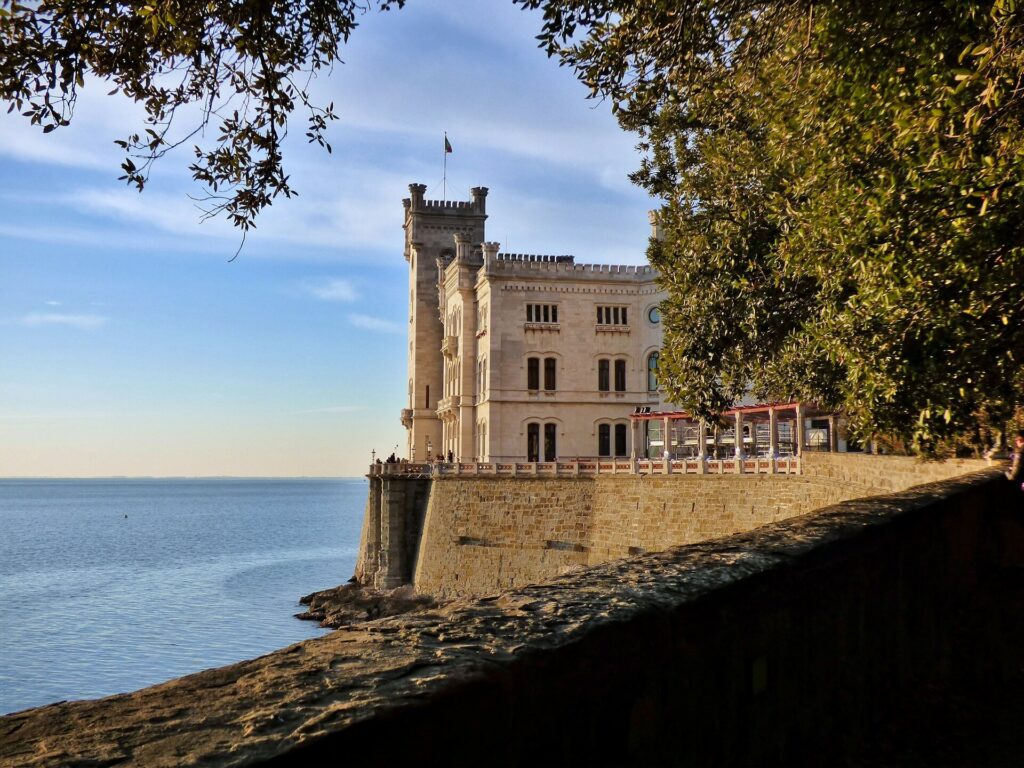
Trieste is a coastal city shaped by centuries of Austro-Hungarian, Italian, and Slavic influence. Roman ruins sit alongside 19th-century palaces and Orthodox, Catholic, and Protestant churches. The city’s cultural landmarks include Miramare Castle, Piazza Unità d’Italia, and several literary cafés tied to figures like James Joyce. Trieste’s size makes it easy to explore on foot. The historic tram to Opicina and local buses help with steeper areas. Most visitors arrive by train and walk between major sites. A car is unnecessary unless traveling outside the city. Trieste offers an unusual and historically layered experience few other Italian cities can match.
3. Naples (Campania) – 14.62 sites per square mile
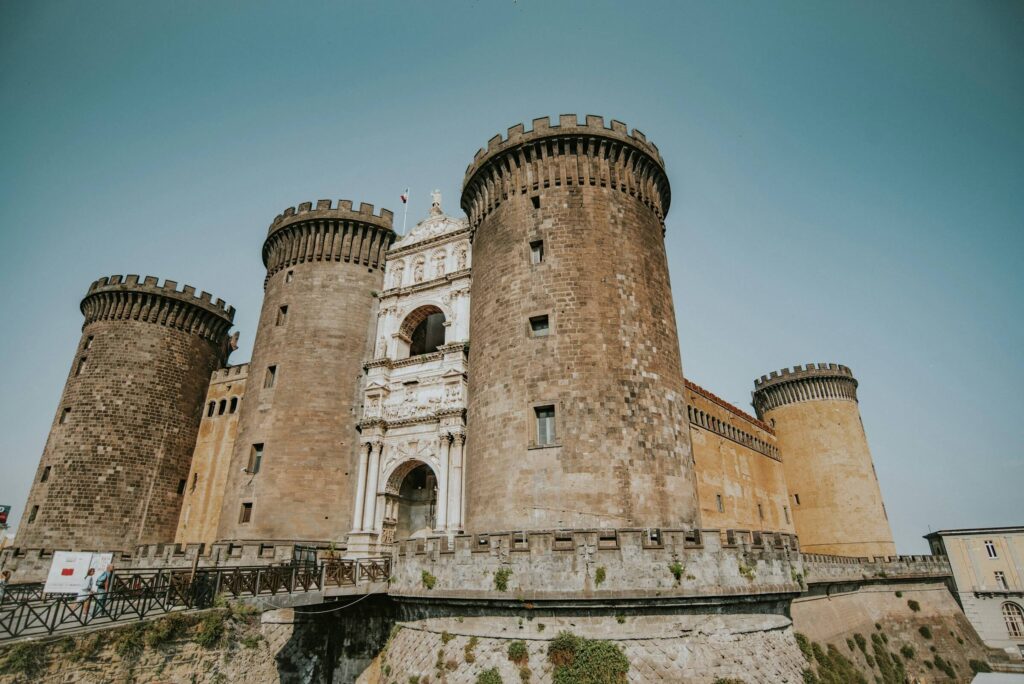
Naples has one of Europe’s largest and oldest historic centers, with over 2,000 years of continuous urban life. The streets sit atop layers of Roman and Greek ruins, accessible through guided visits underground. Highlights include Castel Nuovo, the Royal Palace, the Archaeological Museum, and hundreds of churches, more than any other city in Italy. “Spaccanapoli”, a straight road that cuts through the city’s center, passes many of its major historical and religious buildings. The area is best explored on foot, though the city’s metro and funiculars help with hills and longer distances.
A car is not recommended inside Naples but is useful for day trips to Pompeii or the Amalfi Coast.
Traditional neighborhoods like the Spanish Quarters and the Rione Sanità reveal a mix of urban decay and hidden gems, street shrines, artisan workshops, and baroque churches that have stood unchanged for centuries.
4. Tropea (Calabria) – 13.45 sites per square mile
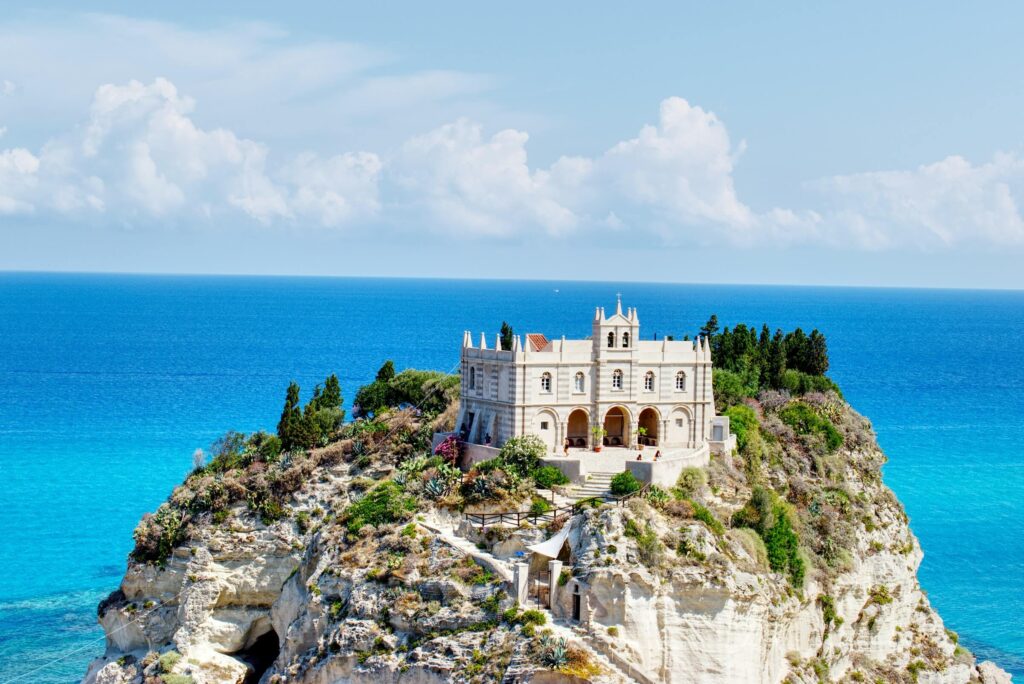
Tropea is a small cliffside town overlooking the Tyrrhenian Sea. Despite its size – less than two square miles – it contains several historic churches, noble palaces, and a Norman cathedral with relics tied to local saints. Most sites are concentrated within a few walkable streets in the old town, which also offers panoramic views of the sea. Visitors don’t need a car to explore Tropea itself, but driving is helpful for accessing nearby beaches or villages like Capo Vaticano. Regional trains stop near the town center. Tropea is ideal for visitors who enjoy quiet historical settings and compact, easy-to-navigate towns.
5. Sorrento (Campania) – 13.26 sites per square mile
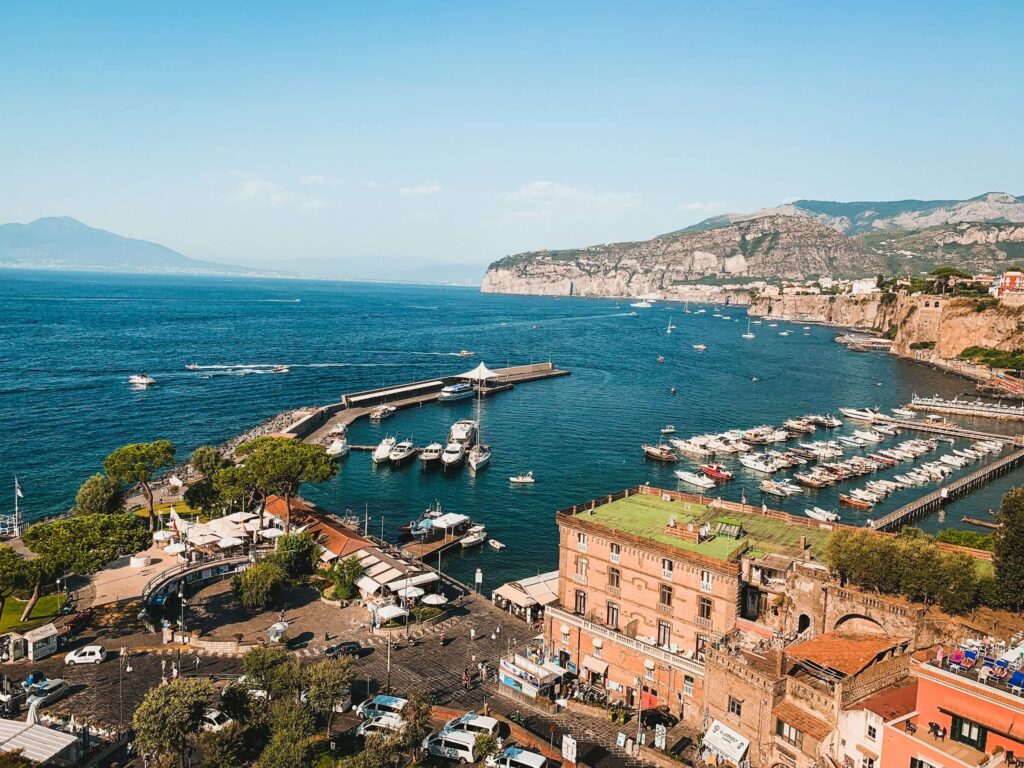
Sorrento combines Roman roots with baroque churches, medieval cloisters, and Renaissance palaces, all compressed into a small area above the Bay of Naples. Historical sites include the 15th-century Sedil Dominova, the Church of San Francesco, and archaeological remains like Villa Pollio Felice.
The town has long been a retreat for writers and artists, including Byron and Goethe. Its central core is walkable and filled with local workshops and museums. The harbor is accessible via stairs or elevator. Trains connect Sorrento to Naples and Pompeii, and buses serve the Amalfi Coast. Driving is not advised in town, though useful for rural excursions.
6. Florence (Tuscany) – 12.25 sites per square mile
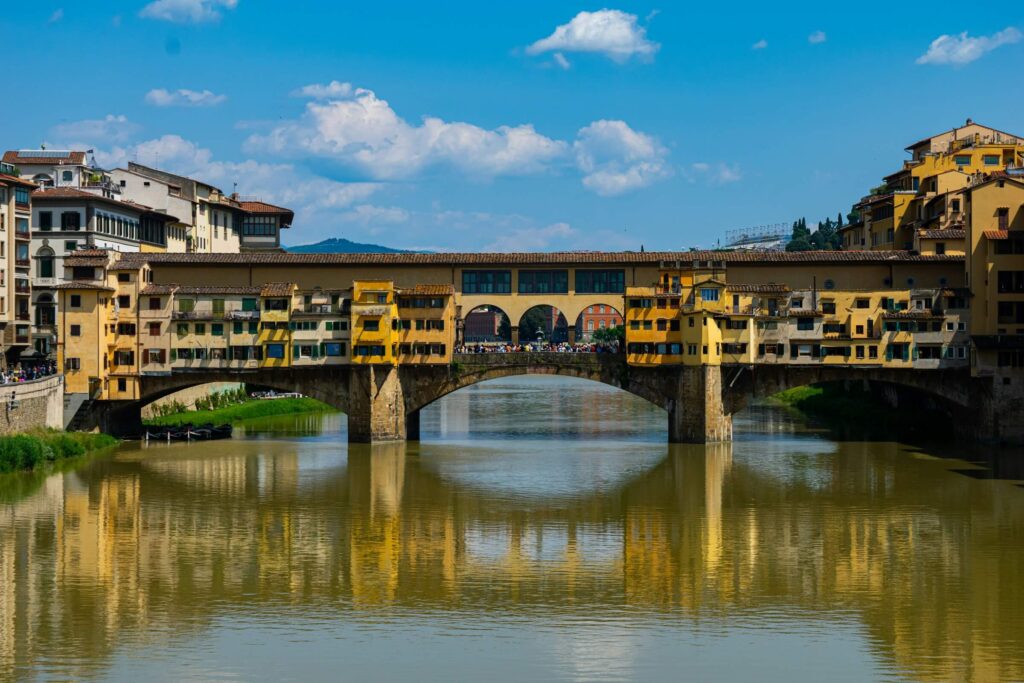
Not a surprise, Florence is densely layered with centuries of art, politics, and craftsmanship. The city’s historic center is a UNESCO World Heritage site and you can visit the Duomo, the Uffizi Gallery, Michelangelo’s David, and the medieval Ponte Vecchio in a single day. The Oltrarno district holds artisan shops and less-visited churches.
Florence’s entire center is walkable, and many streets are restricted to local traffic only. Public buses serve neighborhoods outside the center, and taxis are available. The main train station, Santa Maria Novella, sits on the edge of the historic area. Visitors do not need a car and are better off exploring on foot.
Lesser-known sites like the Medici Chapels and San Marco Monastery offer quieter but equally rich experiences, while the Boboli Gardens provide open-air sculpture and Renaissance landscaping with views across the rooftops.
7. Pescara (Abruzzo) – 11.99 sites per square mile
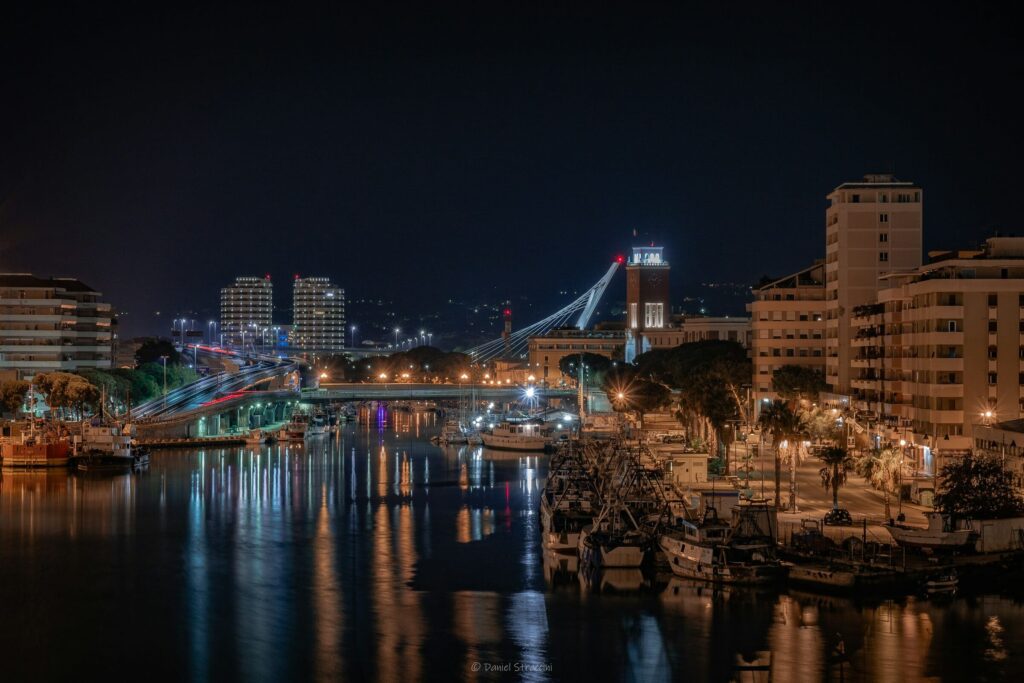
Pescara is a modern Adriatic city that serves as the cultural and commercial heart of Abruzzo. It’s the birthplace of Gabriele D’Annunzio, whose former home is now a museum. Other notable spaces include the Museo delle Genti d’Abruzzo and various contemporary art galleries and public libraries.
The city center, rebuilt after World War II, is laid out on a grid, making it easy to explore on foot. A long pedestrian promenade connects the train station to the seafront. Local buses are available, but most attractions are within walking distance. A car is not necessary in Pescara unless visiting nearby national parks or hill towns.
8. Taormina (Sicily) – 9.07 sites per square mile
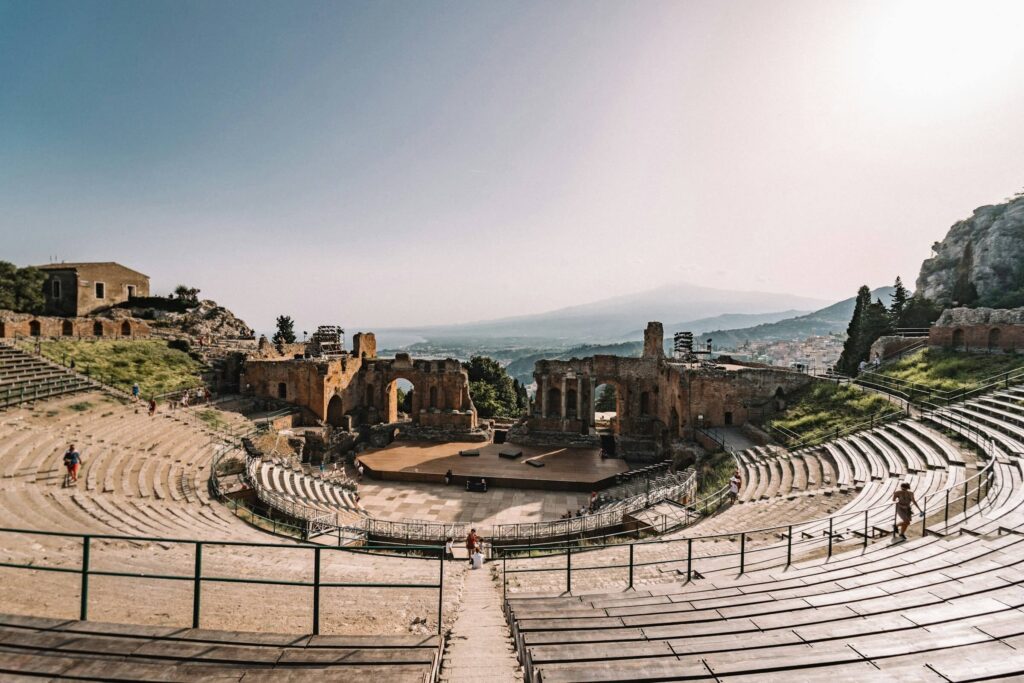
Taormina’s main landmark is its ancient Greek-Roman theater, still in use for performances today. The town also includes medieval churches, noble villas, and small museums, all within a few compact streets. Corso Umberto, the main road, runs through the historic center and is lined with shops, cafés, and civic buildings.
The town is pedestrian-friendly, though some areas involve steep climbs. Public elevators and a cable car help visitors move between the hilltop center and the beach below. Most travelers arrive by train to nearby Giardini-Naxos, then take a shuttle or taxi. Parking is limited, and a car isn’t needed to enjoy the town itself.
9. Padua (Veneto) – 8.94 sites per square mile
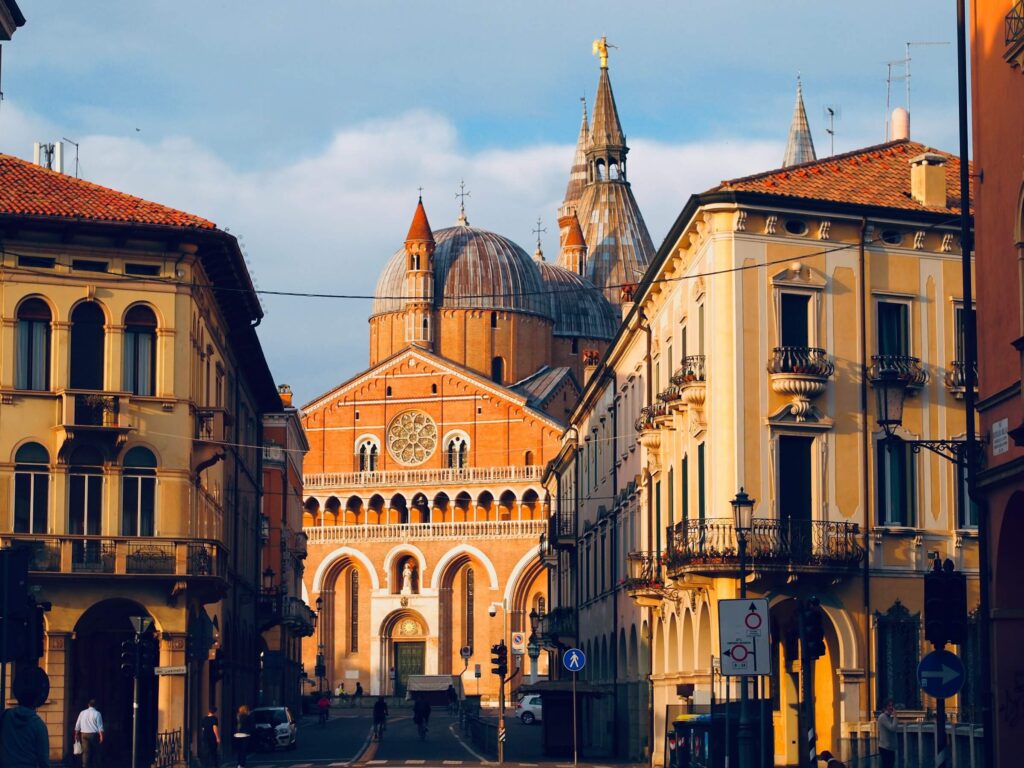
Padua is a university city with a deep cultural history. Its top site is the Scrovegni Chapel, where Giotto’s frescoes mark a key moment in European art. The Basilica of Saint Anthony attracts religious pilgrims, while the nearby botanical garden is the oldest academic garden in the world. The historic center is compact and walkable, with arcaded streets and lively public squares.
A tram line and local buses connect major areas, but most sites can be reached on foot. Padua is about 30 minutes from Venice by train. Visitors don’t need a car unless traveling to surrounding villages or the Euganean Hills.
10. Merano (Trentino-Alto Adige) – 8.55 sites per square mile
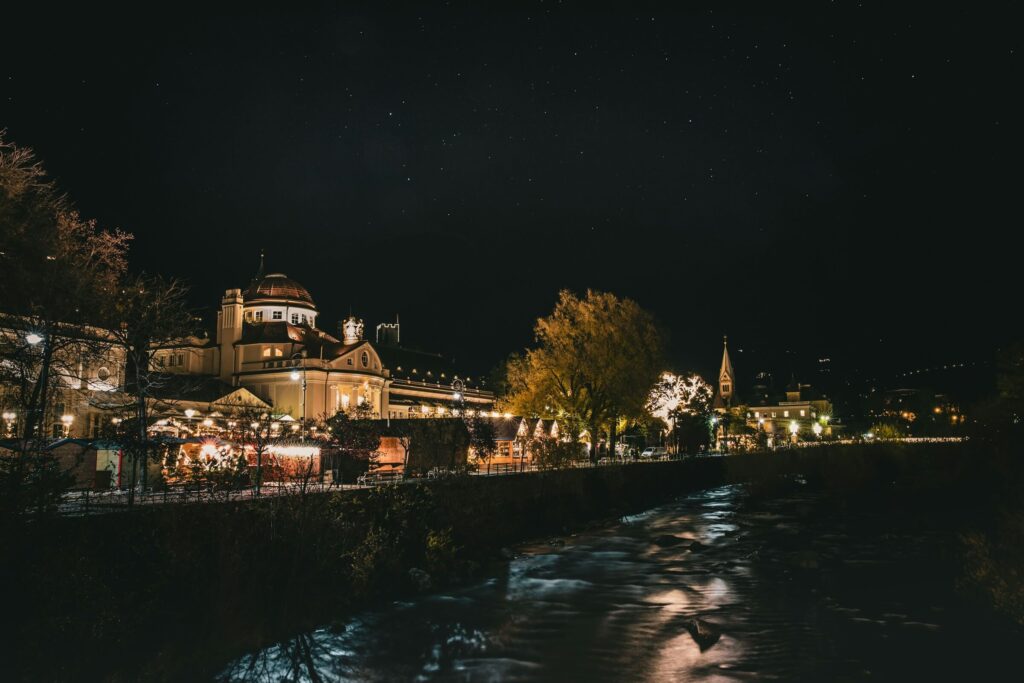
Merano is a small Alpine town known for its spa culture and Austro-Hungarian heritage. The town features 19th-century villas, medieval gates, and the Kurhaus, a historic concert hall and event space. Cultural sites also include Trauttmansdorff Castle, which houses a botanical garden and regional museum. The riverside promenades and mountain views make the center especially pleasant for walking.
Most points of interest are close together, and the town has a calm, pedestrian-friendly layout. Trains connect Merano to Bolzano and Verona. Local buses and cable cars serve nearby valleys and trails. A car is useful only for regional trips, but it’s not needed to visit Merano itself.
Tips for Planning Your Visit to Italy
Italy’s cultural heritage isn’t confined to its biggest cities. Our analysis shows that many small and mid-sized towns offer just as much to see, often in more walkable, less crowded settings.
Here are some travel tips based on cultural site density across the country:
- Don’t skip the mid-sized cities. Padua, Udine, and Aosta all have a high number of cultural sites in compact areas. They’re ideal for walking and often less tourist-heavy than nearby capitals.
- Compact coastal towns offer a lot. Places like Portofino and Lignano Sabbiadoro may be small, but they rank high for cultural density. Their historic centers and scenic settings make them ideal for relaxed, culture-rich visits.
- Visit regional capitals beyond the obvious. Cagliari (Sardinia), Bolzano (South Tyrol), and Caserta (Campania) each combine important heritage sites with good transport links—great for travelers who want to avoid crowds without sacrificing depth.
- Look beyond Milan and Rome. While these cities are packed with attractions, their size means more time in transit. A city like Como or Gorizia can offer a richer experience per square mile, especially for shorter trips.
- Walk when possible. Cities like Merano, Vasto, and Tropea are easily explored on foot. Many of their main sites are concentrated in historic centers where cars are either restricted or unnecessary.
- Pair big and small. Consider combining a major hub like Turin or Naples with a shorter stay in nearby towns such as Cuneo or Salerno. This mix gives a broader view of Italy’s local culture and history, without overloading your itinerary.
Methodology
We identified the most well-known Italian cities and paired them with lesser-known but highly visited towns from each region, based on data from ISTAT (Italian National Institute of Statistics). For each location, we collected surface area figures in square miles using ISTAT and official regional sources. To assess cultural site density, we extracted the number of cultural attractions listed on TripAdvisor, focusing on landmarks, museums, historic buildings, and religious sites. We then calculated the number of cultural sites per square mile to compare how densely each place concentrates its cultural heritage.