Piedmont Wine Region: Complete Guide
In the northwestern corner of Italy sits Piedmont, one of the world’s most distinguished wine regions. The majestic Alps to the north and rolling Apennines to the south create a diverse terroir with remarkable complexity. Turin functions as the capital, while the wine culture remains strongest in Alba and Asti.
Piedmont represents living history—wine production intertwines with Italy’s rich cultural heritage and the Risorgimento movement. The region’s varied climate nurtures exceptional grape varieties across the famous zones of Langhe and Monferrato.
The area boasts 19 prestigious DOCG appellations, including the noble Barolo and Barbaresco. The wines express Piedmont’s character—reflecting place, tradition, and careful craftsmanship. The region’s distinctive rich mineral soils contribute significantly to the full-bodied and complex nature of its renowned wines.
Explore our Italian Wine Guide.
Signature Wines of the Region
Piedmont’s signature wines stand among Italy’s most distinctive expressions, from the powerful Barolo to the delicate Barbaresco, both made from the noble Nebbiolo grape.
The regional white wine selection features the honeyed effervescence of Moscato d’Asti and the crisp minerality of Gavi produced from Cortese grapes. The region benefits from long, hot summers that create ideal conditions for developing complex flavors in these celebrated varieties. Piedmont’s wine diversity extends to Barbera with its bright acidity, Dolcetto with its approachable fruit-forward character, and lesser-known varieties such as the aromatic Ruché that deserve attention.
Notable Wines
Piedmont’s respected wine heritage comes from its varied wines, each reflecting the region’s different soils and traditional methods. The region produces “Barolo,” known as the “King of Wines,” featuring strong tannins and complex leather and cherry notes that improve with time. Barbaresco provides a more accessible version of the Nebbiolo grape, with refined rose petal scents and smooth tannins. The region boasts more DOCG designations than any other Italian wine region, showcasing its exceptional quality standards.
- Barolo, known as the “King of Wines,” is a bold and complex red wine from Piedmont, Italy, boasting rich flavors of cherry, rose, and earthy truffle, perfect for aging and special occasions.
- Barbaresco is a Nebbiolo-based elegant and refined wine with velvety tannins and notes of red berries, violets, and spice, making it a superb choice for fine dining.
- Dolcetto Dogliani is smooth and fruit-forward red. It offers vibrant blackberry and plum flavors with a touch of almond, ideal for everyday enjoyment.
- Moscato d’Asti is a lightly sparkling and aromatic white wine. It delights with its sweet, floral notes of peach, orange blossom, and honey, making it a refreshing dessert wine.
- Barbera d’Alba is a versatile and food-friendly red, loved for its juicy cherry flavors, bright acidity, and subtle spice, pairing beautifully with a variety of dishes.
- Cortese di Gavi, a fresh and mineral-driven white, boasting crisp citrus, green apple, and floral aromas, perfect for lovers of dry, elegant wines.
Hidden Wine Treasures of the Region
Beyond the celebrated Barolos and Barbarescos, Alto Piemonte offers lesser-known wines made from Nebbiolo, Vespolina, and Croatina grapes.
These valuable yet understudied wines from Gattinara, Coste della Sesia, and Colline Novaresi feature Alpine-influenced minerality, vibrant acidity, and notable aging potential. The region’s renaissance has yielded wines that express their unique terroir through leaner, more chiseled profiles than their southern counterparts.
Notable Wines
Hidden beneath the surface of Piedmont’s celebrated Barolo and Barbaresco vineyards lie extraordinary wine treasures. Notable options include Ruché wines, offering an intoxicating bouquet of rose petals and wild berries with a silky, perfumed palate that dances between floral and spice notes.
- Erbaluce di Caluso is a crisp and refreshing white wine with bright citrus, green apple, and floral notes, perfect for seafood and light dishes.
- Roero Arneis is an elegant and aromatic white, offering flavors of pear, white flowers, and almond, with a smooth and well-balanced taste.
- Barbera del Monferrato is a lively and fruit-forward red, featuring juicy berry flavors, fresh acidity, and a soft, approachable character ideal for Italian cuisine.
- Ghemme e Gattinara are prestigious Nebbiolo-based wines from northern Piedmont, known for their deep cherry, spice, and earthy notes with refined tannins.
- Ruchè di Castagnole Monferrato is a very small production area, a wine with distinguished aromas of rose and spices from an almost lost grape variety, rediscovered in the late ‘60s
Geography, Terroir, and Climate
The geographical area of Piedmont sits in Italy’s northwestern corner, where the Alps and Apennines mountains form a natural barrier around the region’s wine-producing center. This historic wine region shares borders with France and Switzerland, with most of its vineyards positioned on hillsides—only about 5% are located on flat land.
Piedmont’s natural conditions show considerable variation: sedimentary clay, calcareous marl, and limestone-rich soils characterize the Langhe, contrasting with Roero’s sandier soil composition. These former seabeds contribute distinct mineral qualities to each wine-growing area. The region’s wine production features several specialized grape varieties with Nebbiolo highly specialized, typically growing in a single homogeneous zone.
The continental climate brings long, hot summers and cold winters, while morning fog (nebbia) prolongs Nebbiolo’s ripening period, adding to its flavor complexity. The significant day-night temperature differences maintain acidity and aromatic elements in the grapes.
The Tanaro River flows through this area, affecting both climate and soil makeup. Each hillside’s height and orientation determines grape variety placement—with Nebbiolo occupying the most favorable, sunshine-rich slopes.
History
Piedmont’s wine history extends beyond two millennia, with vineyards first established during the Roman era when the region’s exceptional terroir attracted ancient cultivators. Nebbiolo‘s documented history traces to 1266 at Rivoli Castle, with severe penalties for damaging these valuable vines.
The 19th century presented major challenges and progress. When phylloxera destroyed vineyards, local growers replanted with American rootstocks. Concurrently, figures like Camillo Benso introduced French techniques that transformed production methods. Austrian tariff increases tested Piedmont’s export strength during this time. These tariffs ultimately sparked regional revolts in 1848-1849, highlighting wine’s economic importance to the area.
Recognition came with DOC status, and in 1980, Barolo and Barbaresco received prestigious DOCG classification. UNESCO’s 2014 declaration of Langhe, Roero, and Monferrato as World Heritage Sites confirmed Piedmont’s position among world-class wine regions.
Important wine-growing areas
Piedmont features several DOC and DOCG designations beyond Barolo and Barbaresco. Dolcetto DOCs offer violet and cherry notes with early-drinking character, while Barbera del Monferrato Superiore and Barbera d’Asti highlight the region’s most planted grape, known for ruby-red color, bright acidity, and aging potential.
Less prominent appellations like Cisterna d’Asti and Terre Alfieri demonstrate regional versatility through indigenous varieties grown on distinct calcareous-clay soils that contribute mineral complexity. The region boasts an impressive 41 DOCs and 18 DOCGs, showcasing Piedmont’s extraordinary viticultural diversity and commitment to quality wine production.
Saluzzese e Torinese area
Among Piedmont’s lesser-known viticultural treasures, the area between Saluzzo and Torino represents distinctive terroirs that contrast with the region’s more celebrated appellations.
In Colline Saluzzesi , the rare indigenous varieties of Quagliano and Pelaverga received DOC status in 1991. Pelaverga yields wines with raspberry and cherry notes, complemented by spicy undertones. The production zone includes Saluzzo, Pagno, and Piasco, where specific hillsides provide ideal growing conditions. The Colline Saluzzesi DOC was officially awarded in 1996 to protect traditional wine-making methods and prevent the loss of unique regional wine styles.
The Torinese area, while less internationally recognized, benefits from its proximity to Turin and features morainic soils with mountain influences. The Pinerolese focuses on preserving tradition with indigenous varieties, including the very rare Doux d’Henry and Ramiè. Moving north west towards Ivrea, the Canavese is renowned for its wines based on native red grapes and notably for its white Erbaluce di Caluso DOCG.
Monferrato Astigiano
The Monferrato Astigiano area is best known for Barbera del Monferrato Superiore and Barbera d’Asti DOCG, one of Piedmont’s most widely planted and beloved red wines. Barbera thrives in the rolling hills of Asti, producing wines with deep ruby color, bright acidity, and flavors of red berries, spice, and hints of vanilla when aged in oak. Thanks to its approachable nature and ability to pair with a wide range of foods, Barbera d’Asti continues to be a flagship wine of Piedmont.
In addition to Barbera, Monferrato Astigiano is also home to Moscato d’Asti DOCG, a lightly sparkling, aromatic white wine with notes of peach, orange blossom, and honey. This sweet yet refreshing wine has a low alcohol content and is a favorite for pairing with desserts and fruit-based dishes. The region’s combination of limestone-rich soils and favorable microclimates allows for the cultivation of other varieties, including Dolcetto d’Asti, and Grignolino, notably Grignolino del Monferrato Casalese, as well as Nebbiolo, Arneis and Croatina in the areas Cisterna d’Asti and Terre d’Alfieri which offer lighter, fruit-forward reds nebbiolo based wines out of the most famous areas dedicated to this grape.
Alto Monferrato
Situated in the southern part of Monferrato, Alto Monferrato features a mix of hills and valleys that create a diverse terroir ideal for both red and white wines. This area is a real melting pot of landscapes, cultures, traditions and dialects with Piedmont and Ligurian backgrounds. One of the most significant wines from this region is Dolcetto di Ovada DOCG, a structured yet smooth red wine with notes of dark berries, almonds, and a hint of spice. Unlike other Dolcetto wines from Piedmont, the Ovada version has greater depth and the ability to age for several years, whilst the Dolcetto d’Acqui represents a fresher and fruitier wine, more similar to the traditional expressions of Dolcetto based wines.
Alto Monferrato is also famous for Cortese di Gavi DOCG, one of Italy’s most celebrated white wines. Gavi wines are known for their crisp acidity, floral aromas, and mineral complexity, making them a perfect match for seafood and light pasta dishes. The region’s clay-limestone soils enhance the freshness and elegance of Cortese, ensuring that these wines remain highly sought after. This area’s ability to produce both bold reds and refined whites makes it a dynamic part of Piedmont’s wine scene: the Tortonese are a produces interesting Barbera, Dolcetto and Croatina in the Colli Tortonesi DOC, but its top wine is the Timorasso, probably the best white wine from South Piedmont, which shows fine elegance, rich complexity and a great structure.
Roero
Across the Tanaro River from Barbaresco lies Roero, an attractive patchwork of sandy, limestone-rich hillsides that creates wines noticeably different from its famous neighbors. Here, in the Roero DOCG the Nebbiolo shows elegant, softer tannins compared to Langhe versions, reflecting the region’s permeable marl-sandstone soils.
Arneis stands as the primary white variety in Roero, offering delicate floral aromatics and crisp, mineral-driven notes that pair well with local seafood dishes. Historically, this grape was used to soften Nebbiolo’s natural harshness in traditional winemaking. The alpine influences—marked by fog, hot summers, and cold winters—gives these wines remarkable tension. Some producers also make a sparkling Spumante version and a sweet Passito after leaving the grapes to mature on the plants for long before harvesting.
Roero remains a less-crowded wine area where about 233 small operations produce around 7 million bottles yearly, all while visitors can enjoy picturesque villages, ancient castles, and truffle-rich forests.
Langhe
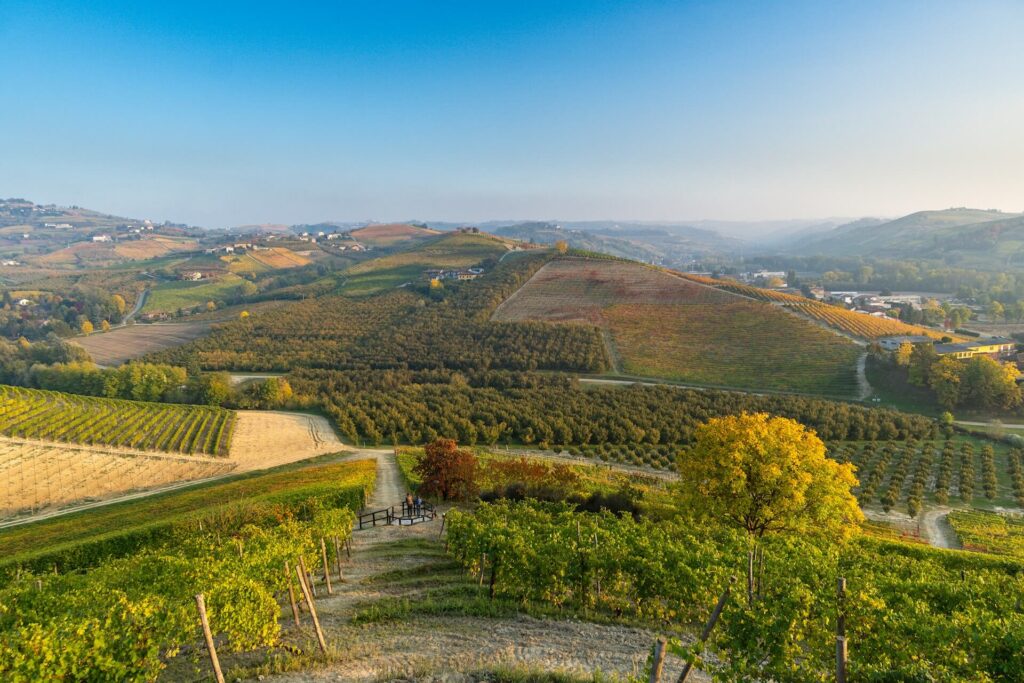
The Langhe, a UNESCO World Heritage site east of the Tanaro River, serves as Piedmont’s principal area for wine production. This hilly region lies south of Alba, where morning fog clears to show vineyards in continental sunshine.
Here, Nebbiolo reaches its finest form through Barolo and Barbaresco. The territory of Alba is the reign of Nebbiolo: this noble and elegant grape finds its elective terroir in Langhe and reflects diversity of soil and microclimate in any nuances. Barbaresco and Barolo should not be compared in terms of importance, but in terms of shades and identity of each portion of terroir, sometimes expressed in a single vineyard. Whether you’re visiting the Barbaresco area, North of Alba tasting Nebbiolo from Barbaresco, Neive Treiso and San Rocco or the Barolo area in the South, tasting Nebbiolo from Cherasco, Verduno, La Morra, Barolo, Castiglione, Falletto, Monforte, Serralunga, Diano, you you can’t help but admire the incredible differences in taste of this spectacular perfect marriage between land, grape and people making wines.
The other grape of the Langhe is the Barbera that, in the Barbera d’Alba, offers bright acidity and red fruit notes
Under the Langhe DOC, production rules provide more flexibility than strict DOCG regulations, allowing work with international grape varieties and creative blending.
The region spans 94 different municipalities across the surrounding provinces, creating a diverse winemaking landscape.
The area features medieval castles throughout its hills, with tastings often paired with regional foods like Tajarin pasta. The varied microclimates and sun exposures create a rich collection of wines that reflect this exceptional terroir.
Alto Piemonte
Located in the northern part of Piedmont, Alto Piemonte is gaining recognition for its elegant and mineral-driven Nebbiolo wines. The region’s cooler climate and volcanic soils create wines with vibrant acidity, refined tannins, and complex aromas. The most notable appellations here are Ghemme DOCG and Gattinara DOCG, both known for their structured yet elegant Nebbiolo expressions. These wines offer flavors of red fruit, dried herbs, and earthy minerality, making them highly sought after for their aging potential.
Alto Piemonte also produces wines from lesser-known local grapes such as Vespolina and Uva Rara (Bonarda), which add unique spice and floral notes to blends. The region’s high-altitude vineyards and careful winemaking practices result in wines that are both fresh and expressive. With its combination of historic appellations and emerging wineries, Alto Piemonte is establishing itself as an exciting destination for collectors and wine enthusiasts looking for structured, terroir-driven wines.
Main Grape Varieties
Piedmont boasts numerous indigenous grape varieties, with Nebbiolo standing as the noble variety responsible for world-class Barolo and Barbaresco.
Barbera shows great versatility through its bright acidity and accessible fruit character, while Dolcetto yields earlier-drinking wines with moderate tannins and cherry notes.
The region’s viticultural wealth also includes Freisa, known for its pronounced structure and aromatic complexity, and Pelaverga, a rare variety that produces wines with distinctive white pepper notes and elegant red fruit profiles. White varieties such as Arneis and Cortese produce exceptional wines with crisp finishes and refreshing minerality that showcase Piedmont’s diverse terroir.
Nebbiolo
Nebbiolo stands as one of Italy’s most noble and distinctive varieties, serving as Piedmont’s flagship grape. This challenging variety thrives in the region’s calcareous marl soils and fog-kissed hillsides, taking its name from “nebbia” (fog) that blankets the vineyards during harvest time.
Nebbiolo wines present a paradoxical nature—pale brick-red color contrasting with formidable structure, pronounced tannins, and remarkable acidity. The ancient grape naturally produces wines with high terroir sensitivity, reflecting even subtle differences in growing conditions. The aromatic profile offers roses, tar, cherries, and herbs, which develop into truffles and dried fruit with age.
While Barolo and Barbaresco represent Nebbiolo‘s greatest expressions, other notable versions exist in Gattinara, Carema, and Roero. For food pairings, rich dishes balance its assertive structure—truffled risotto or lamb ragù complement its elegance. Nebbiolo requires patience but offers extraordinary complexity as a reward.
Barbera
Barbera stands as Piedmont’s everyday heart and soul, while Nebbiolo attracts collector attention. This adaptable grape has a rich history dating to the 13th century, once added to Barolo and Barbaresco for color.
The grape grows mainly in Asti and Alba, creating wines with high acidity and moderate tannins. Its dark, juicy berries produce medium-bodied wines with blackberry, black cherry, and raspberry notes, often showing spice and vanilla characteristics when aged in oak.
Barbera shows remarkable vigor and disease resistance, making it suitable for various soils, particularly clay and limestone. Traditional versions feature minimal oak treatment, though contemporary approaches now include reduced yields and barrel aging for more complex expressions, especially in superior Barbera d’Asti and Barbera d’Alba bottles. Among the prestigious Piedmont appellations, Colli Tortonesi produces its own distinctive DOC Barbera with regional character.
Dolcetto
In your glass, expect rich blackberry and licorice notes wrapped in a round, fruity profile. Shorter fermentations and neutral oak help soften tannins while preserving fresh fruit character. While Dolcetto d’Alba offers excellent value, Dolcetto di Dogliani presents more complex, age-worthy expressions.
This early-ripening grape thrives at higher altitudes where cooler conditions maintain essential acidity. The name “Dolcetto” translates to little sweet one despite producing predominantly dry wines. When pairing regional cuisine like pasta or pizza, you’ll appreciate why locals reach for this versatile, everyday wine rather than saving Barolo and Barbaresco for special occasions.
Freisa
Freisa, the probable relative of Piedmont’s noble Nebbiolo, reveals its genetic heritage through similarly high tannins and vibrant acidity. This once-prominent variety now occupies just 2% of Piedmont’s vineyards, primarily in Monferrato and Langhe.
You’ll encounter Freisa in various expressions—traditional sweet frizzante offerings alongside modern dry styles. The wine’s light color belies its structural intensity, displaying distinctive purple hues and appealing aromas of strawberries, raspberries, and violets.
When exploring Piedmont, seek out DOC-classified versions like Freisa d’Asti and Freisa di Chieri, established in the early 1970s. Historical records show that Freisa cultivation dates back to the early 1500s in the region.
Pelaverga
Pelaverga stands as one of Piedmont’s most captivating viticultural assets. This uncommon red grape variety, preserved from disappearance after the phylloxera crisis, produces wines with notable character despite limited plantings. The Perlaverga from Chieri and Saluzzo area, harvested at the beginning of October produces fruity wines with fresh raspberry notes to be tasted young.
The Pelaverga Piccolo grown in the hills of Verduno appears light ruby with violet hints and offers characteristic white pepper, strawberry, and black currant aromas. The taste features tangy red fruits with silky tannins—similar to fruitier styles of Pinot Noir. Originally introduced to Verduno in the 17th century by Sebastiano Valfrè, this historical variety has deep roots in the region.
While warming temperatures have moved harvest timing earlier, the variety maturation is quite late and maintains its medium-bodied, semi-dry character reflecting its continental growing conditions. These wines are best consumed within three years, providing immediate enjoyment without long-term storage.
Grignolino
Grignolino is one of Piedmont’s most distinctive indigenous grape varieties with roots dating back to medieval times. It grows mainly between Casale Monferrato and Asti, preferring calcareous, sandy soils.
The wines display a pale ruby color with orange hints when aged. The aroma features delicate floral notes, red berries, and characteristic white pepper scents. When tasted, Grignolino shows high acidity, light body, and a pleasant bitterish finish from its numerous seeds.
Following decades of decline, Grignolino is experiencing a revival, with DOCs such as Grignolino del Monferrato Casalese and Grignolino d’Asti highlighting its unique character through careful vineyard management and gentle production methods.
Moscato
Moscato stands as Piedmont’s most aromatic treasure, belonging to the ancient Moscati family of grapes with their distinctive musk-like perfume. This versatile variety gives birth to many different wines in the region, from dry to sweet expressions, with Moscato d’Asti DOCG representing the region’s crown jewel.
Unlike traditional sparkling methods, Moscato d’Asti Spumante is chilled and filtered to preserve its delicate frizzante quality, resulting in a low alcohol content. A glass will reveal an enticing bouquet of white peach, apricot blossoms, and fresh grape essence.
The hills south of Asti town, including Canelli, produce exceptional expressions. While often enjoyed during celebrations, don’t underestimate Moscato’s complexity—this centuries-old Piemontese tradition delivers sophisticated pleasure beyond its sweet reputation.
Arneis
Once known as the “little rascal” of Piedmont’s viticultural landscape, Arneis has risen from the shadows of its noble Nebbiolo neighbor to claim its rightful place among Italy’s premier white varieties. Historically planted to distract pests from Nebbiolo and soften Barolo’s powerful tannins, this indigenous grape experienced a notable revival in the 1980s. T
This medium-bodied wine presents floral aromatics and distinctive notes of pear, apricot, and hazelnut. The finest examples come from Roero DOCG, where they achieve a balance between structure and acidity with a characteristic creamy texture.
Erbaluce
Erbaluce represents one of Piedmont’s most distinctive indigenous white varieties, with documented history dating back to 1606 but likely known to Romans as “Alba Lux.” This grape grows primarily in the Canavese and Caluso areas, where it produces straw-colored wines with remarkable versatility—appearing as crisp dry wines, elegant sparklers, and the Passito di Caluso DOCG that requires a minimum four-year aging period.
Erbaluce is characterized by its spherical berries with amber skin and high natural acidity, making it suitable for long-term aging. The grape’s high fixed acidity contributes significantly to its excellent aging potential while maintaining freshness. Its flavor profile offers delicate wild herbs, apricot, and chamomile notes. This grape remains relatively rare outside Italy. When found, it pairs well with antipasti, river fish, or fresh goat cheeses, reflecting the true essence of Canavese terroir.
Cortese
Cortese functions as Piedmont’s most notable white grape in the southeastern areas, while Erbaluce represents the north’s white wine tradition. The finest Cortese wines come from Gavi, where limestone soils give these elegant wines exceptional minerality.
This grape grows well in temperate subalpine foothills, particularly on hillsides with dry conditions that help protect it from its vulnerability to botrytis. A well-made Cortese offers bright acidity along with green apple and citrus flavors, often accompanied by subtle floral notes. The grape has expanded its presence to other Italian regions, including areas like Lombardy and Veneto.
Cortese is typically fermented in stainless steel to maintain its freshness, though some production methods include lees aging for added texture. This adaptable grape serves effectively as a crisp aperitif or seafood companion, providing both reliability for growers and sophisticated enjoyment for wine drinkers.
Vespolina
Vespolina represents one of Piedmont‘s most fascinating yet underappreciated red varieties, growing mainly in the northeastern provinces of Novara and Vercelli. Often referred to as Nebbiolo Rosato or Fresia Rossa, this native grape has traditionally contributed vibrant color and elegance to wine blends.
This wine is recognizable by its intense ruby color and characteristic floral-spicy profile. Though light-bodied with minimal tannins, Vespolina provides remarkable aromatic persistence. The grape’s reduced vine vigor contributes significantly to the wine’s notable aromatic intensity.
While frequently blended, pure Vespolina wines showcase a delicate freshness and spiciness ideal for immediate consumption.
Uva rara
After Vespolina, another northeastern Piedmontese grape variety worth attention. Uva Rara, which means “rare grape,” is found in Piedmont and Lombardy, particularly across Novara, Vercelli, and Pavia provinces. This variety appears in notable DOCs like Colline Novaresi and DOCGs including Gattinara and Ghemme.
Uva Rara wines show a bright dark-ruby color with complex rose and cherry aromas, gentle tannins, lively acidity, and red berry notes, creating a refreshing profile. Though seldom bottled as a single varietal, this grape serves an important purpose by softening Nebbiolo’s strong tannins in traditional blends. Its sparse bunch formation makes it naturally resistant to botrytis and ideal for air-drying techniques.
Malvasia di Casorzo
Piedmont’s aromatic treasure, Malvasia di Casorzo, grows in the eastern hills of Monferrato across eight municipalities in Alessandria province. This DOC requires 90-100% black Malvasia grapes, occasionally blended with Freisa, Grignolino, or Barbera for complexity.
The wine comes in three distinct expressions: still wines with ruby hues, festive spumante with its intense pink effervescence, and the luxurious passito style made from dried grapes. Each offers a charming aromatic profile dominated by rose and white peach notes. These wines are traditionally cultivated in hilltop vineyard areas with loose, well-exposed soils that enhance their distinctive character.
With a minimum of 10.5% alcohol and mandatory residual sweetness (at least 4.5% for still, 4% for sparkling), these wines deliver a perfectly balanced sweet-acidic character. While less internationally renowned than Piedmont’s Nebbiolo-based wines, Malvasia di Casorzo rewards connoisseurs seeking authentic local expressions for dessert pairings.
Malvasia di Schierano
The hills near Turin hold a treasure in Malvasia di Schierano, which produces some of Piedmont’s most distinctive sweet wines. This aromatic grape grows well in the well-drained clay-silt and chalk soils of the Malvasia di Castelnuovo Don Bosco DOC, where regulations require at least 85% of this variety in the blend (with Freisa allowed up to 15%). The grape’s historical importance dates back to 1468 when the first Malvasia vineyards were documented in Mondonio.
These wines appear in cherry-red colors and offer fine, intense aromas that complement the flavor profile. They’re often made as frizzante or spumante with modest alcohol content, presenting a pleasant sweetness similar to Moscato d’Asti but with their own characteristic notes. The medium-vigor vine yields medium-small, loose clusters with violet-blue berries that produce wines best consumed young.
Brachetto
From sweet Malvasia, we now turn to the equally charming Brachetto, a historic black grape variety that produces one of Piedmont’s most distinctive aromatic red wines.
Primarily grown around Acqui Terme, Brachetto creates enticing, low-alcohol wines with DOCG status since 1996. These ruby-colored treasures come in frizzante or spumante styles, both featuring Brachetto’s signature notes of strawberry, raspberry, and rose petals. The grape forms clusters that are typically medium and elongated, sometimes taking pyramidal or cylindrical shapes. The production involves brief maceration, extracting just enough color and aromatics before bottle aging.
Favorita
Favorita is a distinctive white grape variety that thrives in the sandy soils of Roero in Piedmont. These vines grow on sunny hilltops at approximately 230 meters elevation, mainly along the left bank of the Tanaro river.
In appearance, Favorita shows a straw to golden color with attractive aromas of peach, apricot, and subtle florals. It offers citrus freshness on the palate with a soft, fruity character, moderate acidity, and typically contains 12.5-13% alcohol. Known locally as Furmentin in Roero, this grape is the same variety as Vermentino or Pigato in neighboring Liguria.
Single-varietal expressions are now more common, showing the grape’s true potential. This refreshing wine pairs well with seafood, risotto, or traditional Piedmontese dishes for an authentic regional taste experience. Harvested in October, the grapes reach perfect ripeness in this climate with significant day-night temperature variations.
Timorasso
Among the lesser-known treasures of Piedmont’s wine regions, Timorasso represents a noteworthy white grape variety that has risen from near-extinction. This indigenous variety grows primarily in Colli Tortonesi’s calcareous hillsides, where coastal winds help prevent rot on its thick, disease-prone skin. Dating back to the 14th century, Timorasso is one of Piedmont’s oldest grape varieties.
Timorasso offers a complex aromatic profile featuring dried fruits, marzipan, saffron, and flinty minerality. Its high acidity and full-bodied structure allow for excellent aging potential, with older bottles developing petroleum notes similar to mature Riesling. Most wine production maintains the grape’s character through stainless steel fermentation, though some methods include skin contact and oak aging.
The name “Derthona” appears on many bottles of Timorasso from the Colli Tortonesi region, to link it with the ancient name of Tortona. These wines pair well with truffles, oily fish, or aged cheeses, complementing their distinctive character.
Ruchè
Rescued from near-extinction in the 1980s, Ruchè stands as one of Piedmont’s most intriguing indigenous red varieties, earning its DOCG status in 2010. This aromatic treasure grows primarily in Castagnole Monferrato’s limestone-clay hills, where daily temperature variations contribute to its distinctive character.
In your glass, Ruchè reveals an unmistakable personality—intense floral aromatics of roses and violets combined with red fruits and exotic spice notes. Medium-bodied with vibrant acidity, it delivers a long, persistent finish that lingers on your palate. The wine’s rich characteristics can be attributed to Don Giacomo Cauda’s efforts in the 1970s, which prevented this unique variety from disappearing completely.
Ruchè is typically fermented in stainless steel to preserve its aromatic complexity, with limited oak aging to maintain freshness. This once-obscure grape now appeals to connoisseurs seeking Piedmont’s lesser-known gems, offering a sensory experience quite unlike its more famous regional counterparts.
Gamba di pernice
The Gamba di Pernice, with a name meaning “partridge leg” referencing its distinctive red stalks, stands as one of Piedmont’s most fascinating wine varieties. This grape grows primarily in Calosso where it has a specific DOC appellation, Calosso DOC, yielding approximately 30,000 bottles each year.
The wines show a medium ruby color with floral and fruity scents that develop into spicy, peppery characteristics as they age. Production typically involves 10-day fermentations with week-long skin contact, mostly in stainless steel tanks, though some aging occurs in wooden barrels. These wines are known for their medium-bodied, refined balance and demonstrate excellent aging potential.
Overview on appellations system
Piedmont’s wine classification system has served as the foundation for quality assessment throughout this well-regarded Italian region for many years. Two primary quality designations exist: DOC (Denominazione di Origine Controllata) and the stricter DOCG (Denominazione di Origine Controllata e Garantita).
The region features 42 DOCs and 19 DOCGs, each with specific standards for vineyard practices, allowed grape varieties, yields, and aging requirements. A Barolo DOCG represents the highest expression of Nebbiolo from southwest of Alba, while Barbaresco DOCG offers a somewhat more subtle version from northeastern slopes.
DOCGs such as Barbera d’Asti produce high-acid reds with notable aging potential, while Gavi shows the region’s dedication to quality whites from Cortese. Ghemme, Gattinara, Dolcetto di Dogliani, Roero, Erbaluce, Ruchè and many other DOCG Piedmont wines are here to testify the unquestioned predominance of Piedmonte in the Italian tradition of wine making production in distinguished territories, each reflecting the distinct terroir that characterizes this exceptional winemaking area.
3 Wine Destinations for a Perfect One-Day Trip
The Barolo Hills will captivate you with their rolling landscapes, where the intense Nebbiolo grape grows among cascading vineyards and historic castles.
In Alba, sample the exquisite pairing of white truffles with rich Barbera wines during autumn’s golden hours.
The Barbaresco area offers a more subtle version of Nebbiolo – equally complex with distinctive rose, tar, and cherry aromas that flourish among medieval towers and sun-warmed hillsides.
Barolo Hills Adventure
The beautiful Barolo hillsides rest among green vineyards, creating a perfect backdrop for a wonderful day in Italy’s top wine area. This UNESCO-protected land grows the Nebbiolo grape, which produces bold wines with hints of tar, roses, and cherries.
Start your day with a vertical wine tasting, then walk to La Morra where you can see the entire region’s different slopes. Enjoy some tajarin pasta with fresh truffles alongside local wines. In the afternoon, visit Serralunga’s old castle before ending with a guided tasting where traditionally made Barolo shows the deep complexity that comes from years of aging.
Alba White Truffle Tour
Alba’s white truffle territory offers an exceptional complement to Piedmont’s famous wines, making this area one of Italy’s most remarkable food destinations. From October through early December, you can experience this flavorful combination at the White Truffle Festival in Cortile della Maddalena.
Start your morning at the festival surrounded by wonderful aromas, followed by lunch that pairs local foods where Nebbiolo’s earthiness matches the fungi’s rich flavors.
The afternoon allows time to visit Barolo’s rolling vineyards, where soil characteristics express themselves differently across each commune.
For best results, rent a car and book tastings ahead of time—especially during truffle season when many food enthusiasts come to the region. A local guide can provide truffle hunting experiences that show the traditional methods behind finding these culinary treasures.
Barbaresco Tasting Experience
Barbaresco wine area showcases Nebbiolo with remarkable subtlety that sets it apart from its Barolo neighbor. This small region includes only four communes—Barbaresco, Neive, Treiso, and part of Alba—making it possible to experience its depth within a single day.
Stay in Alba and explore the area’s small producers for tastings that highlight Barbaresco’s soil-specific characteristics. The local geography, with lower elevations and steeper hillsides, creates wines with excellent structure and more approachable tannins.
Between wine stops, climb the Torre di Barbaresco for sweeping valley views, then enjoy traditional Piedmontese dishes matched with your new favorite wines. These ancient villages offer exceptional wines and a true connection to wine-making practices passed down through generations.
3 Traditional Dishes You Must Try
No trip to Piedmont can be complete without tasting the region’s exceptional culinary traditions that perfectly match its famous wines. Among the most important local foods, you’ll find Tajarin with white truffle—thin, hand-cut egg pasta topped with fragrant Alba truffle shavings that works wonderfully with Barbaresco.
For something different, try the classic Vitello Tonnato, thin slices of veal with creamy tuna-caper sauce that pairs beautifully with a crisp Arneis, or taste the carefully prepared Agnolotti del Plin, whose flavorful meat filling shows the Langhe heritage and calls for a bold, tannic Barolo.
Tajarin With White Truffle
Tajarin with white truffle represents one of Piedmont’s finest culinary creations, showing the heart of regional cooking in each fine strand. This thin, egg-rich pasta from the 1500s becomes a luxury when simply dressed with emulsified butter sauce and topped with freshly shaved white truffles.
The pasta’s silky texture offers the perfect background for the earthy, aromatic truffle—an ingredient that needs minimal preparation to display its complex character. The dish pairs wonderfully with a glass of Dolcetto d’Alba, whose bright acidity and red fruit notes balance the truffle’s intensity.
During autumn visits to Alba or La Morra, this seasonal specialty becomes an important food experience that connects you directly to Piedmont’s noted terroir.
Vitello Tonnato
Among Piedmont’s culinary treasures, Vitello Tonnato stands as a paradoxical masterpiece that pairs cold, thin-sliced veal with a creamy tuna-based sauce. This elegant dish from Piedmont’s aristocratic kitchens combines tender veal—traditionally braised with aromatics—with a silky tonnato sauce crafted from olive oil-packed tuna, anchovies, and capers.
The sauce’s briny notes complement the veal’s delicate texture, creating an unexpected symphony on your palate. The dish’s chilled presentation makes it an ideal match for Piedmont’s crisp white wines, particularly Gavi or Arneis, whose mineral backbone and citrus notes cut through the rich sauce. While modern variations might substitute pork or turkey for veal, purists insist on the traditional preparation, served with capers scattered atop like emeralds on satin.
Agnolotti Del Plin
Among Piedmont’s culinary treasures, Agnolotti del Plin represents exceptional regional pasta craftsmanship—small, pinched pouches that demonstrate the resourcefulness of Piedmontese kitchens.
These refined parcels contain a rich filling of roasted meats (typically veal, pork, or rabbit), combined with vegetables, Parmigiano Reggiano, and aromatic nutmeg. The pasta’s delicate profile appears best when served simply—either with beef broth or the classic sage-butter sauce that lightly coats each piece without dominating.
For an authentic taste experience, consider Piedmont’s notable reds. A structured Barolo, with its tar and rose characteristics, balances the richness, while Barbaresco provides similar complexity with gentler tannins. When white truffles grace these dishes during autumn, these combinations create gastronomic excellence rarely found outside this notable region.