Over 20% of Flights Delayed in Key States
Flight delays and cancellations are a constant concern for travelers, especially during busy travel months. Our recent analysis of air travel data during December 2023 offers an in-depth look at how airlines, airports, and states are performing across the U.S. during the holiday season. With over 20% of flights experiencing delays in certain areas, this study highlights where travelers are most likely to encounter disruptions.
Why We Conducted This Study
Given the rise in flight disruptions during the holiday season, we aimed to identify trends and patterns in airline performance. Reports of increased delays and cancellations from major airports during the winter months prompted us to take a closer look. By utilizing extensive datasets from last year, this analysis seeks to empower travelers to make well-informed choices.
State-Level Insights
Flight delays and cancellations provide valuable insights into the operational challenges faced by airlines.
Alaska stands out as a leader in delays, with more than 20% of its flights impacted and an average delay time of 56 minutes. This indicates potential inefficiencies within the state’s airline operations.
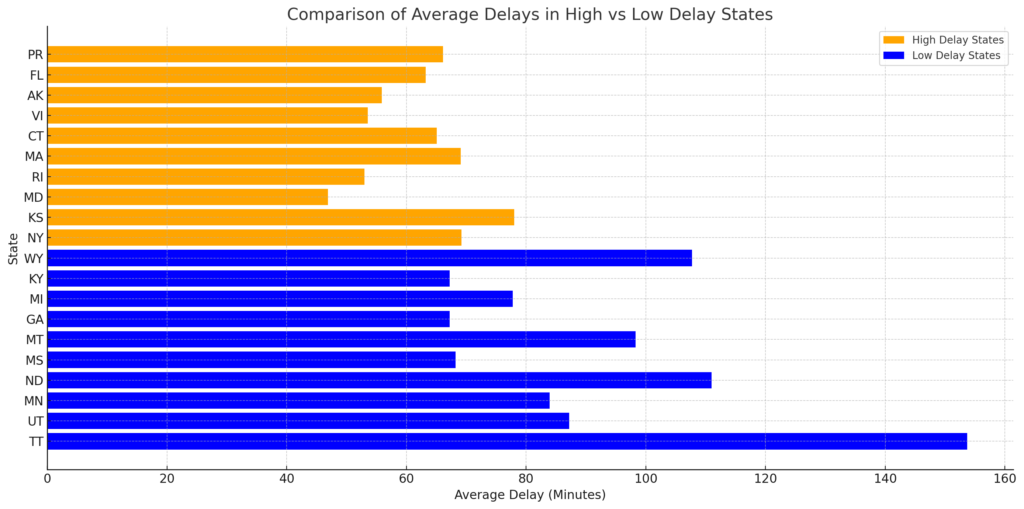
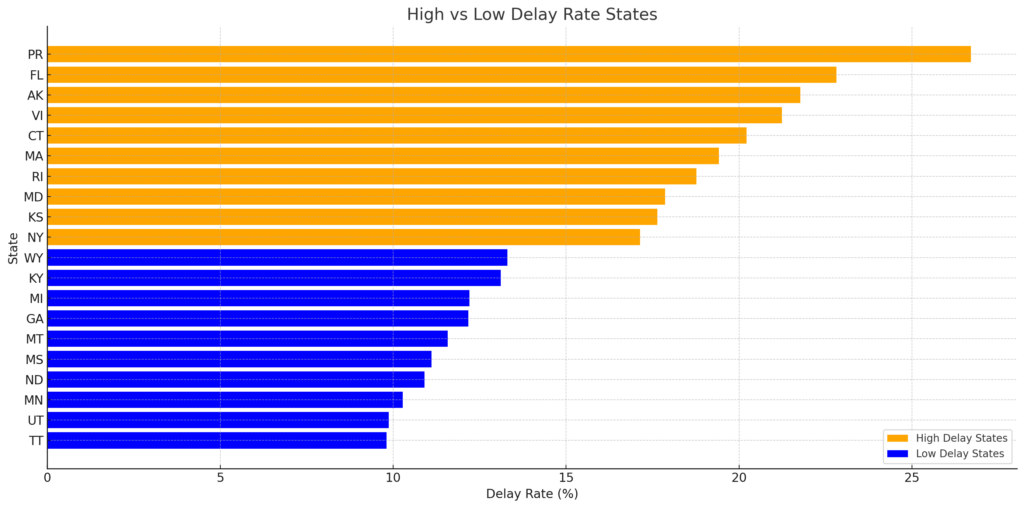
On the other hand, Florida experiences a similarly high rate of delays but a low cancellation rate. This suggests that the state places a strong emphasis on ensuring flights continue to operate, even when they are delayed.
Key findings
- Delay Leaders: Alaska had the highest delay rate, with 21.77% of flights delayed, followed by Florida at 22.81%.
- Average Delays: Alaska also topped the chart with an average delay time of 56 minutes, highlighting the need for better operational efficiencies.
- Cancellations: Florida reported a relatively low cancellation rate of 0.3%, indicating that delays were more common than outright disruptions.
Airport Performance
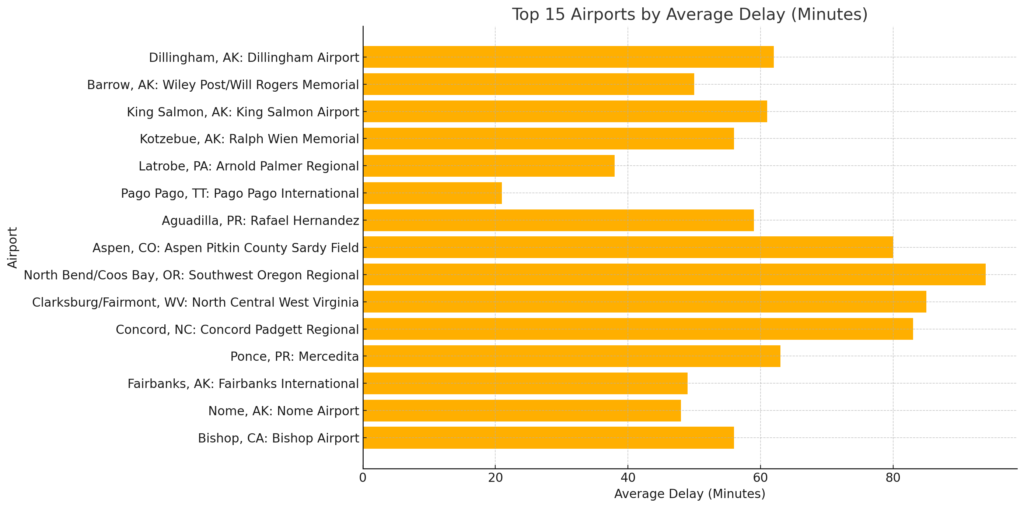
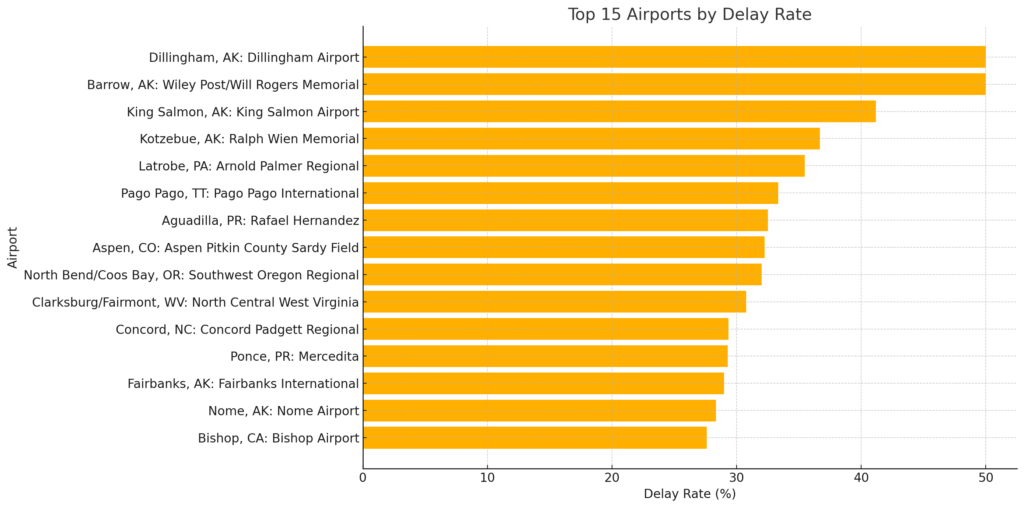
Regional airports faced unique operational challenges, with delays often influenced by systemic inefficiencies and external factors. In contrast, larger hubs demonstrated resilience, benefiting from superior infrastructure and strategic planning.
Key findings
- Weather-related disruptions were a significant factor for delays at several airports during the winter season.
- Major hubs maintained lower cancellation rates, reflecting their robust infrastructure and contingency planning.
- Delays at smaller airports often stemmed from late aircraft operations, suggesting systemic issues in scheduling and aircraft turnaround.
Airline Performance Insights
Smaller airlines face distinct challenges, highlighting the need for efficient operations and strong scheduling systems. Effective resource management has been essential for ensuring consistent service, especially in more complex network environments.
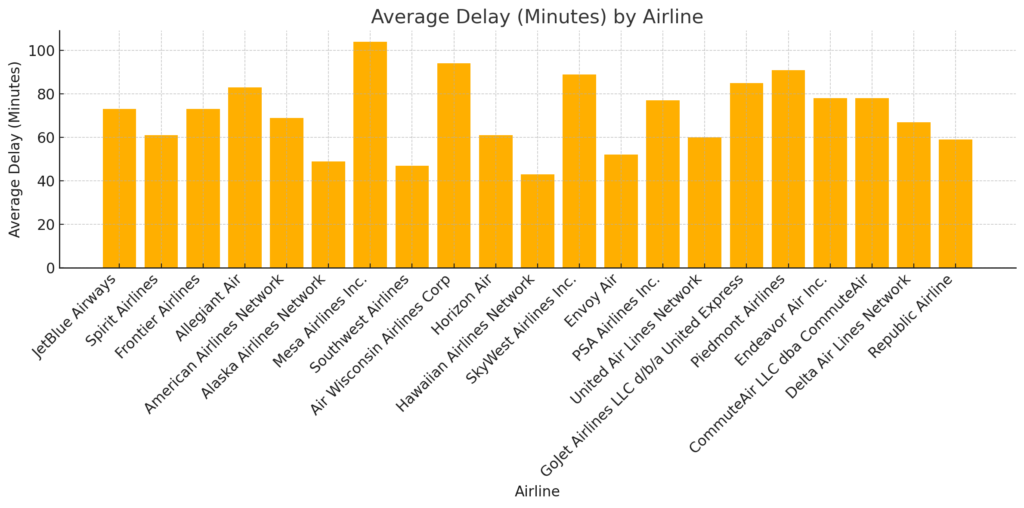
Key findings
- Operational inefficiencies, such as late aircraft turnaround, emerged as the leading cause of flight disruptions.
- Weather was a less dominant factor, even in winter, compared to logistical challenges within airline networks.
- Larger carriers demonstrated stronger reliability, with significantly lower cancellation rates due to better infrastructure and resource planning.
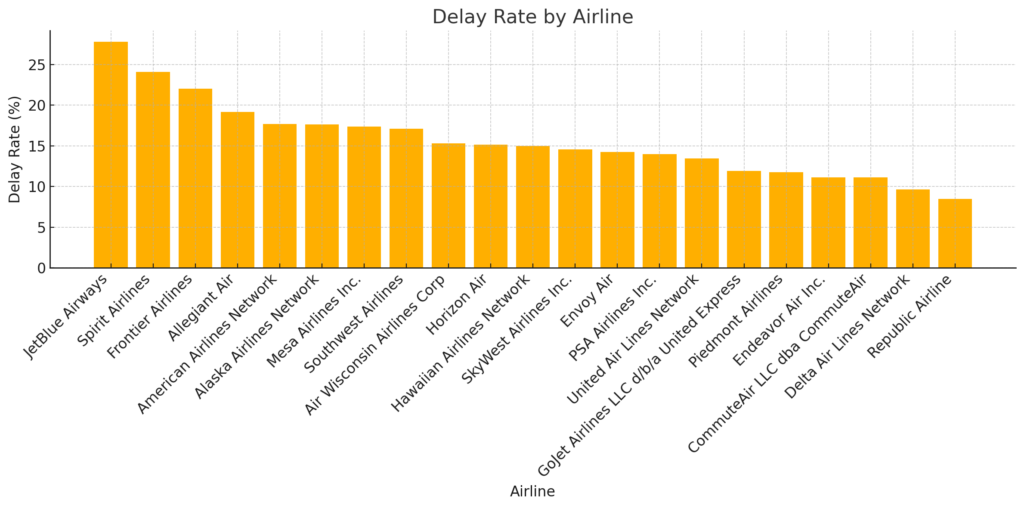
Implications for airlines and passengers
During the holiday season, airlines face significant challenges due to increased passenger volumes and operational bottlenecks that lead to delays. Airlines operating in Alaska, Florida, and Nevada should consider implementing innovative turnaround strategies, such as dynamic staffing and AI-driven maintenance scheduling, to enhance their efficiency.
Airports that experience consistently high delays might benefit from exploring advanced queue management systems or utilizing predictive analytics to optimize traffic flow and better allocate resources.
For travelers, book flights during an airline’s historically less congested operational windows instead of just opting for off-peak hours. Additionally, choosing routes that connect through more reliable hub airports, rather than focusing solely on proximity, can reduce the risk of disruptions.
Methodology
The data for this analysis was sourced from official U.S. Department of Transportation reports covering all major airlines and airports in December 2023.
- Sample Size: Over 600,000 flights
- Metrics Examined: Delay rate, average delay (minutes), cancellation rate, and notable delay causes.
- Definitions: A flight is considered delayed if it arrives 15 or more minutes later than scheduled.
Data was cleaned and aggregated to focus on the most impactful findings, providing actionable insights for industry leaders and travelers alike.
Download source dataset here.