Marche Wine Region: Complete Guide
A geographic gem, Marche sits between the Adriatic Sea and the rolling Apennine Mountains in central Italy. The region benefits from a maritime-continental microclimate that supports excellent grape growing, with limestone-clay soils giving the wines distinct mineral qualities. While neighboring Tuscany, Emilia-Romagna, Umbria, and Abruzzo, Marche maintains its own character through predominantly small, family-run wineries.
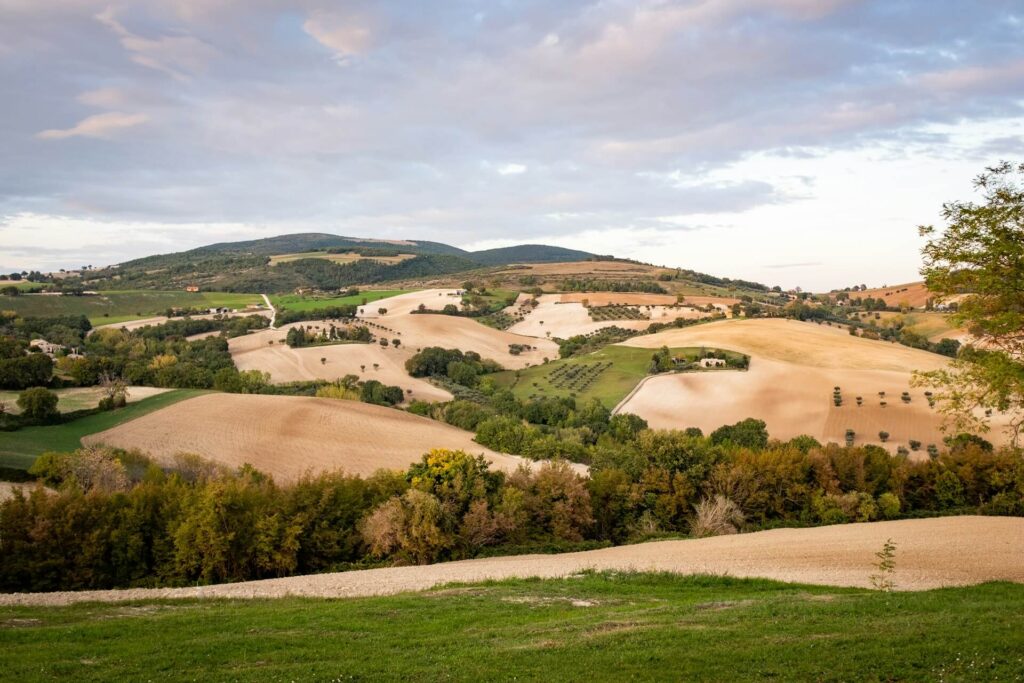
Though wine production here dates back to Roman times, Marche remains somewhat unknown—an authentic retreat for wine enthusiasts. The iconic grape variety Verdicchio reigns supreme among its white wines, celebrated for exceptional crispness and minerality that perfectly captures the region’s terroir. The topography flows from coastal plains to gentle hills and finally to mountain slopes, with each level adding unique traits to the region’s varied wine expressions.
Explore our Italian Wine Guide.
Signature Wines of the Region
Marche offers a diverse selection of distinctive wines, from crisp, mineral-driven Verdicchio to the rich, dark-fruited Rosso Conero. The regional white wine portfolio includes floral Bianchello del Metauro and aromatic Pecorino, while reds feature the intense perfume of Lacrima di Morro d’Alba and the balanced Rosso Piceno blends. The region has evolved significantly from its history of mass-produced bulk wines to focus on premium quality offerings that highlight local terroir. The significant diurnal temperature variations throughout Marche play a crucial role in developing the complex flavor profiles and balanced acidity found in these exceptional wines.
Notable Wines
Marche’s signature wines hold a distinctive place in Italy’s wine geography, representing the region’s unique soil conditions and traditional methods. When tasting through this fascinating region, you’ll find notable bottles that highlight Marche’s grape-growing excellence.
Here are a few of Marche’s standout wines:
- Verdicchio dei Castelli di Jesi Riserva – Bright acidity with clear minerality, showing green apple, citrus zest, and an almond-like finish that matures nicely with age.
- Rosso Conero Riserva – Montepulciano-based wine with firm tannins, rich dark fruit, and earthy notes.
- Lacrima di Morro d’Alba – Better to be tasted young, highly aromatic with violet, rose petal, and black pepper notes and medium body.
Hidden Wine Treasures of the Region
Marche’s wine identity extends beyond well-known blends to include several remarkable local grape varieties.
- Verdicchio di Matelica DOCG provides golden yellow wines, rich and elegant with soft minerality and warm alcohol.
- Vernaccia Nera di Serrapetrona represents a technical achievement in regional winemaking, requiring three separate fermentations—one using partially dried grapes—to create its complex DOCG sparkling wine.
- Offida Pecorino DOCG – Layered white wine with crisp acidity, stone fruit flavors, and noticeable saline minerality from nearby coastal areas.
Geography, Terroir, and Climate
The Marche wine region occupies a distinct position between the Adriatic Sea and the Apennine Mountains in central Italy. This geographical arrangement produces a Mediterranean climate influenced by continental factors, with the mountains providing protection from severe weather while the sea helps moderate temperatures near the coast.
The 16,000 hectares of vineyards across Marche feature diverse soil compositions: calcareous marl in Castelli di Jesi gives Verdicchio wines their mineral qualities, limestone-rich soils in Conero contribute structure to Montepulciano, and clay-limestone mixtures in Colli Pesaresi support Sangiovese growth. This geological diversity is spread across the region’s five distinct provinces, allowing for remarkable variation in wine styles within a relatively compact area.
Four main rivers—Metauro, Potenza, Tronto, and Nera—form valleys that create specific microclimates throughout the region. These environmental variations, combined with day-night temperature differences, allow for wide viticultural diversity. A Marche wine presents the interaction between sea, mountain, and soil—a terroir expression characteristic to this part of Italy.
History
Marche’s wine past reaches back thousands of years through continuous development. The Piceni tribes first planted vineyards in the area’s quality soils long before Roman times. After the region became a Roman municipality in the 3rd century BC, grape growing thrived during Rome’s 700-year rule.
Following Rome’s decline, the area passed through Byzantine and Lombard control until Charlemagne’s forces arrived. During medieval times, Cistercian and Benedictine monks maintained grape cultivation traditions throughout Marche. From 1600, the region came under Papal States control, while cultural figures like Federico da Montefeltro transformed Urbino’s artistic scene.
The late 20th century brought significant changes to Marche’s wine production—new techniques improved quality across the region’s 15,600 hectares of vineyards, through 5 DOCG and 15 DOC designated areas. Today, traditional Verdicchio and Montepulciano wines exist alongside organic methods that respect Marche’s ancient wine heritage. The Vernaccia Nera grape is particularly notable for producing the region’s unique red sparkling wine that showcases Marche’s distinctive viticulture approach.
Important wine-growing areas
Marche’s wine-growing regions include Colli Pesaresi and Metauro in the North, Lacrima-producing areas of Morro d’Alba in the central region, and the Conero peninsula with its maritime-influenced Montepulciano. Finally the Castelli di Jesi zone stands as an important area where calcareous soils and day-night temperature differences create Verdicchio wines with notable minerality and aging capacity.
The region boasts five DOCG zones that represent the highest quality designation in Italian wine classification. Each of these distinct growing areas contributes specific characteristics to their wines, reflecting the varied microclimates and geological features found throughout Marche.
Colli Pesaresi
Colli Pesaresi extends across the northern part of Marche, where hills roll toward the Adriatic Sea. This region combines semi-continental characteristics with elevations ranging from 50 to 600 meters. The limestone-clay soil composition supports distinctive wine production throughout various subzones including Roncaglia and Focara where Pinot Nero is grown since Napoleonic domination, with remarkable results in elegant spicy reds.
The area received DOC classification in 1996 and covers 113 hectares producing 4,930 hectoliters yearly, with an emphasis on quality rather than quantity. The territory encompasses municipalities such as Barchi and Colbordolo along with parts of Urbino. Sangiovese forms the backbone of red wine production—historically shipped to Venice—while Biancame and Trebbiano grapes define the white wines of the region.
Metauro
The Metauro viticulture heritage grows from the gentle slopes of Pesaro and Urbino province, where the namesake river flows through Marche’s northern landscape. Here, Bianchello del Metauro DOC (established 1969) highlights the native Bianchello grape, requiring a minimum 95% composition.
These wines express the region’s sandy clay soils and Adriatic-influenced climate. The straw-yellow wine displays greenish reflections with intense green apple and white peach notes complemented by distinctive salinity and vibrant acidity.
Beyond the standard Bianco, the region produces Superiore, effervescent Spumante, and luscious Passito variations. These expressions match beautifully with coastal cuisine and light appetizers, showing floral notes and fresh almond hints.
Morro d’Alba
Morro d’Alba stands in Ancona province along the Adriatic coast, representing one of Marche’s most distinctive wine areas. This historical appellation, officially recognized in 1985, produces wines mainly from the indigenous Lacrima grape, which must constitute at least 85% of the final blend.
The microclimate allows slow, even ripening of the aromatic Lacrima variety, typically harvested by early October. DOC rules also include Lacrima di Morro d’Alba Superiore rich and structured and the dessert wine Passito.
Lacrima di Morro d’Alba wines show pronounced floral notes of rose and violet, depending on the ageing, with full body but soft tannins.
Conero
East along the Adriatic coastline from Morro d’Alba lies one of Marche’s most prestigious wine territories. Located in an amphitheater-like formation on the slopes of Monte Conero, this terroir features mineral-rich chalky soils and a continental climate moderated by Adriatic breezes.
The DOCG-designated wines here consist of Montepulciano (minimum 85%) with optional Sangiovese additions. These full-bodied reds typically show pronounced black cherry notes with structured, ripe tannins. Their sensory profile often includes Mediterranean herbs alongside notable aging potential.
The Conero DOCG region encompasses parts of seven main communes, including Ancona, Offagna, Camerano, Sirolo, and Numana. The vineyards around Ancona, Offagna, and Camerano represent centuries of winemaking tradition within some of Italy’s most visually impressive wine landscapes.
Castelli di Jesi
Between the Apennine Mountains and Adriatic coast lies Castelli di Jesi, one of Marche’s most distinctive viticultural zones. Located in Ancona province, this area features calcareous clay soils and elevations of 80-260 meters that create excellent conditions for growing grapes.
Verdicchio stands as the region’s primary grape variety, which flourishes in this maritime-influenced terroir. Constant ventilation from east-west river valleys maintains the grape’s characteristic acidity while allowing complete ripening. The wines show remarkable range—from crisp, mineral-driven styles to complex Riservas that can age beautifully for over 20 years. The name Verdicchio derives from verde (green), referencing the wine’s distinctive greenish reflections.
Visitors can explore the picturesque fortified towns along the Strada del Verdicchio, where local producers create everything from fresh, unoaked bottles to structured DOCG Riservas that require 18 months of aging before release.
San Ginesio
The historic comune of San Ginesio stands as a notable location in the countryside around Macerata. The microclimate of this area with limestone-clay soils and varying altitudes, produces distinctive terroir-driven wines.
The area’s DOC, established in 2007, focuses on indigenous varieties. Sangiovese-dominant reds (minimum 50%) are produced alongside sparkling wines made primarily from Vernaccia Nera.
Serrapetrona
Serrapetrona stands as one of Marche’s most distinctive viticultural treasures, producing the rare Vernaccia di Serrapetrona DOCG—a unique sparkling red wine created through a complex triple fermentation process.
Located between 450-600 meters in elevation along the Apennine foothills near Matelica, only 21 hectares are dedicated to this appellation. The area combines calcareous, marl, and red limestone soils with a temperate, rainfall-rich microclimate. The DOC region is situated at the foot of the Sibillini Mountains National Park, offering stunning vineyard vistas surrounded by historic landmarks.
The indigenous Vernaccia Nera grape (genetically identical to Grenache) constitutes at least 85% of blends. These ruby-colored wines offer intense strawberry and cranberry notes. The DOCG undergoes the Charmat method for its final fermentation after partially dried grapes are added in January, creating a flavor profile unique within Italian wine.
Colli maceratesi
Situated within Macerata province, Colli Maceratesi extends from the Adriatic coastline to the Monti Sibillini, establishing itself as one of Marche’s cornerstone viticultural zones. The DOC, formalized in 1975, enjoys a dual maritime-continental climate with diurnal temperature variations that add complexity to the grapes.
The vineyards are located below 450 m elevation on marl, calcareous clay, and alluvial soils, influenced by the Chienti and Potenza rivers. The terroir expresses itself through whites dominated by Maceratino (70% minimum), known locally as Ribona, often blended with Trebbiano or Verdicchio. The region encompasses charming towns including Sforzacosta and Pollenza. Since 2001, reds feature Sangiovese (50% minimum), complemented by Montepulciano and Cabernet Franc. Beyond traditional still wines, the region produces spumante, passito, and novello expressions—each capturing the essence of this historic landscape where vinification traditions work with modern techniques.
Matelica
Within the space between the Natural Park Monte San Vicino and the Sibillini Mountains, Matelica stands as one of Marche’s most unique wine-growing areas. This district is located in Macerata province in the Alta Valle dell’Esino, where clay-calcareous soils give notable minerality to the wines produced here.
Unlike its neighbor Castelli di Jesi, Matelica’s environment features significant day-night temperature differences and little influence from the sea. This microclimate—characterized by abundant sunshine and steady winds—produces Verdicchio wines with exceptional structure and liveliness. The area’s approximately 300 hectares of vineyards produce some of Italy’s finest white wines despite their small footprint.
The DOC-classified Verdicchio di Matelica shows bright acidity, with fresh citrus and green apple characteristics. Though made in much smaller amounts than the Jesi version, this limited availability adds to its interest, especially the Verdicchio di Matelica Riserva DOCG. The area offers opportunities to experience the regional wines and hospitality.
Falerio
South of Matelica’s continental climate lies Falerio, an area characterized by the gentle undulations of the Colli Ascolani across the provinces of Ascoli Piceno and Fermo.
The region features a varied terroir of clay-loam, calcareous, and sandy soils, each contributing distinct mineral qualities to the wines. Pecorino grows successfully here, along with Trebbiano and Passerina, often combined to create Falerio’s characteristic white wines. Vineyards typically sit at 150 to 250 meters above sea level, offering optimal sun exposure for grape ripening.
These wines exhibit notable sapidity, herbaceous notes, and citrus aromatics. Traditional production methods, including lees aging and temperature-controlled fermentation, result in whites with remarkable complexity. The focus in this area remains on quality over quantity, producing wines that reflect this distinctive section of Marche.
Offida
The Offida DOCG stands as a notable achievement in Marche’s wine production, situated within the rolling terrain of Ascoli Piceno province. Recognized with DOCG status in 2011, upgrading from its previous DOC classification, this area features vineyards ranging from 50 to 650 meters altitude, creating various microclimates that affect the wine characteristics.
The diverse soil composition, including deep cambisols, enhances the root systems and nutrient uptake of the vines. Pecorino and Passerina grapes produce distinctive whites Offida Pecorino DOCG and Offida Passerina DOCG with strong mineral notes, while a minimum of 85% of Montepulciano is required in Offida Rosso DOCG wines . The Adriatic Sea’s proximity, along with the moderating influence of the Tesino and Tronto valleys, helps ensure proper ripening and aromatic development—reflecting Offida’s ancient wine heritage also in the sparkling Offida Spumante DOC.
Rosso Piceno
Rosso Piceno stands as one of Marche’s most historically significant DOC appellations, established in 1968 and covering an extensive eastern territory across four provinces.
Rosso Piceno wines consist mainly of Montepulciano (35-85%) and Sangiovese (15-50%), with up to as much as 15% of local grape varieties permitted. It displays ruby-red colors, fresh acidity and impetuous tannins and, in the subzone Superiore produced locally between San Benedetto del Tronto and Ascoli Piceno it develops aromatic complexity, and a higher alcohol content.
Main Grape Varieties
Marche features several native white grape varieties that form the core of the region’s wine production. Verdicchio stands as the primary variety, characterized by freshness and saline minerality.
Pecorino offers aromatic profiles with notes of acacia, stone fruit, and a distinctive savory finish. Other important varieties include Passerina with its delicate floral character, Biancame contributing subtle orchard fruit notes, and Maceratino (also called Ribona) which adds textural richness and weight to the wines of Colli Maceratesi.
Verdicchio
Verdicchio, named for the green-tinged hue it gives to wines, is Marche’s primary indigenous white grape variety. Historical records of this high-yielding grape date back to the 14th century, and it now forms the basis of the Castelli di Jesi and Matelica DOCs.
The grape produces wines with high acidity and minerality, showing citrus, stone fruit, and nutty qualities. Traditionally made as a crisp, dry white, Verdicchio now appears in various styles—from sparkling options to more complex versions with oak influence that can age well. When tasting wines from Marche, try both young versions with floral freshness and older examples that develop honey and toasted almond notes.
Passerina
Passerina’s characteristic profile stems from its ancient central Italian roots, where this native white grape has grown for centuries throughout Marche. The variety takes its name from the sparrow (“passero”) because its small berries attract these birds, and it shows notable disease resistance and vigor.
The wine presents gentle floral notes mixed with citrus scents, followed by crisp green apple, pear, and lemon zest flavors. High acidity leads to a clean, mineral-driven finish with balanced sapidity. Passerina appears in still, sparkling, and passito styles, particularly those from the prestigious Offida Passerina DOCG.
Pecorino
Once nearly extinct, Pecorino has become one of Marche’s most distinctive white grape varieties, known for its complexity and structure. This wine shows an aromatic profile of tropical fruits and delicate florals, with a mineral backbone from Marche’s limestone-rich soils.
Pecorino presents layers of ripe peach, pear, and citrus zest, balanced by vibrant acidity that refreshes the palate. The name originates from shepherds raising sheep in the hilly areas where these grapes were commonly found. The variety reaches its finest expression in Offida DOCG, where higher altitude vineyards allow maximum complexity from these once-forgotten vines. Premium bottles can develop nuanced tertiary notes over nearly two decades when stored properly—a testament to this grape’s return to prominence.
Biancame
Biancame stands as one of the Marche historic white grape varieties, with its origins dating back to 500 BC.
The variety is a mid-ripening grape that creates wines with a straw yellow color and aromas of apple, peach, and subtle spice notes. Bianchello del Metauro DOC regulations require 95% Biancame in blends.
The variety exhibits vigorous growth characteristics with large, five-lobed leaves and medium-sized berries that display waxy skin with distinctive brown spots. Biancame grows well in the terroir between the Adriatic Sea and Apennine Mountains, producing whites with a crisp, clean finish.
Maceratino
Maceratino represents one of Marche’s indigenous grape varieties with historical significance. This variety grows primarily in Macerata, Ancona, and Ascoli Piceno provinces, where it plays an important role in Bianco Piceno and Colli Maceratesi DOC (requiring a minimum of 70% Maceratino).
This medium-late budding variety shows good vigor and productivity but has susceptibility to mildew and frost. The wines produced from Maceratino display pale straw colors with floral aromatics, good acidity, and a dry, light-bodied character. Its origins can be traced to ancient Greek vines imported by early settlers of Magna Graecia.
While plantings have decreased due to competition from Verdicchio, specialized clones of Maceratino adapt well to Marche’s maritime climate and less fertile soils, helping preserve this culturally significant variety.
Lacrima
The ancient Maceratino variety represents only part of Marche’s viticultural heritage.
Historical records suggest that Frederick Barbarossa consumed wine made from Lacrima grapes in 1167 while he was staying in the Morro d’Alba castle during the siege of Ancona.
Lacrima constitutes another of Italy’s most aromatically distinctive indigenous grapes. This dark-skinned varietal grows naturally in the Marche region even if nowadays its cultivation is mostly limited to the Morro d’Alba area. The grape probably gets its name (“teardrop”) from its tendency to split and release juice when fully ripe.
Lacrima di Morro d’Alba DOC presents as a deep ruby-purple wine with an intense bouquet of roses and violets, fresh berries, and subtle spice notes. The wines typically show medium body with smooth tannins and balanced acidity when grown in favorable sunny locations.
The variety faces certain agricultural challenges—it shows sensitivity to botrytis and adapts poorly to American rootstocks—yet has seen significant revival in recent years. Harvest typically occurs by hand in late September from vineyards situated at 150-200 meters above sea level. The wine pairs excellently with rosemary-scented lamb, duck with balsamic reduction, or local cured meats.
Montepulciano
Montepulciano represents Marche’s primary red grape variety, producing wines with significant depth and structure. This thick-skinned grape appears prominently in the region’s Rosso Conero and Rosso Piceno appellations, commonly blended with Sangiovese to add acidity and aromatic qualities.
The resulting wines show deep color with noticeable blackberry, plum, and cherry characteristics, plus subtle spice notes. Often considered the second-most planted red grape variety in Italy, Montepulciano delivers wines with remarkable consistency throughout the Marche region. Moderate tannins provide immediate drinkability. Marche’s sunny conditions create ideal ripening circumstances for this late-harvesting variety, allowing complete phenolic maturity while maintaining freshness.
Throughout Marche’s grape-growing areas, Montepulciano adapts well to various soil types, though restricted yields notably improve wine quality and flavor concentration.
Malvasia di candia e bianca lunga
While Marche’s red wine landscape centers around Montepulciano, the region’s white wine diversity includes the notable Malvasia varieties—specifically Malvasia di Candia and Bianca Lunga.
Malvasia di Candia produces straw-yellow wines with fruity aromatics and a characteristic bitter finish. It thrives in Marche’s hilly terrains, adapting well to both clay and drier soils. Though less prominent than Verdicchio in regional portfolios, it contributes valuable blending components and can be found in slightly more intense versions compared to basic Malvasia Bianca.
Bianca Lunga (Tuscan Malvasia) offers delicate aromatics with invigorating acidity that improves drinkability.
Sangiovese
Sangiovese represents an important red grape in Marche’s wine production alongside Verdicchio and Montepulciano. This late-ripening variety contributes firm tannins and bright acidity to regional wines including Rosso Piceno and Rosso Conero.
Growing on limestone-rich hillsides in Marche, Sangiovese displays its connection to local soil conditions through concentrated flavors of sour cherries, dark berries, and subtle earth notes. The grape responds well to moderate oak aging, which builds structure while preserving its natural characteristics. The wine often develops attractive floral violet aromas when grown in Marche’s well-drained, clay-rich soils.
Careful management of this vigorous vine becomes necessary, especially during wet seasons when its thin skins face rot risks. When combined with Montepulciano, Sangiovese provides structure and aging potential.
Trebbiano toscano
Alongside the traditional reds, Trebbiano Toscano serves as an important white variety in Marche’s wine production. Its thick skin makes it particularly resistant to fungal diseases in the variable coastal climate of the region, adapting well and showing good vigor and resistance to diseases.
The plant features characteristic pentagonal leaves and compact, elongated clusters with medium-sized yellow-green berries. When made into wine, Trebbiano produces high-acid bottles with a clean, neutral character—suitable for fresh sparkling wines and balanced blends.
While visiting Marche, you might find this adaptable grape under different names: Procanico or sometimes Ugni Blanc. Though typically consumed young, quality examples can develop interesting characteristics with age.
Vernaccia nera
Vernaccia Nera represents one of Marche‘s most distinctive indigenous black grape varieties. This variety grows primarily in Serrapetrona, with vineyards situated between 240-957 meters above sea level across roughly 45 hectares.
The grape itself is medium-sized and spheroidal with purple-black skin. It produces Vernaccia di Serrapetrona DOCG—a red sparkling wine made through triple sequential fermentations. This method includes drying 40% of the harvest to achieve 13% potential alcohol.
The resulting wine offers floral, fruity, and characteristic peppery notes. It features high acidity and low astringency, while extractable anthocyanins give it rich color.
Overview on appellations system
Marche’s appellations system features 5 DOCG zones and 15 DOC designations—each working to maintain the region’s viticultural authenticity. These classifications set requirements for grape varieties and production methods, ensuring wines reflect Marche’s terroir accurately.
The five DOCG wines that undergo strict protocols including pre-bottling tastings and serialized numbering arel: Verdicchio dei Castelli di Jesi Riserva, Verdicchio di Matelica, Conero, Offida and Vernaccia di Serrapetrona.
DOC zones, while less restrictive, maintain standards that preserve regional identity. Among Marche’s important DOC appellations are Rosso Conero, Lacrima di Morro, Rosso Piceno, Rosso Piceno Superiore, Colli Pesaresi.
3 Wine Destinations for a Perfect One-Day Trip
Marche’s rolling hills offer excellent single-day wine trips highlighting regional varieties. In the medieval setting of Jesi, visitors can sample Verdicchio wines surrounded by historic walls.
Conero provides seaside vineyard visits featuring distinctive Montepulciano with subtle salt influences.
Ascoli Piceno area allows for small-scale tastings of Rosso Piceno DOC Superiore, where Montepulciano and Sangiovese combine to create structured wines with aromatic qualities. The region’s unique topography creates distinct microclimates that contribute to the exceptional quality and diversity of its wines.
Jesi Medieval Wine Tour
Exploring Jesi’s medieval wine culture presents a fascinating blend of history and viticulture. You’ll stroll through calcareous clay vineyards that once belonged to Emperor Frederick II, observing how Adriatic sea breezes help develop the distinctive Verdicchio grapes.
Enjoy walking through the streets of Jesi, then visit hillside properties where ancient cellars showcase traditional fermentation methods. Sample organic Verdicchio with its characteristic greenish tints and lively acidity—a clear reflection of the local soil conditions. The wines’ mineral quality and saline finish pair excellently with regional prosciutto.
Conero Vineyard Tastings
Dramatically positioned along the Adriatic coast, Conero’s vineyard circuit offers an accessible yet sophisticated one-day wine tour through Monte Conero’s mineral-rich terroir.
The amphitheater-like landscape supports the region’s signature Montepulciano vines, which thrive in chalky, clay-laden soils. The area features certified organic operations with historic underground cellars for structured tastings. The flagship wine is the renowned Rosso Conero, made from pure Montepulciano grapes. Visitors can compare unoaked versus barrel-aged expressions of Rosso Conero DOC and the Conero Riserva DOCG. These wines showcase concentrated cherry notes with firm tannins—a result of the region’s unique microclimate.
Ascoli Piceno Area
Between San Benedetto del Tronto and Ascoli Piceno, across the eastern slopes of central Italy, small-scale producers have established a wine area within a compact 50-kilometer radius. Exceptional small-batch Rosso Piceno Superiore and organic expressions of indigenous grape varieties can be found throughout the region.
The area includes several medieval towns—Offida, Ripatransone, and Carassai—where small hillside operations thrive in limestone-rich soil. The local climate features a distinctive interplay between Adriatic breezes and Apennine air currents. The region produces notable Pecorino Offida DOC wines, while some cellars employ gravity-flow techniques that merge tradition with modern approaches. The region encompasses 13 municipalities in the Province of Ascoli Piceno, each contributing to the area’s rich winemaking heritage.
3 Traditional Dishes You Must Try
When you visit Le Marche, try Vincisgrassi, a special regional lasagna with layers of handmade pasta combined with a rich ragù and béchamel sauce. You should also taste Olive Ascolane, famous stuffed olives with a meat filling and crisp coating that contrasts wonderfully with the olive’s natural flavor.
From the coast, Brodetto stands out as an excellent Adriatic fish stew where tomatoes, white wine, and local seafood create a delicious mix of sea flavors. Don’t miss the chance to sample Ciauscolo, a distinctive spreadable pork sausage typical of the Macerata and Ancona provinces.
Vincisgrassi Lasagna Delight
When visiting the Marche region, you must try Vincisgrassi, a luxurious version of lasagna that goes beyond simple pasta. This culinary treasure has history dating back to 1779, first appearing in Antonio Nebbia’s “Il Cuoco Maceratese,” though some link it to an Austrian general during Napoleonic times (named Windish Graetz, from which the Italian term Vincisgrassi)
The dish presents a combination of flavors with its slow-cooked ragù—made with beef, pork, and chicken giblets—layered between fresh pasta sheets and smooth béchamel. Each mouthful offers nutmeg-scented creaminess that contrasts with the rich depth of the meat sauce. Some local versions feature truffle-infused béchamel or porcini mushrooms. In 2022, the dish received official STG recognition from the European Commission, cementing its cultural importance. When served with its golden, crisp top layer revealing juicy layers below, you’re tasting centuries of Marchigiana cooking tradition.
Olive Ascolane Indulgence
After the layered richness of Vincisgrassi, another culinary gem exists within Marche’s gastronomic tradition.
Olive Ascolane—a delicate, sophisticated appetizer from Ascoli Piceno—features plump Ascolana olives stuffed with a savory mixture of three meats, then coated in a golden crust achieved through precise flour-egg-breadcrumb application before being cooked in hot olive oil.
Biting through the crisp exterior reveals the contrast between the warm, tender meat filling and the briny olive flesh—a sensory combination dating back to 19th century nobility. For an authentic Marchigiani experience, enjoy these morsels with a glass of Rosso Piceno, as the wine pairs well with the appetizer’s richness. Regional variations include fish fillings along the coast or vegetarian adaptations in modern restaurants. The ideal olives for this traditional recipe are the Oliva Ascolana del Piceno which received DOP protected designation in 2005.
Brodetto Fish Stew
The clear waters of the Adriatic Sea offer more than just beautiful views—they provide the main ingredients for Marche’s classic coastal dish: Brodetto. This slow-cooked seafood mixture transforms simple catches—mussels, clams, eel—into a fragrant stew that tells stories of fishermen’s resourcefulness.
You’ll notice various flavors as each component presents itself: the sweet caramelization of onions, the light acidity of white wine, and the salty richness of different seafood types. Made in wide-bottomed pots, the stew gains its distinctive taste through careful layering methods.
When enjoying Brodetto at local festivals, try it with Verdicchio—the region’s notable white wine—whose fresh mineral qualities match the stew’s sea-inspired flavors perfectly. Use a piece of crusty bread to soak up every bit of the flavorful broth.