Veneto Wine Region: Complete Guide
Located in northeastern Italy, Veneto is the country’s eighth-largest region and a significant wine production area. This territory sits adjacent to Lombardy, Trentino-Alto Adige/Südtirol, and Friuli-Venezia Giulia, which together form the “Tre Venezie” wine zone.
Venice functions as Veneto’s capital city within a topographically varied landscape. The region contains the Dolomite Mountains, Lake Garda, and the Adriatic coastline—all contributing to a mild continental climate that shows both alpine and maritime influences.
The wine quality of the region is officially recognized through 28 DOCs and 14 DOCGs, which verify the authenticity and quality of each bottle. From Verona’s Valpolicella to Treviso’s Prosecco, these wines represent centuries of tradition and a distinctive terroir that combines varied soils with suitable growing conditions.
Explore our Italian Wine Guide.
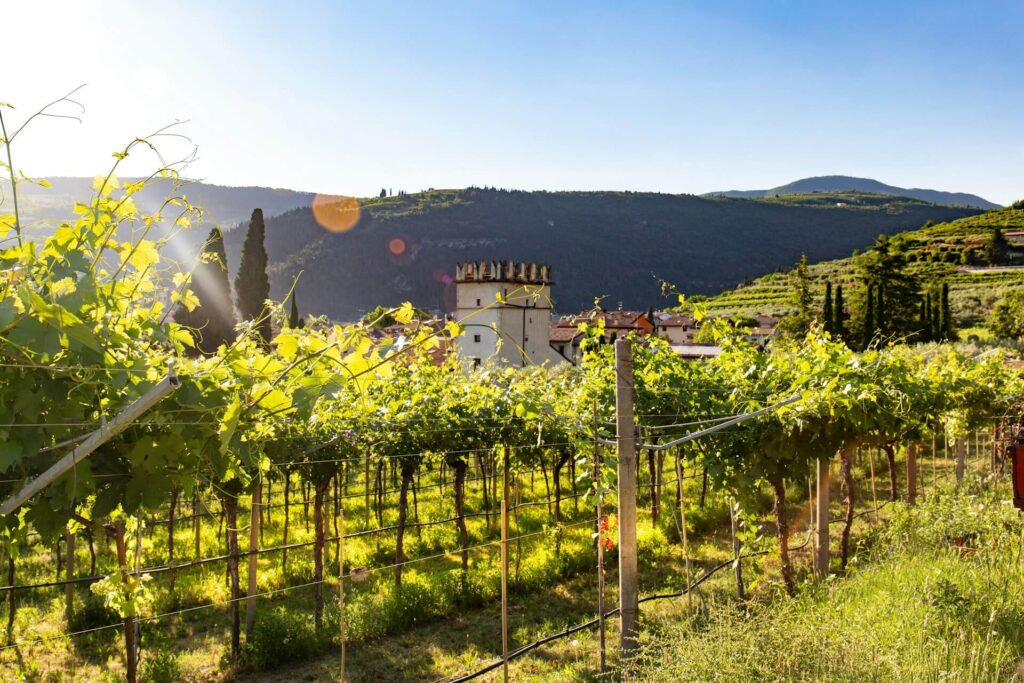
Signature Wines of the Region
Veneto produces an array of wines across multiple categories. The region offers full-bodied Amarone della Valpolicella with concentrated dried-grape character alongside crisp, mineral-driven Soave whites.
Regional selections also include Prosecco sparkling wines, sweet Reciotos, and various terroir-specific expressions from different DOCs throughout the province. The region’s Valpolicella wines are available in multiple styles, including the premium Ripasso Superiore versions that offer exceptional value compared to their Amarone counterparts.
Notable Wines
Four signature wines define Veneto’s extraordinary reputation within Italy’s wine landscape.
- Amarone through the appassimento (drying) method, of local grapes Corvina, Corvinone and Rondinella shows concentrated character and offers an intense sensory experience warm alcohol, rich structure, full body, garnet colour, dried fruit notes, velvety tannins, and notable aging potential.
- Prosecco—made from Glera grapes—has become Italy’s sparkling ambassador globally. Its fine freshness and minerality with delicate white flowers, pear and apple notes make it suitable for aperitivo or celebrations.
- Soave presents elegant expressions of Garganega, offering crisp minerality that pairs well with the region’s seafood dishes. Its subtle complexity rewards careful tasting, showing layers of flavours of straw, elderberry and almond, as well as volcanic minerality and exotic fruits when grown in calcareous soils. Thanks to its thick skin it can be left to dry out on the plants, to produce the sweet Recioto di Soave.
- The lighter-bodied Valpolicella, made with the same grapes as the Amarone, Corvina Rondinella and Corvinone, to be tasted young with its fresh vinosity but also structured and soft in the refermented Ripasso version.
Hidden Wine Treasures of the Region
Veneto houses many overlooked wine treasures beyond the famous Prosecco and Amarone. Notable among these are Torcolato made from Vespaiolo grapes in the Vicenza area and Colli Berici and the aromatic Moscato fior d’arancio from Colli Euganei.
The region offers excellent yet less recognized wine areas including Lake Garda’s Bardolino with corvina based blends, and the quiet Valdadige, in the Arcole area where fine Pinot Grigio Pinot Bianco and Chardonnay grapes grow on sandy soils against mountain settings.
A less known but very old grape grown in the area between Padua and Venice is the Friularo, a grape mentioned by Plinio il Vecchio that can be left on the plants until November to produce Bagnoli FriularoVendemmia Tardiva DOCG, fresh and tannic with wild cherries and violet notes.
Geography, Terroir, and Climate
The region of Veneto features one of the most diverse and complex geographical landscapes for wine growing. Covering over 7,000 square miles from Lake Garda to the Adriatic Sea, the area contains various terrains from alpine slopes to coastal plains across its seven provinces.
Veneto’s mild continental climate combines both alpine and maritime influences, creating distinct microclimates that support a wide range of wine styles. This diversity becomes apparent when comparing the crisp whites from hillside areas with the fuller-bodied reds from warmer valleys. The region experiences a unique blend of maritime and continental influences that contribute to its viticultural success.
The region’s soil composition adds another dimension to its wines. Volcanic soils in Soave bring out minerality in Garganega grapes, while limestone and volcanic terrain in Valpolicella are ideal for Corvina used in Amarone production. The alluvial soils of northeastern Veneto provide excellent conditions for Glera grapes used in Prosecco.
Mountain and sea breezes moderate temperatures, especially around Lake Garda and the Adriatic coastline, contributing to the bright acidity characteristic of many Veneto wines.
History
Veneto’s wine history extends back through millennia, with archaeological findings confirming grape growing practices as early as 1300 BCE among the region’s native peoples including the Euganei, Veneti, and Rhaetians that moved the first steps in wine making also thanks to the knowledge of the Etruscans.
Roman control until the 5th century improved grape cultivation significantly, introducing the pergola training system that remains in use today. As Veneto prospered under the Venetian Republic until 1797, monasteries maintained wine traditions while sea trade opened new markets for local wines.
After the Austrian administration brought different grape varieties and methods, Veneto became part of Italy in 1866. The destructive phylloxera outbreak led to replanting and modernization. The 20th century brought structural changes with the DOC system in 1963, with Soave receiving this status in 1968. The region saw a period of decline with excessive yields per hectare as industrial practices prioritized quantity over quality. Prosecco’s dramatic rise has transformed the region’s reputation, while climate change now pushes experimentation with various grapes and techniques.
Important wine-growing areas
Veneto’s wine areas include the hillsides of Conegliano Valdobbiadene, where fresh and crispy Prosecco DOCG is made with its clay-sandy calcareous soils, and the Valpolicella area where the robust Amarone wine is produced
The Garda Lake area benefits from the mild climate, whilst in Soave area the volcanic soil is rich of tufo exalting the minerality of Garganega grapes.
To the west, the Valdadige Terradeiforti zone connects Veneto and Trentino, creating structured red wines that show the characteristics of its alpine microclimate.
The eastern part of Veneto stretches to the Adriatic Sea, influencing the cultivation of unique grape varieties that thrive in the coastal climate.
Conegliano Valdobbiadene Prosecco
Located in the scenic Treviso province of northeastern Italy, Conegliano Valdobbiadene represents Veneto’s finest viticultural area, extending about 25 kilometers from east to west. This UNESCO-recognized region features distinctive “hogback” hills where Glera grapes flourish under the combined influence of alpine and maritime climates.
The notable sub-regions include Cartizze—often referred to as the area’s “jewel”—and the Rive, with steep slopes that necessitate hand-harvesting. While producing over 104 million bottles annually, the region adheres to strict yield limits of 13.5 tonnes per hectare to maintain quality. On clear days, visitors can enjoy breathtaking views spanning from the Lagoon of Venice to the dramatic Dolomite mountains.
Conegliano’s groundbreaking enology school—Italy’s first—helped refine Prosecco production techniques that continue to set this region’s wines apart, with growing attention to refined millesimato expressions that reflect their specific terroir.
Production largely uses the efficient Martinotti method, resulting in styles ranging from Extra dry with pear, apple, white flowers notes and a fresh sip to the more modern Brut with its citrus notes softened by crunchy brioche taste. New generation of winemakers are now producing artisan Prosecco Sur lies, fermented in bottles with amazing results.
While DOC status applies to the wider region, higher quality can be found in DOCG classifications, especially Superiore and Cartizze Superiore.
Asolo Prosecco
In the rolling hills of Colli Asolani, Asolo Prosecco stands as a notable DOCG within Veneto’s sparkling wine landscape. This “town of a hundred horizons” earned its prestigious designation in 2009, confirming its status for exceptional quality.
The area features varied terroir between Treviso, Vicenza, Venice, Padua and Belluno—white limestone soils in Colli Asolani stand in contrast with red clay in Montello, giving distinct characteristics to the wines. The Glera grape forms the main component of production, occasionally complemented by ancient local varieties like Bianchetta Trevigiana and Verdiso. The steep terrain necessitates heroic viticulture with manual harvesting methods.
Asolo’s Prosecco comes in several expressions: mainly Extra Dry (74%), though Brut, Extra Brut, and the specific Sui Lieviti styles offer interesting alternatives.
Montello
In the same territory of Asolo Prosecco area, Montello, with its gently rolling landscape, stands as one of Veneto’s most distinctive wine territories where Bordeaux varieties grow exceptionally well. This 65-hectare area sits in the broader Veneto region, characterized by fertile loamy-clay soils that support Cabernet Sauvignon, Cabernet Franc, Carmenère, and Merlot.
The Montello Rosso DOCG features these Bordeaux varieties, following strict requirements for composition (40-70% Cabernet Sauvignon) and aging protocols (minimum 18 months with 9 in barrel).
The region’s unique microclimate—shaped by both Alpine and maritime influences with moderate 22.6°C temperatures and 700mm annual rainfall—creates wines with remarkable complexity. While red wines are most common, local varieties are recently enhanced especially in the white wine production like Incrocio Manzoni, Bianchetta Trevigiana and the rare Recantina and Rabosina Bianca.
Valdadige Terradeiforti
In the Alpine-Mediterranean transition zone where cool mountain air meets the Adige River valley, Valdadige Terradeiforti stands as a notable cross-border DOC that spans both Veneto and Trentino-Alto Adige between the provinces of Verona and Trento.
The wines reflect the influence of day-night temperature differences and the calcareous soil composition of terraced hillsides. The Consorzio Terra dei Forti actively works toward preserving traditional winemaking throughout the appellation.
Formally recognized as an independent DOC designation in 2006, this small 19-hectare region yields about 715 hectoliters of wine yearly, with each bottle expressing the distinctive Alpine-influenced growing conditions.
Local antique grape varieties such as Enantio and Casetta, originally used for blending, are now rediscovered to be produced in purity.
Bardolino
Bardolino sits on Lake Garda’s southeastern shore as one of Veneto’s notable wine regions. This DOC produces primarily lighter-bodied reds from Corvina, Rondinella, and Molinara grapes across nearly 2,700 hectares of glacial, sedimentary soils.
The area offers multiple expressions of these red varieties from the Bardolino Superiore Classico DOCG with cherry and dark berries flavours and spice hints of cinnamon and black pepper, to the pale Bardolino Chiaretto rosés with fresh raspberry and grapefruit notes. The “Superiore” version requires a year of aging before release, resulting in more developed flavors and complexity.
Since 2018, three subzones—Montebaldo, La Rocca, and Sommacampagna—highlight quality initiatives based on local growing conditions.
Valpolicella
Valpolicella represents a significant part of Veneto’s wine landscape, extending across the hills north of Verona. This notable region features four main indigenous grapes: Corvina, Rondinella, Corvinone, and the less common Molinara, each adding specific traits to the finished wine.
The range of Valpolicella wines shows considerable variety—from light, fresh, cherry-scented to plummy, smooth, well structured, elegant and long ageing reds wines expressing different characteristics of the areas of Sant’Ambrogio, Fumane, San Pietro in Cariano Marano and Negar.
The more intense Ripasso is made adding the maceration for two more weeks of the fermented grape skins of the Amarone
The region’s terraced vineyards, often grown using the traditional Pergola method, thrive in varied soils from limestone to volcanic rock. The area maintains an ancient winemaking tradition, which is apparent in the restored villas throughout the countryside, where biodynamic practices are increasingly common for environmental sustainability.
Amarone della Valpolicella
The renowned Amarone della Valpolicella, is made from partially dried grapes of Corvina, Rondinella, Corvinone, and Molinara. In the Amarone, grapes are carefully harvested manually in small cases of 6-7 kilos and then left to dry out onto straw layers in specific locations exposed to winds for a period of 3 to 4 months. Fermentation is very soft, often maintaining the stalks, and long lasting. After a minimum of two years of ageing the result is extraordinary. Garnet red, with jammy flavours of dried fruits, and hints of spices, tobacco, chocolate and smoke after the ageing. Velvety and rich with smooth tannins, fresh and mineral, yet warm and well balanced, with a long final.
Lugana
Lake Garda’s waters surround Lugana, a wine region spanning the provinces of Brescia and Verona across Lombardy and Veneto. This 600-hectare area benefits from a microclimate where the lake moderates temperatures, creating ideal growing conditions on clay-rich, calcareous soils.
Turbiana grape (Trebbiano di Soave) stands as the principal variety, making up at least 90% of all Lugana DOC wines. Five styles are produced: the fresh basic Lugana, the more structured Superiore, the mature Riserva, sweet Late Harvest, and bubbly Spumante. These wines typically show straw-yellow colors and bright acidity with notes of citrus, green apple, white flowers, and almonds—pairing well with seafood and light pasta dishes. The area’s wine tradition extends back 2,000 years. Locals and tourists alike can explore the region’s scenic landscape, which features picturesque vineyards with stunning views of Lake Garda.
Monti Lessini
The Monti Lessini area lies in the Southern Alpine foothills northeast of Valpolicella and Soave, representing one of Veneto’s most distinctive wine territories. This DOC, established in 1987, includes municipalities such as Vestenanova and Tregnago, where vineyards grow at elevations between 200-700 meters in a continental climate.
Durella, the region’s signature grape, forms the basis of the celebrated sparkling wines produced through both traditional Champagne method and Charmat methods. The Lessini Durello DOC highlights this indigenous variety’s bright acidity and mineral character of this volcanic soil.
The DOC allows various styles including still whites, reds with Merlot as the main component, and Passito dessert wines. Though production remains small—just 125 hectoliters annually—these wines express their Alpine terroir, offering a taste of Veneto’s mountainous viticulture within the setting of the Lessinia Regional Nature Park.
Soave
Southeast from the Alpine Lessini hills lies Soave, one of Veneto’s most significant white wine appellations. This historic region near Verona spans over 4,527 hectares of vineyards, producing some of Italy’s most celebrated white wines.
Soave’s terroir features a mix of limestone and volcanic soils, particularly in the Lessini hills, where well-draining conditions suit the late-ripening Garganega grape. This variety dominates production, occasionally complemented by Trebbiano di Soave and Chardonnay for added complexity.
The region offers various expressions—from fresh, dry DOC wines with floral and citrus notes to the more prestigious Soave Superiore DOCG mineral, with broom and tropical fruits notes and an almond final. The sweet Recioto di Soave DOCG, the first wine from Veneto that got the DOCG recognizement in 1998, is made with dried grapes to get a rich sugar content and develop the Botrytis cinerea.
Breganze
Located in Vicenza province, Breganze is a notable DOC region within Veneto’s viticultural landscape. Between the Astico and Brenta rivers, its vineyards grow on gravel soils across plains and alpine foothills. The area has mild summers with cold winters and regular rainfall.
Since gaining DOC status in 1969, Breganze has had strict yield limits. The region’s characteristic Vespaiolo grape is central to the honey-rich Torcolato dessert wine. The Consortium of Protection with 13 member wineries oversees the quality and production standards of the region. Other important varieties include Merlot, Pinot Grigio, and Pinot Bianco.
The wines represent Breganze’s ancient viticultural history, with grape growing dating to prehistoric times and recorded during Venetian rule. For food pairings, Vespaiolo works well with traditional Vicentine fish dishes, while Pinot Grigio serves as an elegant aperitif.
Colli euganei
The volcanic hills of Colli Euganei rise 60 kilometers southwest of Padova, forming one of Veneto’s most distinctive wine regions. Established as a DOC in 1969, these mineral-rich volcanic soils produce wines of remarkable complexity and character.
The area features both indigenous and international varieties growing across 15 diverse microclimates. The Mediterranean conditions—warm summers and cool, wet winters—create ideal conditions for Merlot, Cabernet Franc, and Cabernet Sauvignon, alongside local treasures like Raboso, Pinello and Serprino.
The sweet DOCG Moscato Fior d’Arancio stands as a regional specialty. The area’s winemaking heritage dates back to pre-Roman times. Visitors can enjoy tastings paired with local delicacies, surrounded by stunning volcanic landscapes and historic Venetian architecture. The region is also known for its hot springs and leisure activities that complement the wine tourism experience.
Bagnoli
Between the Adige and Bacchiglione rivers lies Bagnoli, a distinctive wine region in between the provinces of Padua and Venice in the south east with a fascinating transformation story. Once swampland, Benedictine monks reclaimed this terrain, establishing a winemaking legacy that continues today under its 1995 DOC designation.
Bagnoli’s vineyards span just 30 acres, producing approximately 5,000 cases annually while the Friularo DOCG (established 2011) covers 82 acres with output around 20,400 cases. The region’s mild continental climate nurtures mainly Raboso (locally called Friularo), which must comprise at least 90% of the signature wines.
Bagnoli’s portfolio includes Rosso and Riserva alongside Vendemmia Tardiva and Passito . Only wines from Bagnoli di Sopra commune earn the “Classico” designation, marking the appellation’s central area.
Gambellara
Moving east from the reclaimed lands of Bagnoli, Gambellara stands as a distinctive viticultural enclave in the Vicenza province of Veneto. This area lies northwest of European route E70, characterized by steep, terraced volcanic hillsides where the Garganega grape dominates.
The region’s volcanic soils, rich in potassium and magnesium, give a distinctive minerality to its wines. Established as a DOC in 1970, Gambellara reached a milestone in 2009 when Recioto di Gambellara received DOCG status. Traditional Veronese pergola training systems are common throughout the vineyards.
For food pairing, Gambellara Classico works well with seafood, while the Recioto di Gambellara shows flavours of honey, orange marmalade, dried fruits, and marzipan and pairs well with almond cookies and desserts. The rare Vin Santo appears only in exceptional vintages.
Colli Berici
South of Vicenza lies Colli Berici, one of Veneto’s characteristic wine regions, with viticultural roots dating back to ancient Roman times. The area features limestone and marl soils with volcanic elements that contribute to the distinctive nature of its wines.
Carmenère makes up 30% of production, with Merlot and Grenache following. The local Tai Rosso variety produces wines with gentle fruit and floral notes that reflect the area’s geological features.
The region consists of limestone hills forming what many call Veneto’s “green heart,” along with prehistoric caves and Palladian villas. Since its establishment in 1973, the DOC has focused on quality through new zoning initiatives.
The chalky terrain produces wines with excellent body and subtle aromatic qualities—a true representation of this historic wine-growing area. The region’s winemakers must adhere to strict yield requirements to maintain the exceptional quality standards of Colli Berici DOC.
Lison- Pramaggiore
The Lison wine-growing area extends across three regions—Venezia and Treviso in Veneto, and Pordenone in Friuli-Venezia Giulia—featuring a terrain influenced by the Piave River plains. Located between the Livenza and Tagliamento rivers the region features calcium-rich, calcareous clay soils that give local wines their unique mineral character
The Lison-Pramaggiore DOC includes elegant red varieties such as Merlot, Cabernet Sauvignon, and the native Refosco dal Peduncolo Rosso, as well as fresh whites like Pinot Grigio and Chardonnay.
For the most authentic taste, Tai (the local name in Veneto for the Friulano grape) is the main grape for wines from the Lison Classico zone, which represents the traditional production area. Straw yellow, with greenish nuances, flavours of peach and lavender, fresh and gently soft, these wines pair perfectly with grilled fish with herbs.
Main Grape Varieties
Veneto’s viticultural landscape features Glera as the base for Prosecco, while Bianchetta and Perera are traditional blending partners.
Verdiso adds minerality to wines from Conegliano-Valdobbiadene. Garganega, the main variety in Soave, offers complexity ranging from crisp citrus to rich honey characteristics. Corvina, Rondinella and Corvinone create the blends of Valpolicella and Amarone.
Glera
Golden-yellow with hints of green, Glera serves as the primary grape variety central to Veneto’s wine heritage. This vigorous, disease-resistant variety grows mainly in Treviso, Conegliano, and Valdobbiadene’s well-drained clay soils and gentle slopes. The grapes grow in large cylindrical bunches and are known for their thin, delicate skins.
Prosecco showcases Glera’s delicate character—light-bodied with crisp acidity, showing pear, apple, and white floral notes beneath fine, persistent bubbles.
Bianchetta
Bianchetta Trevigiana’s delicate character represents one of Veneto’s historic grape varieties, though it remains relatively unknown outside the region. This grape grows primarily in Treviso’s hills around Conegliano and Valdobbiadene, where it thrives in biodiversity-rich vineyards despite its sensitivity to powdery mildew.
Bianchetta produces a light straw-yellow wine with greenish highlights, offering delicate white flower and green apple aromas. Though once praised as Treviso’s finest white wine in the 17th century, it now serves primarily as a blending grape in Prosecco DOC and DOCG wines, where it contributes freshness and acidity. Its compact, cylindrical clusters make it easy to identify during harvest season.
Perera
Hidden among Veneto’s more celebrated varieties, Perera remains one of the region’s distinctive indigenous grapes, found only in Treviso province where it serves an important supporting role in Prosecco production. Its contribution appears through the delicate pear-like aromas and flavors it adds to blends, complementing the primary Glera grape with a touch of elegance.
While regulations allow up to 15% of supporting varieties in Prosecco blends, Perera’s unique characteristics make it irreplaceable. Its medium-sized yellowish-green berries contribute to the freshness and lightness that’s become Prosecco’s signature quality. Though rarely bottled as a single variety, some producers still offer monocépage versions, giving wine enthusiasts a chance to experience Perera’s pure expression—a true collector’s find in a region where tradition and innovation quietly coexist. The variety was nearly lost to history after being severely affected by the phylloxera plague in the past.
Verdiso
Verdiso thrives as an indigenous grape variety in Veneto, growing primarily in the hilly terrain of Treviso province. This resilient grape appears most commonly around Conegliano and Valdobbiadene, where it grows well in well-drained clay and calcareous soils at approximately 180 meters elevation.
While less productive than the popular Glera, Verdiso plays an important role in regional winemaking. It contributes to Prosecco DOCG blends, where it can make up to 15% of the mix, adding structure and freshness. The variety is especially valued for its lively acidity that enhances the overall complexity of wine blends. When made into a single-variety wine, Verdiso typically shows floral aromas with green apple notes, subtle herbaceous qualities, and characteristic minerality with a pleasant bitter finish.
With history dating to the 19th century, Verdiso appears in various styles beyond sparkling wines, including sweet passito expressions.
Garganega
Garganega is an ancient grape variety that serves as the primary component of Veneto’s Soave wines. With origins dating back to Roman times, this productive vine grows well in the region’s volcanic and calcareous soils, developing complex characteristics through its typically late ripening cycle.
Garganega wines feature high acidity and a characteristic profile of green apple, pear, lemon, and almond notes, often with subtle floral and herbal qualities. This versatile grape often produces wines with creamy texture and full-bodied character when properly cultivated. While mainly found in Soave, this adaptable grape also appears in Gambellara, Bianco di Custoza, and sweet Recioto wines produced using the appassimento method.
Corvina
While Garganega remains Veneto’s principal white grape, the region’s red wine tradition centers on Corvina, an indigenous variety with history dating back to at least the 13th century. Named after the crow (“corvo”), referring to its deep blue-black berries, Corvina grows well in Valpolicella’s hillside vineyards.
Corvina plays a key role in Amarone and Valpolicella wines, where its thick skin works well for the appassimento drying process. Typically blended with its offspring Rondinella and with Molinara, Corvina adds brightness, acidity, and aromatic complexity. The traditional pergola training system helps protect the grapes from sunburn while ensuring even ripening.
The wines show medium body with moderate tannins, high acidity, and characteristic sour cherry notes, sometimes showing cinnamon, almond, and spice flavors. The lighter Valpolicella styles offer a clear contrast to Amarone’s intense concentration—both represent classic expressions of Veneto’s traditional winemaking.
Oseleta
Oseleta is a previously obscure indigenous grape variety that has recently gained attention as one of Veneto’s noteworthy viticultural assets. This small, thick-skinned berry—whose name means “little bird” in local dialect—was found again in Valpolicella.
Oseleta creates wines with deep, nearly opaque ruby color and firm, velvety tannins. It gives intense black cherry, blackberry, and dried fruit flavors, often accompanied by spice, herbal notes, and sometimes tobacco or balsamic hints. While traditionally blended into Valpolicella to add structure and complexity, some producers now create single-varietal wines from this grape. After nearly disappearing from vineyards, the variety is experiencing a significant resurgence due to its unique qualities in winemaking. Despite lower yields than common varieties, Oseleta’s return shows Veneto’s dedication to maintaining its viticultural heritage while offering wine enthusiasts a distinctive tasting experience.
Raboso
The “angry grape” of Veneto, Raboso stands as one of the region’s most historically significant indigenous varieties, with records dating back to the 17th century. Its name, likely derived from “rabbioso” (angry), aptly describes the high acidity and firm tannins that define its character.
Raboso thrives along the Piave River valley, producing deep-colored wines with remarkable longevity. Though its popularity declined over time, the Confraternita del Raboso Piave helped bring attention to this variety in the 1990s. The grape has been a key traditional crop in Treviso Province for centuries.
A well-aged Raboso transforms from its initially austere nature into a complex mix of dark fruits, earthy notes, and herbs. Beyond still wines, Raboso also contributes to sparkling varieties and creates the sweet Raboso Passito from dried grapes.
Marzemino
Immortalized in Mozart’s opera “Don Giovanni,” Marzemino is a historically significant grape variety with deep roots in northern Italy, particularly in the Trentino region. In Veneto, this ancient variety produces wines with distinctive character and charm.
When grown well, Marzemino yields wines of deep color and complex aromatics—featuring fruit and floral notes that move across the palate. Its flavor profile includes red and black fruits with herbal undertones. The grape’s naturally high acidity and softer tannins create an appealing structure. The variety is often recognized for its sophisticated violet undertones that enhance its floral bouquet.
While not as common in Veneto as in neighboring Trentino, Marzemino appears in various forms including varietal bottlings, blends, and even sparkling styles. Its versatility works well when paired with regional smoked meats or mushroom-based dishes.
Casetta
Among Veneto’s more obscure indigenous varieties, Casetta represents a notable viticultural element, primarily found in the hilly terrain of Val Lagarina between Ala in Trentino and Dolcé in Verona. Often called “Foja Tonda” (round leaf) in local dialect, this thin-skinned grape produces wines of intense ruby red with complex profiles of plum, blackberry, and distinctive black pepper notes.
Casetta appears exclusively in Valdadige Terra dei Forti DOC wines, where it must comprise at least 85% of any blend. Nearly extinct before its 2002 regulatory revival, only about 14 acres exist worldwide. Historically, the variety was widely cultivated until the 1950s but was later abandoned due to its sensitivity to grey mould. The structured character, soft tannins, and remarkable aging potential of wines made from this variety make them well-suited for pairing with game meats and cheeses.
Rondinella
Rondinella stands as one of Veneto’s fundamental varieties, serving a key supporting function in the region’s prominent red wines. This grape appears primarily in Valpolicella, Amarone, and Bardolino blends, where it adds structural strength alongside Corvina and Molinara rather than contributing distinctive flavor characteristics.
This disease-resistant variety—named “small swallow” possibly for its distinctive pentagonal, five-lobed leaves—grows well in clay-rich soils throughout Valpolicella. Rarely found as a single-varietal wine due to its neutral profile, Rondinella proves valuable during the Appassimento process, where its resistance to drying becomes critical for Amarone production.
Genetic analysis has confirmed Corvina as one parent of this high-yielding grape, which has remained central to Venetian winemaking since its first documented mention in 1882, persisting through the Phylloxera epidemic.
Friularo
Continuing our examination of Veneto’s grape varieties after Rondinella’s role in Valpolicella blends, we find Friularo—a case of viticultural synonymy in the region’s grape portfolio. This grape isn’t distinct but rather an expression of Raboso Piave shaped by environmental conditions, with documentation in the region dating back to the 1870s.
The Bagnoli Friularo DOCG near Bagnoli di Sopra requires wines with at least 90% of this variety, known for high acidity, deep color, and structured tannins. The temperate climate—moderated by Adriatic breezes and the Venetian Prealps—provides excellent conditions for these complex wines. The region’s diverse soil types including clay, silt, limestone, and alluvial deposits contribute significantly to the wine’s distinctive character and complexity.
Tai Rosso
Veneto’s lesser-known viticultural treasure, Tai Rosso, grows primarily in the Colli Berici hills south of Vicenza. This grape shares genetic connections with France’s Grenache and Sardinia’s Cannonau but shows unique characteristics when grown in Veneto’s limestone and red clay soils.
The variety was called Tocai Rosso until 2007. These wines show bright ruby colors with notable acidity and pleasant notes of raspberry, cherry jam, and blackberry.
The best Tai Rosso vineyards are typically found on south-facing slopes at approximately 300 meters altitude. While not as famous internationally as Prosecco or Amarone, Tai Rosso offers an authentic taste of Veneto’s wine heritage.
Incrocio manzoni
Professor Luigi Manzoni created one of Veneto’s most distinctive grape varieties—Incrocio Manzoni—through research in the 1930s. His crossbreeding work, conducted across two periods, focused on improving disease resistance and wine quality. Reports vary on the parentage—either Trebbiano Romagnolo × Traminer or Pinot Bianco × Riesling Renano—but the results speak for themselves.
Incrocio Manzoni produces full-bodied white wine with straw-to-gold coloring and strong rose and apricot aromas. The variant specifically known as Incrocio Manzoni 1.50 combines Trebbiano Romagnolo and Gewürztraminer parentage. The palate shows rich texture with bright acidity, ending with a characteristic bitter almond finish. First grown in Treviso, this adaptable grape now grows throughout Italy’s hillsides, especially in fertile, deep soils. Its thick-skinned, small berries form compact, conical clusters, making wines that complement foods ranging from roasted cheese to sophisticated sushi.
Merlot
Merlot has established itself as one of Veneto’s most important red grape varieties since arriving in the late 1800s. This early-ripening grape thrives in the region’s diverse terroir with varied soils, from volcanic to sandy compositions. The wines show deep ruby colors with violet hues.
These approachable wines feature fresh, winy aromas with ripe red fruits and cherry notes. They offer a smooth, velvety texture and a well-balanced, sapid taste profile that remains clean and fresh. Production includes 12-15 days of skin contact at 28-30°C, followed by aging in stainless steel or sometimes oak.
Veneto Merlot is best served between 14-16°C. It pairs well with red meats, medium-soft cheeses, and regional specialties such as meat-filled ravioli and risotto.
Verduzzo trevigiano
Verduzzo Trevigiano stands as one of Veneto’s most historically significant yet increasingly rare native grape varieties. This slim-bodied, straw-colored wine with greenish hints features a slightly tannic profile and delicate peach aromas reminiscent of spring.
The grapes reach harvest in late September, followed by careful crushing, destemming, and temperature-controlled fermentation with selected yeasts. While nearly abandoned as international varieties gained popularity, some local growers now focus on Verduzzo as a pure varietal rather than just a blending component. The grape’s disease resistance to common vine ailments like mildew and bunch rot makes it particularly valuable in Veneto’s often humid climate conditions.
Vespaiola
Vespaiola represents one of Veneto’s indigenous treasures with a distinctly localized identity. This white grape variety grows primarily in the Breganze DOC between the Astico and Brenta rivers, where it has been present since at least the 19th century.
Its name comes from “vespa” (wasp), as these insects are attracted to its sweet, golden-skinned berries. The variety thrives particularly well in volcanic soil of hillside vineyards. Vespaiola creates two different wine styles: a dry, straw-yellow wine with delicate fruity notes and notable acidity, and Torcolato—a sweet wine made from dried grapes, showing intense dried flower and honey characteristics.
When exploring Veneto’s wine landscape beyond Prosecco and Amarone, Vespaiola offers a fascinating example of this region’s rich viticultural diversity.
Moscato giallo
Among Veneto’s diverse array of grape varieties, Moscato Giallo stands as an aromatic treasure with remarkable versatility. Though less prevalent than its cousin Moscato Bianco, this variety grows in scattered plantings throughout the region, particularly in the Luvigliano Hills near Padua.
This mid-ripening, thick-skinned variety excels in both dry and sweet expressions. When tasting a Veneto Moscato Giallo, expect enchanting notes of orange blossom, lavender, and honeysuckle, often with pronounced minerality from the region’s calcareous soils. Recent genetic studies have confirmed it is a direct descendant of Muscat Blanc.
Traditional passito styles undergo two years of wood aging without malolactic fermentation, preserving their vibrant acidity while developing honeyed complexity. The grape’s natural resistance to botrytis makes it ideal for air-drying techniques that concentrate its distinctive aromatic compounds.
Pinot grigio
Pinot Grigio represents the signature white grape of Veneto, known globally for its refreshing character and approachability. This rose-colored mutation is genetically related to Pinot Noir, but produces distinctly crisp notes of green apple, pear, and citrus that characterize the Venetian style.
The style adopted in Veneto focuses on early grape picking, which contributes to the wine’s higher acidity and lighter body compared to fuller-bodied expressions.
Pinot bianco
Pinot bianco, a less familiar relative of Pinot Grigio, grows well in Veneto’s distinctive soil conditions, especially in the volcanic areas of Colli Euganei. These wines present clean, clear expressions with pear, apple, and melon characteristics—resulting from the iron-rich volcanic soils of the region.
The typical production method involves fermentation in stainless steel to maintain the wine’s subtle qualities, though some more nuanced versions spend several months on lees. The grape needs careful attention; its compact clusters are prone to fungal issues. Its early ripening nature combined with densely packed bunches increases vulnerability to diseases, particularly in wet weather conditions.
While not as famous as other Veneto varieties, Pinot bianco‘s structure and adaptability have gained increasing appreciation among wine enthusiasts looking for alternatives to more widespread white wines. Its medium to full body and refreshing acidity make it a worthwhile selection.
Chardonnay
Globally recognized for its remarkable versatility, Chardonnay holds an important position in Veneto’s rich wine landscape. These grapes flourish in the region’s hilly areas, where well-draining soils contribute to their quality and character.
Veneto’s Chardonnays offer subtle aromas of exotic fruits with balanced, savory profiles. The resulting wines reflect Veneto’s distinctive terroir through their elegant minerality and floral notes. Though not as widespread as Soave or Pinot Grigio, these refined Chardonnay expressions demonstrate this grape’s impressive adaptability to Veneto’s various microclimates.
Sauvignon
Sauvignon Blanc represents a minor element in Veneto’s viticultural landscape at just 0.7% of planted area, yet adds subtle complexity to the region’s diverse wine portfolio. This international variety appears often blended rather than bottled alone, contributing crisp, invigorating dimensions to Veneto’s white wine expressions.
Though less prominent than native varieties like Garganega and Glera, Sauvignon Blanc creates space for variation within this tradition-rich region. A Veneto Sauvignon typically presents citrus-forward profiles that reflect the continental climate and varied soils of northeastern Italy. These wines offer an interesting contrast to the region’s signature styles like Soave and Prosecco, allowing you to experience Veneto’s terroir through a different aromatic lens.
Cabernet
Cabernet Franc and Cabernet Sauvignon play important roles in Veneto’s viticultural landscape, adding structured complexity to the region’s red wine portfolio. These varieties appear primarily under IGP Veneto classification, where they display characteristic tannins and acidity that define their profiles.
Colli Berici and Piave are notable production regions, where Alpine influences meet sea breezes to create balanced wine expressions. The varied soils—mostly clay and limestone—contribute distinctive mineral notes that characterize these terroir-driven wines. When submitting reviews about these wines online, be cautious as certain security services may block content containing specific phrases deemed potential threats.
The range of styles varies from light to full-bodied, with most Veneto Cabernets featuring dark fruit flavors matured in oak. Though less famous than Prosecco or Amarone, these wines maintain a dedicated following due to their consistent quality and the growing adoption of organic practices throughout the region.
Overview on appellations system
The wine classification system of Veneto is one of Italy’s most thorough, with 28 DOCs and 14 DOCGs across the region’s varied landscape. This structure organizes wines by quality levels, with DOCG representing the highest tier through rigorous production rules and quality controls.
When looking at Veneto’s wines, you’ll find notable appellations like Valpolicella, known for its appassimento-method Amarone; Soave, creating refined whites from Garganega; and Prosecco, Italy’s popular sparkling wine. Beyond these, the region also features IGT designations that comprise 9 different geographical indications. Each designation reflects a specific terroir, where native varieties such as Corvina and Glera grow successfully alongside international grape varieties.
The classification system maintains quality standards while preserving traditional winemaking methods developed over centuries. Selecting a Veneto wine means choosing more than just a drink—it’s accepting a cultural element that supports local economies and presents the region’s extensive wine heritage internationally.
3 Wine Destinations for a Perfect One-Day Trip
When planning a one-day wine tour in Veneto, consider these three excellent destinations. The Prosecco Road between Conegliano and Valdobbiadene offers beautiful views and outstanding sparkling wines among picturesque hills.
In the Valpolicella Valley, you can taste famous Amarone and Ripasso wines while exploring the countryside.
For history lovers, Soave Castle provides both architectural interest and excellent white wine tastings, showing how the local soil conditions and traditional methods create the region’s distinctive character.
Prosecco Road Drive
Located between the pleasant towns of Conegliano and Valdobbiadene, Prosecco Road attracts visitors with its UNESCO-recognized landscapes and excellent sparkling wines. Just 90 minutes from Venice, this route offers a close look at Italy’s top sparkling wine region.
As you travel along the Prosecco Superiore Ring, you’ll find historical wine production sites where tastings often include local cured meats and malga cheeses. Worth visiting is Cartizze Hill, whose special microclimate produces outstanding Prosecco.
Valpolicella Valley Excursion
Near Verona’s ancient walls, the Valpolicella area offers an excellent day-trip for those interested in Italy’s respected red wines. The area features rolling hills with vineyards and pleasant villages like Fumane and San Giorgio.
You can arrange wine tastings throughout the region, where you’ll find the characteristic Corvina, Rondinella, and Molinara grapes. Try various wines from light Valpolicella Classico to rich Amarone—made using the traditional appassimento grape-drying technique.
The scenic 2.5km Quattro Fontane walking path provides a nice route between tastings. The region’s five valleys present themselves like a complex wine—layered, subtle, and thoroughly enjoyable.
Soave Castle Wine Tour
Beyond the active streets of Verona, the 10th-century Soave Castle stands as a medieval sentinel atop Mt. Tenda, providing a 360° panorama of the region’s famous vineyards.
Built in 934 to defend against Hungarian invasions, this carefully restored fortress features three concentric walls enclosing different courts—showing thoughtful defensive architecture.
You’ll walk across the Venetian-added drawbridge before seeing the commanding Mastio Tower, once a prison and torture chamber that now tells tales of centuries past. Within the outer courtyard, fragments of a Romanesque church hint at devotion during times of conflict.
After touring the castle’s 14th-century Scaliger renovations, walk down into the town. Here, crisp, mineral-rich white wines complement your historical visit—connecting cultural and grape-growing heritage.
3 Traditional Dishes You Must Try
When exploring Veneto’s food traditions, you’ll want to sample the region’s iconic dishes. Try Risotto al Radicchio, where the bitter chicory perfectly balances the creaminess of risotto, or Bigoli in Salsa, a pasta dish featuring a rich anchovy sauce that complements local white wines.
Don’t miss Baccalà alla Vicentina, the region’s renowned salt cod specialty prepared with caramelized onions and a slow-cooked sauce that has earned its place as a cornerstone of Venetian gastronomy.
Risotto Al Radicchio
Risotto al Radicchio stands as a characteristic Veneto dish where bitter meets sweet, highlighting the region’s agricultural richness. Cooks typically select Treviso or Chioggia radicchio, combining them with Vialone nano or Carnaroli rice for proper texture.
The cooking process requires patience—warm broth added little by little while continuously stirring creates the signature creamy consistency. Many recipes finish with Gorgonzola Dolce or Grana Padano cheese, which melts to counter the radicchio’s natural bitterness.
Served “all’onda” (with a wave-like consistency), it pairs well with Prosecco, completing your experience of Veneto’s culinary traditions.
Bigoli in Salsa
Among Veneto’s most iconic dishes, Bigoli in Salsa represents the perfect marriage of rustic simplicity and profound flavor. This pasta dish, with its Jewish-Venetian roots, traditionally graced tables on fasting days like Ash Wednesday and Christmas Eve.
The dish features thick, coarse bigoli pasta covered in a sauce of slowly softened onions and melted anchovies (though sardines were the original choice). No garlic intrudes on this delicate balance—just olive oil, fish, and onions creating a rich, savory experience.
While adaptable to spaghetti or bucatini, authentic bigoli provides the ideal textural foundation. Some modern variations include pine nuts and raisins, though purists might disagree.
Baccalà Alla Vicentina
Baccalà alla Vicentina stands as one of Veneto‘s most respected fish preparations—a testament to culinary patience and regional creativity. This dish from northeastern Italy dates to the 15th century, transforming salted cod through a 48-hour soaking process followed by slow-cooking with onions, milk, anchovies, and olive oil for 3-4 hours.
The authentic preparation is protected by the Venerable Confraternity of Baccalà alla Vicentina, who maintain the dish’s tradition as a winter comfort food. Fish and golden sautéed onions combine into a rich texture, completed with fresh parsley and garlic. In Veneto, it’s typically served alongside soft polenta and a glass of crisp Soave Classico. The flavors actually improve after resting for a day, showing its full depth and character.