Friuli Venezia Giulia Wine Region: Complete Guide
Located in Italy’s northeastern region, Friuli-Venezia Giulia stands as one of the country’s most distinctive wine areas. This autonomous territory borders Austria and Slovenia, with the Adriatic Sea along its southeastern shores—a geographic position that significantly shapes its viticultural character.
The region extends from Alpine peaks to coastal plains, creating various microclimates across more than 20,000 hectares of vineyards. Production generally happens on a small scale, with quality prioritized over quantity.
What makes Friuli-Venezia Giulia notable within Italy’s wine landscape is its focus on white grape varieties, which make up 77% of total production. The combination of Mediterranean and continental alpine influences creates conditions perfect for aromatic whites with pronounced acidity and mineral complexity. This special statute region represents a unique blend of Italian winemaking tradition with Central European influences. Most vineyards are situated in the southern half of the region, where they receive direct sunlight and breezes from the Adriatic Sea.
Explore our Italian Wine Guide.
Signature Wines of the Region
Friuli Venezia Giulia’s signature wines reflect the region’s distinctive terroir through both international and indigenous varieties. Key white wines include the crisp Pinot Grigio, aromatic Friulano (formerly Tocai Friulano), and the mineral-driven Ribolla Gialla with its characteristic high acidity.
Among reds, the region produces the full-bodied Pignolo, spice-forward Schioppettino, and the complex Refosco dal Peduncolo Rosso, all showing the versatility of this northeastern Italian wine region. These reds pair exceptionally well with rich meats and game, complementing the region’s hearty local cuisine.
Notable Wines
Throughout the rolling hills and sun-drenched valleys of Friuli Venezia Giulia, a remarkable collection of wines has emerged that shows the region’s distinctive terroir and winemaking philosophy.
You’ll find notable expressions through these signature examples:
- Ribolla Gialla – Blended with other white grape varieties in Collio DOC and Friuli Colli Orientali DOCG or fermented in purity in San Floriano and Oslavia, this grape represents the quintessential identity of Friuli wine production
- Collio Friulano – The utmost regional white, presenting delicate almond blossom aromas that transform to fennel and nuts as it matures, all while maintaining a distinctive mineral backbone.
- Ramandolo DOCG – A sublime dessert wine crafted from air-dried Verduzzo grapes, delivering concentrated tropical fruit, honey, and apricot notes balanced by the variety’s natural acidity.
Hidden Wine Treasures of the Region
Friuli-Venezia Giulia holds special wine selections that remain relatively unknown to many. These include uncommon native grape varieties like the red Terrano or the white Vitovska grown with heroic methods in the cliffs of the Carso area around Trieste and the sublime Colli Orientali del Friuli Picolit Cialla, which present unique characteristics with aromas of white flowers and acacia honey notes.
Orange Wines – These complex, skin-contact treasures reveal the region’s ancient traditions while offering extraordinary aging potential, with tannic structure and oxidative notes that change magnificently over time. Created through longer skin contact with traditional fermentation and maceration methods in terracotta jars placed in the ground, these wines represent historical winemaking practices from Caucasian Georgia that have gained renewed interest among modern wine lovers. The revival of these techniques represents part of the late 20th century innovations
Geography, Terroir, and Climate
Friuli-Venezia Giulia stands at the intersection of Italian, Austrian, and Slavic influences in Italy’s northeastern region, where the Alps gradually slope toward the Adriatic Sea. This geographic position creates various microclimates and landscapes, ranging from mountains to coastal flatlands.
The region features diverse soil compositions—the mineral-rich “ponca” soils of Collio with excellent drainage properties; the gravel-based areas of Grave; and the Carso’s distinctive red, limestone-rich soil. These soil differences support both indigenous and international grape varieties. The region’s location at the cultural crossroads of Europe has profoundly influenced its winemaking traditions.
The climate, influenced by both the Alps and the Adriatic Sea, produces warm summers with average temperatures of 73°F and cold winters, with notable day-night temperature fluctuations. The region receives approximately 60 inches of rainfall annually, providing sufficient moisture. These conditions create wines with characteristic bright acidity and aromatic intensity, with white varieties comprising 77% of production, gaining international recognition.
History
Friuli-Venezia Giulia’s viticultural history extends over two millennia. The timeline begins around 180 BC when Romans established viticulture near Aquileia, although Celts had previously introduced vines from eastern territories.
During medieval periods, monasteries preserved winemaking traditions, while both Byzantine and Austro-Hungarian empires influenced the viticultural landscape, with French varieties introduced under Habsburg rule. Prior to the devastation of phylloxera, the region cultivated an impressive 350 grape varieties. The 19th-century phylloxera epidemic severely damaged vineyards, necessitating complete regeneration.
The 1960s transformed the region’s reputation through temperature-controlled fermentation, establishing the “Friuli method” that focuses on preventing oxidation to maintain fruit character. By the 1980s, Pinot Grigio brought Friulian wines to global markets.
The present-day region features small, family-operated estates, with indigenous varieties gaining international recognition, and a return to amber orange wines that connects modern techniques with ancient practices.
Important wine-growing areas
Friuli-Venezia Giulia’s viticultural landscape contains five distinct subregions that each add unique expressions to the region’s wine portfolio. In Collio and Colli Orientali, premium white wines made from indigenous and international varieties grow on hillside terroir.
While Friuli Grave produces Pinot Grigio and Prosecco across its wide alluvial plains, Friuli Isonzo’s microclimate creates aromatic whites with notable structure. Lison (formerly Tocai) offers distinctive mineral-driven expressions influenced by its position near the Adriatic.
Collio
The Collio region lies in the province of Gorizia and stands as one of Friuli Venezia Giulia‘s most distinguished wine appellations. The name “Collio” references the undulating hillsides that characterize this former Habsburg territory’s landscape.
In this area, Mediterranean and Continental climates meet, while marl, sand, and clay soils support excellent viticulture between the Julian Alps and Isonzo River.
The area features soils rich in calcareous marl and flysch sandstone that, combined with heavy rainfall and abundant sunshine, produce wines with remarkable mineral complexity.
Collio is known primarily for aromatic white wines—Sauvignon, Pinot Grigio, Pinot Bianco, Malvasia istriana, Friulano and Ribolla Gialla offer crisp acidity and floral complexity. Though whites are the main focus, the area also produces notable Merlot and Cabernet wines.
The Northern area in Dolegna and Rutters offers some of the best Sauvignons in Italy whilst Friulano, Pinot Grigio and Bianco in Cormons, Spessa, Russiz and Capriva contribute to the fame of this appellation.
The region maintains centuries-old winemaking traditions while incorporating modern techniques. The peculiar characteristics of soil and microclimate in Oslavia and San Floriano made the Ribolla Gialla one of the best wines produced in Friuli and the selected area for the production of orange wines.Visitors to Collio will find a lively wine tourism scene enriched by Slovenia’s cultural influences, with traditional festivals that honor the region’s deep oenological heritage.
Colli Orientali
Colli Orientali lies just east of Udine in Friuli Venezia Giulia‘s northeastern corner, representing one of Italy’s most distinguished viticultural zones. Complex marl-sandstone soils—locally known as “ponca”—provide an ideal foundation for premium viticulture.
The region’s pronounced temperature variations between day and night build aromatic complexity in indigenous varieties like Ribolla Gialla, Friulano, the Verduzzo Friulano of the Ramandolo DOCG and the rare Picolit, while Refosco (notably the Refosco di Faedis), Pignolo, Tazzelenghe and Schiopettino di Prepotto offer distinctive red expressions. DOP-protected wines show the results of careful viticulture, with traditional pergola and guyot training systems optimizing fruit exposure. Visitors can complement wine tastings with regional delicacies like San Daniele prosciutto while exploring medieval Cividale del Friuli—an experience of terroir that’s quintessentially Friulian.
Friuli Grave
Spanning two provinces across the alluvial plains of northeastern Italy, Friuli Grave represents one of the region’s most extensive DOC zones, where ancient glacial activity has deposited the characteristic gravel soils—”grave” in local dialect—that define this terroir.
The viticulture landscape features a Mediterranean climate with cool nights, creating conditions for aromatic whites and structured reds. Pinot Grigio dominates, while Sauvignon,Chardonnay and Friulano thrive in these well-draining, stony soils.
The area continues to balance tradition with innovation through sustainable practices and modern technology. Visitors can experience the local wine festivals where products are showcased alongside regional cuisine that marries Austro-Hungarian and Mediterranean influences—a reflection of Friuli’s cross-cultural heritage.
Friuli Isonzo
Eastward from the expansive plains of Friuli Grave lies Friuli Isonzo DOC, a distinctive viticultural zone in Gorizia province along the Slovenian border. This terroir features alluvial soils and gravel deposits with a microclimate influenced by both Adriatic breezes and Alpine currents of the wind Bora.
The region’s identity appears through exceptionally structured white wines—primarily Friulano, Pinot Grigio, Malvasia, and Ribolla Gialla—though notable reds like Merlot, Cabernet Sauvignon, and indigenous Refosco dal Peduncolo Rosso also grow here. Vineyards near rivers benefit from natural protection, while the flat plains receive ideal sun exposure and the mix of clay and gravel rich in iron in soil develops mineral complexity and a rich bouquet.
Lison
The Lison DOC forms an important viticultural area within the Lison-Pramaggiore region, where varying elevations from flatlands to hillsides create numerous microclimates. The area features moderate climate conditions with notably cool mornings that maintain essential acidity in the grapes, while different soil types ranging from clay to sand contribute to the wines’ unique character.
Historically linked with Tocai Friulano (now called simply Friulano), Lison’s focus has changed to include Refosco and other native varieties, often paired with international grapes such as Cabernet Sauvignon and Franc. Small-scale production is common in the region, combining traditional methods with current technology while more frequently adopting sustainable practices.
Latisana
Latisana sits in Udine province, functioning as an important wine-growing area where Adriatic influences create optimal viticultural conditions. The terroir features clay, sand, and gravel soils that offer excellent drainage and mineral complexity to the local wines.
The appellation grows indigenous varieties such as Friulano and Pinot Grigio, along with some international grapes like Merlot. The Mediterranean climate, with moderate rainfall and temperature variations, helps grapes reach ideal ripeness. White wines form the majority of production, showing characteristic softness and bright young fruity profiles.
Aquileia
Aquileia stands as one of Friuli Venezia Giulia‘s most distinguished wine appellations, with a winemaking tradition dating back to its founding by Romans in 181 BC. The area features varied soils—glacial in the north, shifting to sandy loess southward—under the gentle influence of Adriatic breezes.
The DOC includes a diverse range: aromatic whites like Friulano, Malvasia Istriana, and Traminer Aromatico; reds including Refosco dal Peduncolo Rosso showing here one of the best expressions of this grape for complexity, elegance and longevity and Bordeaux varieties. Modern vinification techniques include stainless steel fermentation and lees stirring, preserving the wines’ characteristic crispness and complexity.
Carso
The rugged Carso region along the Slovenian border stands in stark contrast to the lush hills of Collio Goriziano, featuring a harsh limestone karst plateau extending between the provinces of Trieste and Gorizia. This area presents a unique agricultural challenge—almost no topsoil exists, forcing growers to extract iron-rich terra rossa from caves and mix it with imported soil for planting.
This small 57-hectare DOC yields only 11,240 cases per year, concentrating on native varieties such as mineral-driven Terrano and aromatic Vitovska, along with international grapes. The vineyards face two distinct climates—Mediterranean influence near the Adriatic and strong Bora winds at higher altitudes. The wines reflect their unique origin: reds offer bright acidity with violet notes, while whites display herbaceous character and strong minerality. The region has gained significant recognition for its orange wine production, utilizing extended skin contact fermentation techniques. These distinctive wines represent a place where Italian, Slovenian, and Austrian influences meet.
Prosecco
While Veneto claims the largest portion of Italy’s Prosecco production, Friuli Venezia Giulia plays an important role in the broader Prosecco DOC classification, which includes the provinces of Gorizia, Pordenone, Trieste, and Udine.
These areas primarily grow Glera grapes, with up to 15% of traditional local varieties and increasing use of Pinot Noir for the newer Prosecco Rosé expressions. The region’s combination of Mediterranean and Alpine climates creates distinct ripening conditions across various soil types. The addition of Pinot Noir adds complexity and structure to Prosecco Rosé, creating a more phenolic expression.
Most Prosecco was traditionally produced using the cost-effective Charmat method, but now traditional Champagne method options are taking place. Three styles are available: spumante (fully sparkling), frizzante (lightly sparkling), and the less common tranquillo (still). Since 2009, protected designation has raised regional identity while maintaining accessibility that has helped Friuli’s contribution to global Prosecco demand.
Main Grape Varieties
Friuli Venezia Giulia grows an impressive range of grapes, both native and international.
The local growing conditions support some less common varieties too, like Vitovska, which is mainly cultivated in the Carso area near the Slovenian border, adding to the region’s rich grape diversity. The region is particularly renowned for its white wine production, showcasing freshness and elegance in its offerings.
Refosco
Refosco represents the authentic heart of Friuli‘s native viticulture—not a single grape but a family of related dark-skinned varieties that have shaped northeastern Italian wine traditions for centuries. The most significant variant, Refosco dal Peduncolo Rosso, grows exceptionally well in the Colli Orientali DOC.
The wines offer notable structure—deep purple in appearance, with high acidity and firm tannins that command attention. They present black cherry, plum, and dark berry flavors alongside characteristic herbal notes and occasional coffee or chocolate undertones. The best examples can be cellared for over a decade when properly produced with oak influence. These wines pair well with wild meats and mature cheeses.
Selective harvest practices and appropriate oak aging transform Refosco’s natural rusticity into refined complexity, yielding age-worthy bottles that express Friuli’s genuine terroir.
Chardonnay
Chardonnay adapts exceptionally well to Friuli Venezia Giulia‘s diverse terroirs, establishing itself as a key international variety with a distinctive character in this northeastern Italian region. Various expressions exist, from delicate, unoaked versions to complex barrel-aged interpretations.
These wines typically show a light straw yellow color with greenish reflections, featuring complex aromatics of apple, pear, and subtle floral notes. The region’s calcareous, marine-influenced soils contribute a compelling minerality, while cool fermentation (16-18°C) maintains fruit purity and freshness.
Friuli’s unique climate—cold winters and hot, breezy summers—creates Chardonnays with remarkable balance between acidity and softness. They pair well with seafood, white meats, or spring vegetable risottos, demonstrating their versatility. The minimal oak treatment common in Friuli helps ensure the wine’s terroir expression remains clear and authentic.
Vitovska
Vitovska stands as a distinctive indigenous grape variety along the Italy-Slovenia border, representing the complex identity of Friuli Venezia Giulia’s Carso region. After post-war decline, this drought-resistant variety was rediscovered in the late 1980s and grows well despite the harsh Bora winds.
Vitovska wines display a straw yellow color with delicate wildflower, hay, and citrus notes. The palate progresses from fresh to salty, ending with subtle almond hints. Traditionally blended with Malvasia or Sauvignon Blanc, it’s now often presented as a single varietal, sometimes unfiltered to preserve its authentic character. When trying Carso’s selections, consider pairing Vitovska with regional seafood or Montasio cheese tart for a complete experience.
Friulano
Friulano represents the heart and soul of Friuli-Venezia Giulia‘s white wine tradition, standing as the region’s signature varietal despite its relatively recent name change. The medium-sized, tightly packed clusters flourish in diverse soils throughout Collio and Colli Orientali del Friuli DOC.
It is a grape variety of very ancient origin, even if recent studies would make it coincide with the Sauvignonasse vine, of French origin. Despite the name, the “Tocai Friulano” vine variety gives a wine completely different from the Hungarian Tokaji, whose name also stands for a precise Hungarian geographical area.The name Tocai Friulano for the wine has been replaced with “Friulano” in Friuli and “Tai” in Veneto.
In the glass, Friulano shows an intimate dialogue between floral aromas, citrus notes, and its characteristic bitter almond finish. Fermentation typically occurs in stainless steel, with lees stirring to build structured mouthfeel while preserving varietal purity. The vines require careful management as they are susceptible to rot due to their thin skins, especially in wetter vineyard sites.
Premium expressions exhibit compelling minerality and impressive alcohol content (often reaching 14.5% ABV). These qualities make Friulano exceptionally versatile with cuisine, particularly seafood and rich sauces. The region’s diverse terroir translates directly into the glass—northern zones yielding more structured wines, southern areas offering lighter, fruitier profiles.
Malvasia istriana
Malvasia Istriana represents another key element of Friuli’s viticultural identity alongside Friulano. This ancient Greek variety, brought by Venetian merchants, grows particularly well in coastal areas where sea breezes help develop its medium-sized, yellowish berries.
The wines show a straw-yellow color and characteristic aromatic profile—floral notes mixed with lime and mineral qualities. With age, honeyed scents, dried fruits, and toasted almond characteristics become apparent, particularly in versions aged in oak. The grape is also known as Malvazija Istarska in neighboring Croatia and Slovenia where it’s equally prized.
This grape produces both crisp, lively styles and fuller-bodied wines, varying with production methods. The limestone and clay soils of Collio contribute to its distinctive character.
Glera
Glera, the main grape in Italy’s Prosecco production, holds a notable position in Friuli-Venezia Giulia’s grape growing areas. While not as widespread as in the Veneto region nearby, this variety was originally grown and took its original name, Prosecco, from a village of this region. Originally called ‘Prosecco’ until renamed in 2009, Glera has grown in this area since Roman times.
Glera often grows alongside native varieties like Ribolla Gialla and Friulano, adding its characteristic high acidity and neutral flavor profile to regional wines. The region’s diverse microclimates and mineral-rich soils contribute significantly to the distinctive character of local Glera wines.
Its thin skin yields light, aromatic wines with distinctive white peach notes—an excellent match for local seafood dishes from the coast.
Merlot
The Merlot grape holds a notable position in Friuli-Venezia Giulia‘s wine production, making up almost 40% of the region’s red vineyards. These vines are especially common in Cormons, where many are 20-30 years old and benefit from cooling Adriatic breezes that shape their character.
These wines show an intense ruby-red color with garnet hints. They offer fruity, slightly herbaceous aromas with clear cherry or raspberry notes, along with a medium-bodied, smooth taste and moderate tannins. The grapes are harvested in late September and undergo gentle pressing followed by fermentation in stainless steel tanks to maintain their natural qualities. Best served at 16-18°C, Friuli’s Merlot pairs well with both white and red meats—a fine representative of a region mostly known for its white wines.
Picolit
Among Friuli’s treasured viticultural gems, Picolit stands as a historically significant yet remarkably rare grape variety dating back to the 17th century. This prestigious varietal grows primarily in Colli Orientali del Friuli, where it earned DOCG status in 2006 after centuries of acclaim in royal courts throughout Europe.
Picolit’s distinct challenge lies in its reproductive difficulty—often requiring Verduzzo for successful pollination—resulting in extremely limited production across a mere 60 hectares. This genetic peculiarity, combined with early budbreak and late ripening, creates wines of extraordinary character. The variety produces uniquely small bunches with only 15 to 30 berries, contributing to its exceptional rarity.
When vinified in the traditional passito style, one can experience delicate floral notes with concentrated peach and apricot flavors. Despite cultivation difficulties making it economically challenging, Picolit remains one of Italy’s most revered dessert wines, preserved by dedicated growers through generations.
Pignolo
Native to Friuli’s northeastern terrain, Pignolo represents one of Italy’s most interesting viticultural resurrection stories—a dark-skinned variety that nearly vanished before being restored to prominence. The name derives from “fussy,” aptly characterizing both its pinecone-shaped clusters and challenging cultivation.
Pignolo produces profoundly structured wines with formidable tannins and acidity, exhibiting blackberry and gamey notes that develop beautifully during extended aging. Despite vigorous growth, yields remain frustratingly low—a primary reason for its historical decline to fewer than 50 hectares today. Historical records show that Pignolo was once highly valued and priced above other regional wines in Friuli.
The finest examples spend years in oak before release, often reaching their peak after a decade—patience ultimately rewarded with extraordinary complexity.
Pinot Bianco
Moving from Friuli’s resurrected red rarity to its internationally recognized white grapes, Pinot Bianco offers a refined counterpoint to the region’s bold indigenous varieties. This genetic mutation of Pinot Noir grows well in the cooler, elevated vineyards of Friuli, particularly in sandy, limestone-rich soils between 300-700m altitude.
The wines typically show delicate apple, pear, and citrus aromatics, with medium to full body supported by vibrant acidity. Though less prominent than Friulano or Pinot Grigio in regional plantings, it makes notable contributions to both varietal bottlings and blends across several DOCs. The variety’s natural elegance is enhanced by its creamy and crisp texture that perfectly expresses Friuli’s distinctive terroir.
Its versatility appears through still expressions and sparkling wine production, with many examples responding well to careful oak aging.
Pinot Grigio
Friuli’s approach to Pinot Grigio rises above the grape’s common commercial versions, bringing this copper-skinned variety to notable quality through careful growing and production methods. The region’s mineral-rich soils add distinctive character, while producers use cool fermentation techniques with occasional skin contact and oak aging to create significant depth.
The sensory range extends beyond typical expectations—green apple and pear notes mix with honeysuckle aromas and subtle vanilla hints. The characteristic crisp acidity remains, yet these wines show a structural integrity that sets them apart.
While known worldwide, Friuli’s versions represent the variety’s most authentic expression—sophisticated yet straightforward, complex yet refreshingly accessible.
Verduzzo friulano
This small-berried variety grows successfully in Friuli’s well-exposed, hilly areas, showing strong resistance to cold and spring frosts.
Dry versions feature a unique tannic structure unusual for white wines, along with honey, apricot, and floral notes. Some production methods include skin contact to create orange wine styles. The vine grows in a semi-upright pattern and adapts well to medium-expansion training systems with medium-to-long pruning. The grape’s disease resistance qualities make it particularly valuable in the region’s occasionally humid conditions.
While international varieties have gained popularity, Verduzzo reaches its finest expression in the passito style from Ramandolo—a DOCG-protected wine that works exceptionally well with hazelnut pastries and aged cheeses.
Ribolla gialla
Ribolla Gialla is indigenous to the region and recognized for its distinctive character as one of Friuli Venezia Giulia‘s most historically significant white grape varieties. Its finest expressions appear in the eastern hills around Rosazzo, Collio Goriziano, and Colli Orientali del Friuli, where day-night temperature variations contribute to its balanced aromatic profile.
The name comes from its high malic acid content, which historically caused “boiling” during fermentation. Ribolla Gialla offers vibrant acidity with peach blossom and green apple notes. Historical records show it has been cultivated in the region since the 12th century when it was mentioned as “Rabiola” from Collio. Current production methods range from temperature-controlled fermentation in steel to skin-macerated “orange wines” and sparkling versions made via the Charmat method.
Sauvignon
Sauvignon Blanc grows extensively throughout the hillside vineyards of Friuli Venezia Giulia, standing as one of the region’s most successful international grape varieties. While originally from Bordeaux, this grape has found excellent expression in Colli Orientali and Collio’s mineral-rich sandstone and flysch soils. Sauvignons from Dolegna and Ruttars stands among the best Sauvignons all over the word
These wines show characteristic smoke, herb, honey, and hazelnut notes similar to Sancerre—yet maintain their own regional character. The cooler alpine-influenced climate helps maintain necessary acidity while developing rich aromatic complexity. The wine’s thriving presence in Friuli can be attributed to the region’s favourable microclimate that perfectly suits its aromatic profile.
Schioppettino
Schioppettino represents one of Friuli’s historic indigenous grapes, notable for its remarkable recovery from near-extinction in the 1960s to becoming one of the region’s most distinctive red varietals. First documented in 1282 and primarily grown around Prepotto in the Colli Orientali, this variety gets its name from “scopp,” referring to the sound berries make when they crack.
These purplish-red wines offer aromatic complexity with pronounced violet, red berry, and spice notes. Their high acidity and structured tannins create a fresh, medium-bodied profile with blackberry and currant undertones. The wine displays black pepper notes that contribute significantly to its distinctive character. Schioppettino di Prepotto DOC stands as the primary expression of this grape.
Tazzelenghe
Tazzelenghe represents a significant element in Friulian viticulture—a challenging yet rewarding native variety whose name—literally “tongue-cutter”—accurately describes its formidable acidity and tannic structure. This grape grows primarily around Buttrio and Cividale, producing wines of intense ruby coloration with remarkable aging potential.
DNA analysis shows a relationship with Nostrano Refosco, though Tazzelenghe remains distinct—less peppery than Schioppettino and less tannic than Pignolo. Its medium-large blue-black berries create wines with dark cherry, spice, and graphite notes within an elegant, medium-bodied profile. Despite late ripening, this vigorous variety yields consistent, abundant harvests.
The variety adapts to various soils but remains affected by climatic changes. This distinguished grape is predominantly cultivated in the Colli Orientali del Friuli region. While not extensively planted, its wines pair well with game dishes and red meats, where the structured intensity complements rich flavors.
Cabernet Franc
Among the noble grape varieties grown in Friuli Venezia Giulia, Cabernet Franc is a distinguished transplant that has found remarkable expression in this northeastern Italian terroir. Though traditionally associated with Bordeaux and Loire Valley, this parent of Cabernet Sauvignon thrives in Friuli’s calcareous-clay soils and moderate climate. Specifically in areas like Cormons and Mariano, these vines produce outstanding results.
These wines typically show bright ruby hues with purple reflections. The aromatic profile presents characteristic herbaceousness alongside red pepper and raspberry notes, while the palate offers a velvety texture with moderate tannins. Harvested in late September, the process often includes slow fermentation in stainless steel, sometimes followed by lees aging for added complexity.
Overview on appellations system
Friuli Venezia Giulia’s appellation system forms a structured hierarchy of quality designations that reflects the region’s viticultural diversity and heritage. At the highest level stand three DOCG designations, including Lison Pramaggiore, Ramandolo, Rosazzo and Colli Orientali del Friuli Picolit, which represent the highest standard of regional wine quality.
The core of Friuli’s wine classification includes several DOC zones—Friuli Colli Orientali, Collio Goriziano, and Friuli Grave being particularly notable—collectively making up 62% of regional production. Within these, specific subzones like Cialla and Schioppettino di Prepotto offer additional terroir definition. The Friuli Colli Orientali DOC stretches from Buttrio in the south to Tarcento in the north, encompassing fourteen municipalities around Udine.
Supporting this framework are three IGT designations—Alto Livenza, delle Venezie, and Venezia Giulia—offering more flexibility to work with the region’s selection of 26 authorized grape varieties, half of which are native to Friuli.
3 Wine Destinations for a Perfect One-Day Trip
For a perfect one-day wine trip in Friuli Venezia Giulia, the Collio Wine Road provides an excellent concentration of quality white wine producers in a small, easy-to-travel area.
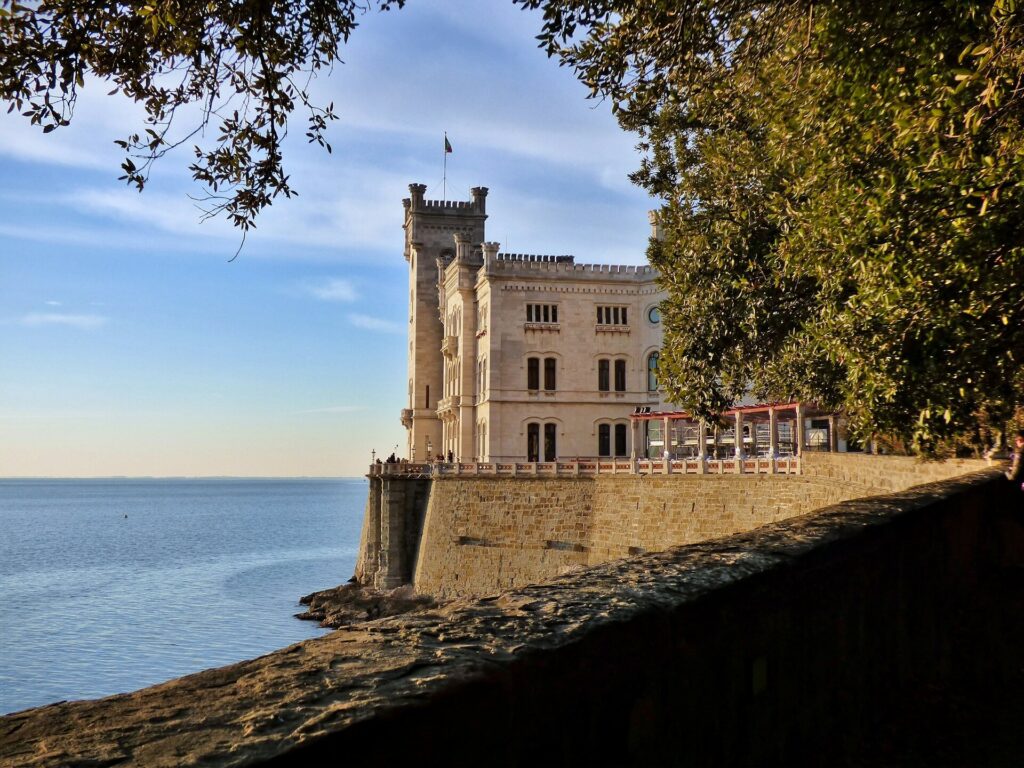
Trieste and Carso, where art, history, culture, and a spectacular landscape will capture your soul, while tasting a fresh and mineral Vitovska.
Around Gorizia Castle, the hillsides covered with grapevines offer both historical background and wonderful tasting possibilities, especially for the local Friulano and Ribolla Gialla grape varieties.
Collio Wine Road
The enchanting Collio Wine Road offers an idyllic excursion through one of Italy’s most distinguished white wine terroirs, weaving through undulating hillsides that connect charming townships and vineyards.
From Gorizia to Cormòns, experience traditional viticulture and cuisine. The region’s unique ponca soil creates exceptional growing conditions that contribute to the distinctive minerality in local wines. For varied oenological expressions, visit Oslavia—known for its amber-hued Ribolla Gialla – and explore the cooler microclimates of Dolegna del Collio, then cross into Slovenia’s Brda region for comparative tastings.
The area features centuries-old winemaking traditions that continue alongside contemporary techniques, honoring indigenous varietals like Friulano and Ribolla Gialla.
Trieste and Carso wines
Speaking of Carso, one cannot fail to mention Trieste, the Mitteleuropean town, set like a precious gem between the Gulf and the hills.
The Carso is a unique territory characterized by caves, paths carved among the stones consumed by wind and rain, and cliffs overlooking the waters of the Adriatic Sea.
This extremely difficult land has always been cultivated with vineyards, notably the local Vitovska, which can be tasted in the small local wineries run by passionate winemakers.
Gorizia Castle Hills
Situated along the Italian-Slovenian border, Gorizia’s castle hills represent another exceptional facet of Friuli Venezia Giulia’s oenological landscape. The area features vineyards in a protected terroir between the Julian Alps and Adriatic Sea, where marl and Eocene sandstone soils nurture exquisite white varietals.This borderland produces delicate Friulano, Ribolla Gialla, and Malvasia Istriana. The region is renowned for the exceptional Picolit dessert wine, once favored by European nobility for its golden hue and refined bouquet.
3 Traditional Dishes You Must Try
When visiting Friuli Venezia Giulia, you’ll want to try Frico, a crispy cheese and potato specialty that shows the region’s rustic cuisine.
Cjarsons are special ravioli combining sweet and savory fillings, representing the area’s cultural mix of Italian, Austrian, and Slavic influences.
Don’t miss Jota, a hearty winter soup with sauerkraut and beans that pairs well with the local red wines.
Be sure to taste the traditional Gubana, a celebratory pastry ring filled with walnuts and raisins that has been part of the region’s culinary heritage since 1409.
Frico: Cheese Potato Delicacy
Throughout centuries of Friulian cooking tradition, frico has become the region’s quintessential comfort food—showing practical thriftiness and simplicity. This iconic dish, created from the practical need to reuse leftover cheese, represents Friuli’s rustic food heritage.
You’ll find two distinct types: a tender, thick version with grated potatoes and a delicate, crisp variation that forms a lacy cheese wafer. It epitomizes the cucina povera style that characterizes much of traditional Italian regional cooking. Montasio, the region’s prized cheese, makes up frico’s base, though Asiago sometimes serves as a substitute. The preparation requires patience—cheese and potatoes combine over low heat before developing the characteristic golden crust.
Once a hearty meal for woodcutters, frico now appears on tables throughout the province. Enjoy it alone, with comforting polenta, or alongside the region’s distinctive cured meats—particularly good with Friuli’s excellent wines.
Cjarsons: Sweet-Savory Ravioli
From the alpine valleys of Carnia in northern Friuli comes one of Italy’s most distinctive pasta variations—cjarsons, an intriguing sweet-savory ravioli that defies conventional taste categories. Dating back to the 15th century, these pillowy pouches represent the culinary soul of Friulian mountain communities.
The fillings blend ricotta, raisins, and spices with seasonal herbs, all encased in a delicate flour-water dough. Each village guards its signature combination—some incorporating grated apple and cinnamon, others featuring potatoes or local nuts. These unique pasta pockets showcase the region’s tradition of blending sweet and savory flavors in a single dish. After a gentle boil until they float, cjarsons are typically adorned with brown butter and sage.
For the regional experience, pair these ravioli with indigenous varietals like Friulano or Refosco, whose characteristics complement both the sweet and savory elements.
Jota: Hearty Bean Soup
Jota is the essential winter soup of Friuli Venezia Giulia, reflecting the region’s multicultural influences through its hearty combination of beans, sauerkraut (locally called capuzi garbi), potatoes, and cured pork. The Austrian and Slavic culinary traditions are present in each spoonful—the tang of fermented cabbage mixing with the earthiness of borlotti beans or the prized fagioli di Lamon. The name “jota” derives from the late Latin word for soup, highlighting its ancient origins.
During winter, jota appears on family tables, particularly during holiday gatherings. The soup’s preparation needs overnight soaking of beans before slow-cooking with pancetta, bay leaves, and cumin. Some versions include brovada (pickled turnips) instead of sauerkraut, while others add regional touches. A bowl of jota with local Refosco creates an authentic Friulian meal.