Basilicata Wine Region: Complete Guide
The Basilicata wine region, located in southern Italy, offers a captivating mix of rugged landscapes and a rich vinicultural history. Bordered by Campania, Puglia, and Calabria, this mountainous area features small coastal gems that attract curious travelers. The region is known to be one of the most mountainous regions in Italy, with about 47% mountains and 45% hills, which adds to its unique terroir.
The climate is characterized by hot summers and mild winters, which support vine growth. Wine production here has roots dating back to ancient Roman times, with traditions that have been maintained through generations. The volcanic soils around Mount Vulture provide ideal conditions for grape cultivation.
While Basilicata’s wine scene is relatively small, accounting for only about 3% from DOC areas, it’s gaining recognition for its distinctive qualities. As you explore this hidden gem, you’ll have the opportunity to taste exceptional wines and experience an untouched slice of Italy’s heart.
Explore our Italian Wine Guide.
Signature Wines of the Region
When exploring the signature wines of Basilicata, you’ll encounter an array that reflects the region’s unique terroir.
Each varietal tells a story of the land, inviting you to experience the rich flavors and traditions of this hidden gem in Italy. With Aglianico del Vulture Superiore DOCG being the most well-known wine from the region, it further emphasizes the significance of this varietal in showcasing Basilicata’s winemaking heritage.
Notable Wines
Basilicata’s wine scene is a treasure trove of unique flavors and character, showcasing the region’s diverse grape varieties.
Exploring the wine treasures of Basilicata reveals the incredible Aglianico del Vulture, a red celebrated for its smoky complexity. This wine reflects the region’s volcanic soils and traditional winemaking methods, making it a must-try for enthusiasts. The unique characteristics of the wine are deeply rooted in the local terroir, showcasing the passion and expertise of the region. Many of these vineyards benefit from volcanic soils, which contribute to the rich and complex flavors of the wines produced.
- Aglianico del Vulture: This flagship wine features intense flavors and significant aging potential, thanks to the region’s volcanic soils. The wine is made primarily from the Aglianico grape variety, which is celebrated for its robust character. This powerful red bursts with dark fruit flavors, embodying the volcanic terroir.
- Grottino di Roccanova: One of the youngest DOC in Italy. Limited to the area between Sant’Arcangelo, Castronuovo di Sant’Andrea, Potenza and Roccanova it is the symbol of the renaissance of Basilicata’s viticulture thanks to the efforts of local winemakers on the Apennines
These wines reflect Basilicata’s unique geography and time-honored traditions. Each bottle is an invitation to experience the region’s soul and passion, shaped by its unique terroir and climate.
Geography, Terroir, and Climate
Situated in southern Italy, the Basilicata wine region is characterized by diverse geography that significantly influences its terroir and climate. Nearly half of the landscape is covered in mountains and hills, featuring the notable Vulture Massif and peaks such as Monte Pollino. This mountainous terrain, alongside volcanic soils, establishes a distinctive environment for grape growing, resulting in grapes with rich character. The ancient Greeks recognized the region’s potential for viticulture, contributing to its long-standing wine tradition.
The Mediterranean climate presents hot summers and mild winters, while notable diurnal temperature variation aids in grape ripening and maintains acidity. Each sub-region, from the volcanic soils of Vulture to the calcareous compositions around Matera, offers a varied array of wine styles.
In exploring the region, one can observe the unique microclimates formed by the proximity of seas and mountains, making each wine from Basilicata a representation of its remarkable landscape. The outcome is an enchanting experience waiting to be appreciated.
History
With a history steeped in ancient traditions, the Basilicata wine region offers a fascinating narrative that reflects its rich viticultural heritage. Winemaking here traces back to ancient Greece, where grape varieties and cultivation techniques were introduced. The Romans expanded these practices, setting the foundation for the region’s wine industry. As you explore Basilicata, you’ll note its strategic location as a cultural crossroads, playing a significant role in Magna Graecia and the Kingdom of Naples.
Throughout the medieval period, monasteries played a key role in preserving viticulture, with monks documenting winemaking methods. The Renaissance saw Aglianico rise to prominence, thriving in the volcanic soils of Mount Vulture. Aglianico del Vulture gained DOC status in 1971, marking a significant milestone in the region’s wine production. Despite challenges like the phylloxera crisis, the region adapted and continued its traditions. Today, with a DOC classification for Aglianico del Vulture and a blend of traditional and modern methods, Basilicata’s wines reflect the essence of its storied past.
Important wine-growing areas
In Basilicata, there are three key wine-growing areas that each offer something unique: Vulture, Val d’Agri, and Materano.
Vulture, characterized by its volcanic soils, is known for producing the notable Aglianico del Vulture. The region’s volcanic eruptions from over 130,000 years ago created ideal conditions for grape cultivation.
Val d’Agri boasts a mix of cooler climates that support a variety of grape types.
Materano, steeped in history and culture, showcases the region’s distinctive terroir and contributes to the overall wine experience.
Vulture
Vulture stands out as a remarkable wine-growing area in Basilicata, where the combination of volcanic soils and a unique climate creates an ideal environment for viticulture. Located near the extinct Mount Vulture, vineyards thrive at elevations between 450 and 600 meters, benefiting from cool nights and warm days. The region consists of rugged terrain and is characterized by its volcanic activity, which enriches the soil and enhances the quality of the grapes.
Here, the Aglianico grape reigns supreme, producing rich, intense wines like Aglianico del Vulture DOC and the esteemed Aglianico del Vulture Superiore DOCG. These wines showcase deep ruby hues and complex aromas, reflecting their volcanic terroir. With a history dating back to the Greeks, Vulture’s small, picturesque plots contribute to a vibrant local economy and offer a taste of tradition and passion in every sip.
Val d’Agri
Located in the province of Potenza, the Val d’Agri region showcases a unique character within Basilicata‘s wine landscape. Designated as a DOC in 2003, this area comprises municipalities such as Viggiano, Grumento Nova, and Moliterno, with approximately 16 hectares allocated to vineyards. Here, Merlot and Cabernet Sauvignon dominate, resulting in rich Rosso and vibrant Rosato wines. The Rosso features a distinctive blend of at least 50% Merlot and 30% Cabernet Sauvignon, complemented by Malvasia Nera, which adds depth to the flavor profile. Characterized by a continental climate and challenging mountainous terrain, each bottle reflects its origins. Despite limited production, the wines from Terre dell’Alta Val d’Agri show promise for enthusiasts eager to explore hidden gems, while local cooperatives are increasingly advocating for sustainable production methods.
Materano
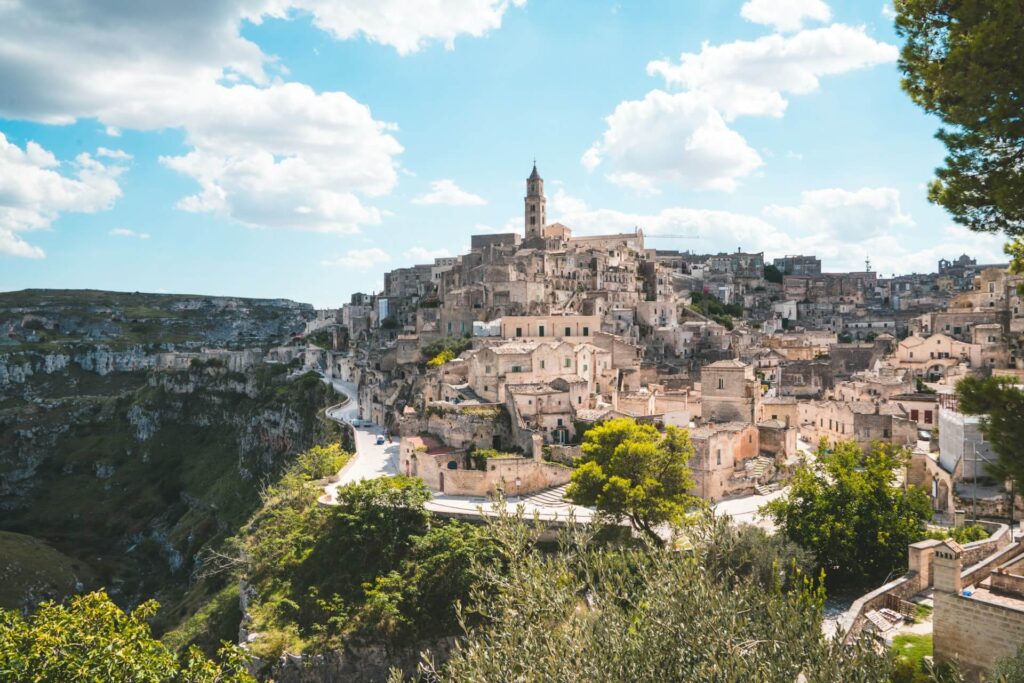
Situated in the southern part of Basilicata, the Materano wine region boasts a rich history and viticulture that dates back over three millennia. This captivating area, home to the ancient Sassi di Matera, experiences a Mediterranean climate with warm summers and mild winters, ideal for grape growing. The calcareous soils impart a distinct minerality to the wines, while coastal breezes from the Ionian Sea moderate temperatures. The region’s dedication to maintaining traditional farming practices ensures that the unique character of the wines is preserved for future generations.
An array of grape varieties can be found here, including the bold Primitivo and the aromatic Greco Bianco. Materano wines, whether it’s a robust Rosso or a revitalizing Spumante, reflect the region’s cultural heart and dedication to quality, inviting you to savor each sip.
Main Grape Varieties
In the Basilicata wine region, an exciting array of grape varieties defines its unique character. Aglianico stands out as the principal red grape, while Sangiovese and Primitivo contribute rich profiles to the mix. The contributions of Malvasia are also noteworthy, as it plays a role in both red and white blends, making this region a treasure trove for wine enthusiasts. The evolution towards quality-focused winemaking has allowed these varieties to shine even brighter in recent years.
Aglianico
Aglianico, the crown jewel of Basilicata’s wine scene, captivates with its rich character and impressive aging potential. Grown primarily around Mount Vulture, its volcanic soils impart distinct minerality and complexity to the wine. Recent plantings have occurred in regions like California and Australia, showcasing the grape’s adaptability beyond its traditional roots. Expect bold flavors of dark fruits and black cherries, complemented by a hint of spice. With firm tannins and high acidity, Aglianico wines can age beautifully, often mellowing over years of careful maturation. The DOC requires at least three years of aging, while the prestigious DOCG demands even longer. Harvested late at the end of October, these small, thick-skinned berries thrive in the region’s sunny, dry climate. Pair a glass with hearty lamb dishes, and you’ll appreciate the soul of Basilicata in every sip.
Sangiovese
Sangiovese is one of Italy’s most beloved grape varieties, known for its versatility and distinctive character. This late-ripening grape thrives in high limestone soils and prefers hilly terrains with ample sun exposure. Its nature allows it to flourish in various conditions, yet it’s susceptible to rot in wet weather. Sangiovese is the most widespread black grape variety in Italy, covering 11% of vineyard area, its complexity and adaptability highlights its significance in Italian viticulture.
Sangiovese wines are characterized by aromas of cherry, plum, and subtle oak, while the flavors range from tart red fruits to earthy undertones. With medium-plus tannins and high acidity, these wines provide a sharp, invigorating finish.
Montepulciano
Montepulciano is a red grape variety that embodies the essence of Italy’s central and southern wine regions. Originating from Abruzzo, this grape flourishes in areas like Marche and Lazio, yielding deeply colored wines with soft tannins and moderate acidity. Its late-ripening nature allows it to thrive in regions with late spring frosts, further enhancing its appeal.
Each sip reveals rich flavors of blackberry, plum, and violet, resulting in a smooth texture that invites you to linger. These wines pair beautifully with pasta or pizza and typically shine best when enjoyed within a few years of vintage. So, pour a glass, relax, and let the essence of Montepulciano envelop you.
Malvasia
When exploring the diverse landscape of Italian wines, Malvasia stands out as a versatile and aromatic grape variety. The Nera type is often used in blends, contributing delightful aromatics, a pleasant acidity, and a touch of alcohol. It thrives around Matera and Potenza, where it’s skillfully blended with Sangiovese, Montepulciano, and Cabernet Sauvignon in one of the youngest Italian DOC, the Grottino di Roccanova. Malvasia Nera is mainly used as a blending grape rather than a varietal wine, which enhances its appeal.
Malvasia Nera wines are typically light-to-medium bodied, showcasing flavors of cherries and plums. Whether you enjoy a dry wine or a sweet passito, this grape’s aromatic profile enriches the experience. Perfectly paired with gnocchi or roasted duck, Malvasia invites you to savor the essence of Basilicata’s rich winemaking tradition.
Primitivo
Primitivo, a bold and expressive grape variety, commands attention with its rich, fruit-forward character. Originating from Croatia but thriving in southern Italy, especially in Puglia (not Basilicata), this grape ripens early, delivering luscious flavors of blackberry, cherry, and raisin. Primitivo is known as “the early one” in Italian due to its early ripening characteristic.
With its full-bodied wines often exceeding 15% ABV, Primitivo’s high alcohol content contributes to its intensity. The Mediterranean climate, prevalent in southern Italy, nurtures its earthy and rustic undertones, though volcanic soils are not commonly mentioned as a significant factor in this context.
Whether enjoying a dry red or a sweet dessert wine, Primitivo pairs beautifully with grilled meats or hearty stews. Decant it to reveal its complex aromas, and pour it into a Burgundy glass for a truly intimate experience. Enjoy every sip.
Merlot
Merlot, one of the most popular grape varieties globally, captivates wine lovers with its smooth texture and rich flavors. Originating from Bordeaux, this versatile grape thrives beautifully in diverse climates and soils.
In Basilicata’s Val d’Agri area, Merlot finds ideal conditions due to the diverse soils and Mediterranean climate. Here, Merlot wines are characterized by dark fruit notes like black cherry and plum, often complemented by subtle hints of chocolate and spice. Its softer tannins make these wines approachable, while a touch of oak aging adds warmth and depth. You might even find Merlot blended with local varieties like Aglianico, resulting in elegant wines that reflect the region’s unique character. Additionally, Merlot’s adaptability to climates allows it to express different flavor profiles, enhancing the overall experience that invites you to savor every sip.
Cabernet Sauvignon
Cabernet Sauvignon stands out as a prominent player in the global wine scene, even though it’s not a primary grape in Basilicata. Here, this varietal is grown in smaller quantities, often blended with indigenous grapes. While the region’s volcanic soils favor Aglianico, Cabernet Sauvignon can still provide a rich, full-bodied experience with dark fruit flavors and high tannins. Imagine enjoying a glass with lamb or aged cheese, where its complexity unfolds over time. Cabernet Sauvignon is celebrated worldwide with International Cabernet Sauvignon Day on August 30, highlighting its significance in the wine industry. Though not deeply rooted in Basilicata’s wine heritage, this grape’s adaptability adds an intriguing layer to local blends. So, when exploring Basilicata wines, don’t overlook the subtle charm of Cabernet Sauvignon alongside its indigenous companions.
Overview on appellations system
DOCG Denominazione di origine controllata e garantita
DOCG (controlled and guaranteed designation of origin) wines must undergo a set of rules of which the most important are: territory and grape varietals. These wines can be produced only in a limited territory and by using specific types of grapes, with a low yield per hectar. They express historical roots and territorial identity and are submit to very severe controls
DOC Denominazione di origine controllata
DOC (controlled designation of origin) wines have territorial borders as the DOCG but with less limits regarding blendings,ageing and quantity.
In the heart of Basilicata, the appellation system plays a significant role in shaping the region’s wine identity, ensuring that the unique characteristics of its wines are preserved and recognized. Established in the 1960s, this system safeguards local varieties, highlighting their authenticity and quality.
You’ll find one DOCG and several DOCs here, with Aglianico del Vulture leading the pack. This red wine embodies the volcanic soils of Mount Vulture, while other DOCs like Terre dell’Alta Val d’Agri and Grottino di Roccanova showcase the diversity of the region.
This commitment to quality not only bolsters Basilicata’s reputation but also preserves cultural heritage. As you explore, you’ll appreciate how the appellation system enriches your wine experience, connecting you to the land and its people.
3 Wine Destinations for a Perfect One-Day Trip
If you’re planning a perfect one-day trip in Basilicata, be sure to explore the beautiful landscapes filled with vineyards. Imagine wandering through scenic itineraries, taking in wonderful views while enjoying excellent local wines.
Top Wine areas to Visit
Exploring the Basilicata wine region offers authentic experiences and delightful offerings, perfect for a one-day trip.
You can opt for a visit to appreciate the influence of volcanic soil in the Aglianico del Vulture wines. Aglianico’s kingdom is renowned for producing full-bodied, intense wines that truly showcase the region’s unique terroir, blending tradition with modern techniques.
Be sure to taste the wines from the organic wineries of the Val d’Agri in the Roccanova area or the Primitivo in purity from Matera. If you like white wines, don’t miss the Matera area, which offers you fresh and fruity Greco and Malvasia Bianca based wines.
Aglianico del Vulture tour
Amid the rolling hills and stunning landscapes of Basilicata, the wonderful Vulture area, where ancient Mount Vulture offers a majestic backdrop for vineyards known for Aglianico del Vulture, provides scenic vineyard tours and an unforgettable experience for wine lovers and nature enthusiasts alike.
Between Rapolla, Rionero, and Barile, in the heart of the Aglianico del Vulture DOC and Superiore DOCG production area, some of the best wineries of the territory produce rich and powerful wines in small properties, mostly organic and family-run. Vineyards are planted 400 and 500 meters above sea level, on mineral volcanic soil combined with tuff and clay, that reflects in the elegance and complexity of the wines, while the old volcano Vulture overlooks from nearby.
Val d’Agri tour
The village of Roccanova is the heart of the production of the Grottino di Roccanova. Old caves around the village are still used as aging cellars for the wine. The region, which winds along the course of the Agri River in the heart of Lucania, is also renowned for the extra virgin olive oil produced with a local variety of olive, called oliva majatica.
Many small, beautiful villages like Armento and Guardia Perticara complete the tour. The antique Roman site of Grumentum deserves a detour: the Archaeological Park of Grumentum preserves, within a suggestive landscape, the remains of one of the major Roman cities of the Regio Lucania, a unique example in Basilicata of a Roman urban structure that can be entirely visited, allowing you to walk through the public and private spaces of the Roman city.
Bread and wine between Basilicata and Apulia: Altamura and Matera
A voyage between two regions takes you to visit two wonderful works of man, only 12 miles apart, both carved in rock and tuff. Basilicata is renowned for the UNESCO World Heritage Site of Matera, with its unique and spectacular Sassi — small dwellings, churches, and other locations carved into the limestone rock.
Starting in the 8th century, several monks and hermits settled along the Gravina caves, transforming them into rock churches and shelters. From that time, a civitas was born in the area, made up of buildings carved into the rocks. Today, Matera’s unique architecture, combined with its long history and surrounding landscape, makes this town a truly exceptional destination.
Altamura, with its narrow streets and Claustri, typical small enclosed squares created during the Middle Ages almost spontaneously by the gathering of families or ethnic groups (including Greeks, Moors, and Jews), each with its own style, is another captivating site. The Greek Claustri are characterized by a rounded widening with a well in the center, while the Arabic Claustri resemble a small, narrow street with a well at the end to collect rainwater.
You can enjoy a guided visit of these two unique places, combined with a winery visit and tasting, complemented by Altamura’s famous Dop bread for a full experience.
3 Traditional Dishes You Must Try
When you explore the flavors of Basilicata, you’ll find a rich array of local ingredients like olive oil, cured meats, and fresh cheeses that characterize its cuisine. Popular regional recipes, such as the savory Lucanica sausage and hearty Pasta Mollicata, reflect the area’s culinary traditions. Enjoying these dishes is a wonderful way to appreciate the essence of this remarkable region. One standout ingredient is Peperone di Senise, which adds a sweet and vibrant flavor to many traditional dishes.
Local Ingredients and Flavors
Basilicata’s culinary scene is a rich blend of local ingredients and bold flavors that showcase its heritage. Pork, lamb, and goat serve as staples, complemented by spicy chili peppers and aromatic wild fennel. Lampascioni, or wild onions, provide a satisfying crunch, while Senise Peppers peperoni cruschi, the dried sweet peppers, make for tempting snacks. The Mediterranean climate nourishes these flavors, resulting in vibrant produce shaped by volcanic soils and coastal breezes. Olive oil, with its low acidity and fruity notes, adds depth to every dish, while traditional Lucanica sausage is packed with fennel and spice. Additionally, the region’s unique volcanic soils contribute to the distinct minerality and complexity found in both its wines and local produce. Don’t overlook unique offerings like Melanzane Rosse di Rotonda, which highlight Basilicata’s agricultural richness.
Popular Regional Recipes
The culinary treasures of Basilicata invite food lovers to explore a delightful array of traditional dishes that reflect the region’s rich heritage and vibrant flavors.
Savor the comforting Lagane with Chickpeas, where garlic and rosemary meet tender chickpeas. Indulge in Orecchiette with Lamb, a hearty baked delight. For something unique, try Cavatelli with Sarconi beans, a burst of flavor in every bite. The region’s cuisine is heavily influenced by its neighbors, making Basilicata’s dishes a true representation of Italian culinary diversity.
Don’t miss the savory Pizza Rustica, filled with cheeses and cured meats, or the sweet Cartellate, heavenly fried pastries drenched in honey. Each dish tells a story of local ingredients and age-old recipes, inviting you to relish the warmth of Basilicata’s culinary heart. These authentic flavors will linger in your memory long after your visit.
Wine Pairing Suggestions
Exploring the culinary delights of Basilicata wouldn’t be complete without considering the perfect wine pairings that complement these traditional dishes.
Each sip and bite tells a story of Basilicata’s rich culinary heritage—truly a feast for the senses. For a spicy sausage like Salsiccia Lucanica, let the wine’s flavors blend seamlessly. If you’re enjoying orecchiette with a spicy sauce, Aglianico shines again, while cavatelli with ricotta may call for a lighter Greco Bianco. Don’t forget the local cheeses; Pecorino pairs beautifully with the wine’s acidity, creating a delightful balance. Flavour pairing principles can help elevate the experience of Basilicata’s traditional dishes even further.